
Ch. 39 - Animal Form and Function
Freeman - Biological Science 8th Edition
Freeman8th EditionBiological ScienceISBN: 9780138276263당신이 사용하는 게 아니라요?교과서 변경
39장, 문제 1

True or False: The increase in red blood cell count in tourists visiting Tibet is an example of acclimatization.

검증된 단계별 안내
1
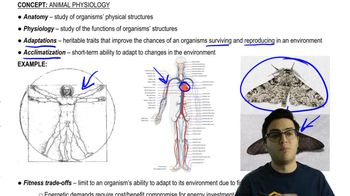
Identify the concept: Acclimatization refers to the physiological adjustments that organisms make in response to changes in their environment, such as altitude, temperature, or humidity.
Understand the environmental change: Tibet is at a high altitude where the air has lower oxygen levels compared to sea level.
Relate the physiological response: In response to lower oxygen levels, the human body increases the production of red blood cells to enhance oxygen transport and compensate for the reduced oxygen availability.
Apply the concept to the scenario: The increase in red blood cell count in tourists visiting Tibet is a direct physiological adjustment to the decreased oxygen levels at high altitudes.
Conclude the statement: Therefore, the statement is true. The increase in red blood cell count in tourists visiting Tibet is an example of acclimatization.

비슷한 문제에 대한 검증된 영상 답변:

이 영상 해법은 위 문제에 도움이 된다고 튜터들이 추천한 것입니다.
영상 길이:
3m
도움이 되었나요?

주요 개념

질문에 올바르게 답하기 위해 반드시 이해해야 하는 핵심 개념들은 다음과 같습니다.

Acclimatization

Acclimatization is the process by which an organism adjusts to changes in its environment, allowing it to maintain performance across a range of environmental conditions. This physiological adaptation can occur over days to weeks and involves changes such as increased red blood cell production in response to lower oxygen levels at high altitudes.
추천 영상:
가이드 코스
10:26
Animal Physiology and Fitness Trade-Offs

Red Blood Cells

Red blood cells (RBCs) are the cells in the blood responsible for transporting oxygen from the lungs to the body's tissues and returning carbon dioxide from the tissues back to the lungs. An increase in RBC count enhances the blood's oxygen-carrying capacity, which is crucial for individuals exposed to high altitudes, where oxygen levels are lower.
추천 영상:
가이드 코스
07:01
Blood Sugar Homeostasis

High Altitude Physiology

High altitude physiology studies how the body responds to reduced oxygen availability at elevations above 2,500 meters (8,200 feet). At high altitudes, the body undergoes various adaptations, including increased ventilation, heart rate, and red blood cell production, to cope with hypoxia, which is essential for maintaining physical performance and health.
추천 영상:
가이드 코스
05:13
Heart Physiology