Ch. 48 - The Immune System in Animals
Freeman - Biological Science 8th Edition
Freeman8th EditionBiological ScienceISBN: 9780138276263당신이 사용하는 게 아니라요?교과서 변경
48장, 문제 9

Which of the following outcomes would be expected if somatic hypermutation did not occur?
a. The diversity of pattern-recognition receptors would be significantly lowered.
b. B and T lymphocytes would not be able to produce receptors that recognize antigens.
c. The adaptive immune response would not be activated by pathogens.
d. The secondary immune response to a repeat infection would produce the same antibodies as those made in the primary immune response.

검증된 단계별 안내
1
Understand the role of somatic hypermutation: It is a process that occurs in B cells during an immune response, leading to the production of antibodies with increased affinity for their specific antigen.
Recognize that somatic hypermutation contributes to the diversity and specificity of antibodies, allowing the immune system to adapt and respond more effectively to pathogens.
Consider the options: a. Pattern-recognition receptors are part of the innate immune system and are not affected by somatic hypermutation, so this option is incorrect. b. B and T lymphocytes can still produce receptors without somatic hypermutation, but these receptors would not have increased affinity, so this option is incorrect. c. The adaptive immune response can still be activated without somatic hypermutation, but it would be less effective, so this option is incorrect.
Evaluate option d: Without somatic hypermutation, the secondary immune response would not produce antibodies with higher affinity than those produced in the primary response, leading to the same antibodies being produced.
Conclude that the correct outcome if somatic hypermutation did not occur is option d, as the secondary immune response would not improve in terms of antibody affinity compared to the primary response.

비슷한 문제에 대한 검증된 영상 답변:

이 영상 해법은 위 문제에 도움이 된다고 튜터들이 추천한 것입니다.
영상 길이:
4m
도움이 되었나요?

주요 개념

질문에 올바르게 답하기 위해 반드시 이해해야 하는 핵심 개념들은 다음과 같습니다.

Somatic Hypermutation

Somatic hypermutation is a cellular mechanism in B cells that introduces mutations at a high rate in the variable regions of immunoglobulin genes. This process occurs after B cell activation and is crucial for the diversification of antibodies, allowing the immune system to adapt and improve its response to specific antigens over time.
추천 영상:
04:06
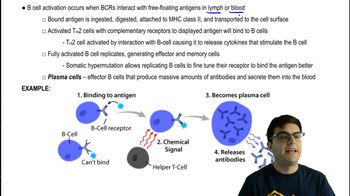
Helper T Cells and B Cells

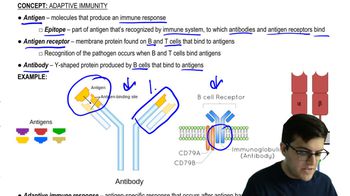
Adaptive Immune Response

The adaptive immune response is a highly specific defense mechanism that involves the activation of lymphocytes (B and T cells) in response to pathogens. It is characterized by its ability to remember past infections, leading to a more rapid and effective response upon re-exposure to the same pathogen, primarily through the production of specific antibodies and memory cells.
추천 영상:
05:50
Adaptive Immune Response

Secondary Immune Response

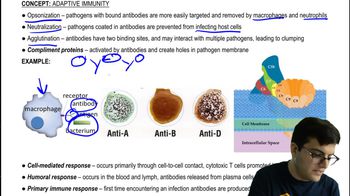
The secondary immune response is the immune system's reaction to a previously encountered antigen. It is faster and more robust than the primary response due to the presence of memory B and T cells. These cells quickly recognize the antigen and produce a more effective and higher affinity antibody response, often preventing reinfection or reducing the severity of the disease.
추천 영상:
06:14
Primary and Secondary Immunity