Ch. 52 - Community Ecology
Freeman - Biological Science 8th Edition
Freeman8th EditionBiological ScienceISBN: 9780138276263당신이 사용하는 게 아니라요?교과서 변경
52장, 문제 9

In some circumstances, the use of probiotics, which stimulate the rapid growth of bacteria that are mutualistic or commensal with humans, can eliminate the need to use antibiotics, which can wipe out helpful bacteria along with harmful bacteria. The use of probiotics is an example of which process?
a. Succession
b. Competitive exclusion
c. Parasitism
d. Niche differentiation

검증된 단계별 안내
1
Understand the definitions of the terms provided in the options: Succession refers to the process of change in the species structure of an ecological community over time. Competitive exclusion is the principle that two species competing for the same resources cannot coexist if other ecological factors are constant. Parasitism is a relationship where one organism benefits at the expense of another. Niche differentiation involves species using different resources or environments to coexist.
Consider the role of probiotics: Probiotics are beneficial bacteria that, when introduced into the human body, can outcompete harmful bacteria for resources and space, thereby promoting health.
Analyze how probiotics interact with the human body: Probiotics can create an environment where beneficial bacteria thrive, potentially reducing the need for antibiotics, which indiscriminately kill both harmful and beneficial bacteria.
Relate the concept of probiotics to the options: The introduction of probiotics leads to a situation where beneficial bacteria outcompete harmful bacteria, aligning with the concept of competitive exclusion.
Conclude which process is exemplified by the use of probiotics: Based on the analysis, the use of probiotics is an example of competitive exclusion, as they help beneficial bacteria outcompete harmful bacteria for resources.

비슷한 문제에 대한 검증된 영상 답변:

이 영상 해법은 위 문제에 도움이 된다고 튜터들이 추천한 것입니다.
영상 길이:
1m

주요 개념

질문에 올바르게 답하기 위해 반드시 이해해야 하는 핵심 개념들은 다음과 같습니다.

Probiotics

Probiotics are live microorganisms that, when administered in adequate amounts, confer a health benefit on the host. They are often used to restore the natural balance of gut bacteria, promoting the growth of beneficial bacteria and inhibiting harmful ones. This can enhance digestive health and boost the immune system.

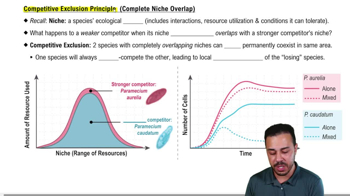
Competitive Exclusion

Competitive exclusion is a principle stating that two species competing for the same resources cannot coexist if other ecological factors are constant. One species will outcompete the other, leading to the latter's decline or extinction. In the context of probiotics, beneficial bacteria can outcompete harmful bacteria, reducing the need for antibiotics.
추천 영상:
04:23
Competitive Exclusion Principle (Complete Niche Overlap)

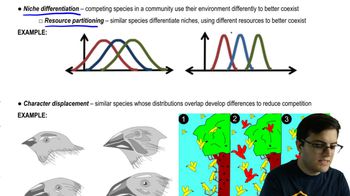
Niche Differentiation

Niche differentiation refers to the process by which competing species use the environment differently to coexist. This can involve variations in resource use, habitat preference, or timing of activity. Probiotics can help beneficial bacteria occupy specific niches in the gut, reducing competition with harmful bacteria and promoting a balanced microbiome.
추천 영상:
03:43
Competitive Exclusion and Niche Differentiation
관련 실천
교과서 질문

Draw a vertical food chain (part of a food web) showing that sea urchins eat kelp and that sea otters eat sea urchins.

Use this model to (1) show or explain how a trophic cascade works; and (2) offer an explanation for why otters are considered a keystone species.

1277
views
교과서 질문

What is a disturbance? Consider the role of fire in a forest. Compare the consequences of high-frequency versus low-frequency fire, and high severity versus low severity of fire.

704
views
교과서 질문

Evaluate this statement: Species want to increase their fitness by helping friendly species and hurting enemy species.

605
views
교과서 질문

The carnivorous plant Nepenthes bicalcarata ('fanged pitcher plant') has a unique relationship with a species of ant—Camponotus schmitzi ('diving ant'). The diving ants are not digested by the pitcher plants but instead live on the plants and consume nectar. Diving ants also dive into the digestive juices in the pitcher, swim to the bottom, and capture and consume trapped insects, leaving uneaten body parts and ant feces behind.

What nutritional impact do the ants have on fanged pitcher plants?

Do the pitcher plants derive any nutritional benefit from this relationship?

Researchers tested the hypothesis that the relationship between diving ants and pitcher plants is mutualistic (i.e., both species derive a nutritional benefit). To do so, they compared leaf surface area (as a measure of overall growth) in two sets of pitcher plants: plants with diving ants and plants without. The results are shown in the graph. The P values indicate whether there is a significant relationship between the size of the host plants and the surface area of the host plants' leaves. Based on this graph, what conclusions can be drawn about the impact of diving ants on overall plant growth?

812
views
교과서 질문

Suppose that a two-acre lawn on your college's campus is allowed to undergo succession. Describe how species traits, species interactions, and the site's history might affect the community that develops.

776
views
교과서 질문

Lyme disease is caused by infections of the bacterium Borrelia burgdorferi (stained blue in the inset, among red blood cells), which is transferred to humans via blood-sucking bites from the tick Ixodes scapularis. Lyme disease can cause flu-like symptoms in the short term and more serious illnesses in the long term if not treated.

Why is Lyme disease on the rise in eastern North America?

In relation to humans, B. burgdorferi is a/an ____________ and the tick is a/an _____________.

a. endoparasite/ectoparasite

b. endoparasite/host

c. parasitoid/host

d. parasite/predator

1388
views