Cite an example to explain why species interactions are conditional and dynamic.
Ch. 52 - Community Ecology
52장, 문제 2
The relationship between corals and the photosynthetic protists they harbor is an example of
a. Commensalism.
b. Competition.
c. Consumption.
d. Mutualism
검증된 단계별 안내1
Begin by understanding the concept of symbiotic relationships, which are interactions between two different organisms living in close physical proximity. These relationships can be classified into different types: mutualism, commensalism, competition, and consumption.
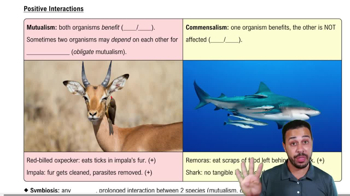
Define mutualism: It is a type of symbiotic relationship where both organisms involved benefit from the interaction. In the context of corals and photosynthetic protists, mutualism is observed as both parties gain advantages from their association.
Define commensalism: This is a relationship where one organism benefits while the other is neither helped nor harmed. Consider if this applies to corals and photosynthetic protists.
Define competition: This occurs when organisms vie for the same resources, potentially harming one another in the process. Evaluate if corals and photosynthetic protists are competing for resources.
Define consumption: This involves one organism consuming another, such as predation or herbivory. Assess if this is relevant to the relationship between corals and photosynthetic protists.

비슷한 문제에 대한 검증된 영상 답변:
이 영상 해법은 위 문제에 도움이 된다고 튜터들이 추천한 것입니다.
영상 길이:
1m도움이 되었나요?
주요 개념
질문에 올바르게 답하기 위해 반드시 이해해야 하는 핵심 개념들은 다음과 같습니다.
Mutualism
Mutualism is a type of symbiotic relationship where both organisms involved benefit from the interaction. In the case of corals and photosynthetic protists, the protists provide the corals with nutrients through photosynthesis, while the corals offer the protists a protected environment and access to sunlight, making this relationship mutually beneficial.
추천 영상:
Positive Interactions
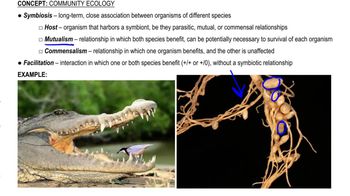
Symbiotic Relationships
Symbiotic relationships are interactions between two different organisms living in close physical proximity. These relationships can be classified into mutualism, commensalism, and parasitism, depending on the benefits or harms experienced by the organisms involved. Understanding these interactions is crucial for studying ecological dynamics and species interdependence.
추천 영상:
Symbiosis
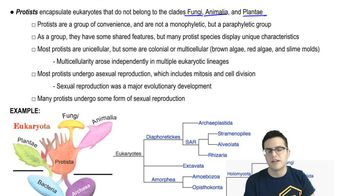
Photosynthetic Protists
Photosynthetic protists, such as zooxanthellae, are single-celled organisms capable of photosynthesis, similar to plants. They play a vital role in marine ecosystems by providing energy and nutrients to their hosts, like corals, through the conversion of sunlight into chemical energy, thus supporting the growth and survival of coral reefs.
추천 영상:
Protist Cells 2
관련 실천
교과서 질문
830
views
교과서 질문
Pioneer species tend to have high ________ and lower survivorship.
965
views
교과서 질문
What is true about inducible defenses? Select True or False for each statement.
T/F They are always present; thus, an individual is always able to defend itself.
T/F They make it impossible for a consumer to launch surprise attacks.
T/F They result from a coevolutionary arms race.
T/F They make efficient use of resources, because they are produced only when needed.
761
views
교과서 질문
What is niche differentiation?
a. The evolution of traits that reduce niche overlap and competition
b. Interactions that allow species to occupy their fundamental niche
c. The degree to which the niches of two species overlap
d. The claim that species with the same niche cannot coexist
1076
views