Ch. 2 - Limits
Briggs - Calculus: Early Transcendentals 3rd Edition
Briggs3rd EditionCalculus: Early TranscendentalsISBN: 9780136847243당신이 사용하는 게 아니라요?교과서 변경
2장, 문제 2.7.3

Which one of the following intervals is not symmetric about x=5?
a.(1, 9)
b.(4, 6)
c.(3, 8)
d.(4.5, 5.5)

검증된 단계별 안내
1
Step 1: Understand the concept of symmetry about a point. An interval is symmetric about a point x = a if the distance from a to the left endpoint is equal to the distance from a to the right endpoint.
Step 2: For each interval, calculate the midpoint and check if it is equal to x = 5.
Step 3: For interval (1, 9), calculate the midpoint: (1 + 9) / 2.
Step 4: For interval (4, 6), calculate the midpoint: (4 + 6) / 2.
Step 5: For interval (3, 8), calculate the midpoint: (3 + 8) / 2.

비슷한 문제에 대한 검증된 영상 답변:

이 영상 해법은 위 문제에 도움이 된다고 튜터들이 추천한 것입니다.
영상 길이:
2m
도움이 되었나요?

주요 개념

질문에 올바르게 답하기 위해 반드시 이해해야 하는 핵심 개념들은 다음과 같습니다.

Symmetry in Intervals

An interval is symmetric about a point if the distances from that point to the endpoints of the interval are equal. For an interval (a, b) to be symmetric about x = c, it must hold that c - a = b - c. This means that the midpoint of the interval must coincide with the point of symmetry.
추천 영상:
가이드 코스
06:21
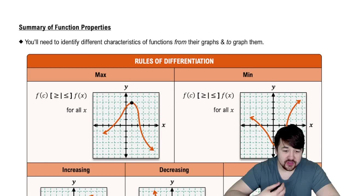
Properties of Functions

Endpoints of an Interval

The endpoints of an interval are the values that define the limits of the interval. For example, in the interval (a, b), 'a' is the left endpoint and 'b' is the right endpoint. Understanding the endpoints is crucial for determining the symmetry of the interval about a specific point.
추천 영상:
03:34
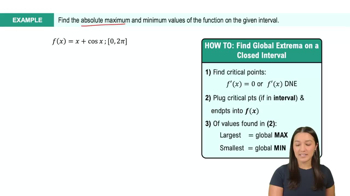
Finding Global Extrema (Extreme Value Theorem) Example 4

Calculating Midpoints

The midpoint of an interval (a, b) can be calculated using the formula (a + b) / 2. This value represents the center of the interval and is essential for assessing symmetry. If the midpoint does not equal the point of symmetry, the interval is not symmetric about that point.
추천 영상:
가이드 코스
04:46
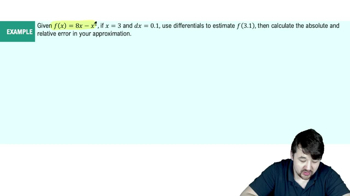
Determining Error and Relative Error Example 1