Ch. 3 - Derivatives
Briggs - Calculus: Early Transcendentals 3rd Edition
Briggs3rd EditionCalculus: Early TranscendentalsISBN: 9780136847243당신이 사용하는 게 아니라요?교과서 변경
3장, 문제 3.6.29a

Consider the following cost functions.
a. Find the average cost and marginal cost functions.
C(x) = 1000+0.1x, 0≤x≤5000, a=2000

검증된 단계별 안내
1
To find the average cost function, divide the total cost function C(x) by the number of units x. The average cost function A(x) is given by A(x) = C(x) / x.
Substitute the given cost function C(x) = 1000 + 0.1x into the average cost formula: A(x) = (1000 + 0.1x) / x.
Simplify the expression for A(x) to get A(x) = 1000/x + 0.1.
To find the marginal cost function, take the derivative of the total cost function C(x) with respect to x. The marginal cost function MC(x) is given by MC(x) = dC(x)/dx.
Differentiate C(x) = 1000 + 0.1x with respect to x. Since the derivative of a constant is 0 and the derivative of 0.1x is 0.1, the marginal cost function MC(x) = 0.1.

비슷한 문제에 대한 검증된 영상 답변:

이 영상 해법은 위 문제에 도움이 된다고 튜터들이 추천한 것입니다.
영상 길이:
4m
도움이 되었나요?

주요 개념

질문에 올바르게 답하기 위해 반드시 이해해야 하는 핵심 개념들은 다음과 같습니다.

Average Cost Function

The average cost function, denoted as AC(x), represents the total cost C(x) divided by the quantity produced x. It provides insight into the cost per unit of production, helping businesses determine pricing strategies. For the given cost function C(x) = 1000 + 0.1x, the average cost can be calculated as AC(x) = C(x)/x, which simplifies to (1000/x) + 0.1.
추천 영상:
가이드 코스
06:37
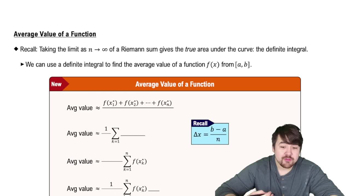
Average Value of a Function

Marginal Cost Function

The marginal cost function, denoted as MC(x), measures the additional cost incurred by producing one more unit of output. It is derived from the derivative of the total cost function C(x) with respect to x. For the cost function C(x) = 1000 + 0.1x, the marginal cost is found by calculating MC(x) = dC/dx, which results in a constant value of 0.1, indicating that each additional unit costs 0.1.
추천 영상:
가이드 코스
06:21
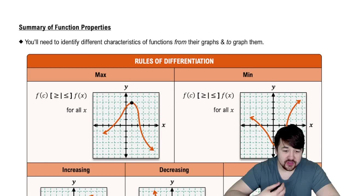
Properties of Functions

Cost Function

A cost function describes the relationship between the quantity of output produced and the total cost incurred in production. It typically includes fixed costs, which do not change with output, and variable costs, which do. In the provided function C(x) = 1000 + 0.1x, the fixed cost is 1000, while the variable cost is represented by the term 0.1x, indicating that costs increase linearly with production.
추천 영상:
가이드 코스
06:21
Properties of Functions