Ch. 3 - Derivatives
3์žฅ, ๋ฌธ์ œ 3.5.15

Use Theorem 3.10 to evaluate the following limits.
lim x๐Ÿ ‚0 (tan 5x) / x

๊ฒ€์ฆ๋œ ๋‹จ๊ณ„๋ณ„ ์•ˆ๋‚ด
1
Theorem 3.10 refers to the limit of the form lim xโ†’0 (sin(ax)/x) = a, which is a standard result in calculus.
To use this theorem, we need to express tan(5x) in terms of sine and cosine: tan(5x) = sin(5x)/cos(5x).
Rewrite the original limit as lim xโ†’0 (sin(5x)/cos(5x)) / x, which can be rearranged to lim xโ†’0 (sin(5x)/(x * cos(5x))).
Separate the limit into two parts: lim xโ†’0 (sin(5x)/x) * lim xโ†’0 (1/cos(5x)).
Apply Theorem 3.10 to the first part: lim xโ†’0 (sin(5x)/x) = 5, and evaluate the second part: lim xโ†’0 (1/cos(5x)) = 1, since cos(0) = 1.

๋น„์Šทํ•œ ๋ฌธ์ œ์— ๋Œ€ํ•œ ๊ฒ€์ฆ๋œ ์˜์ƒ ๋‹ต๋ณ€:

์ด ์˜์ƒ ํ•ด๋ฒ•์€ ์œ„ ๋ฌธ์ œ์— ๋„์›€์ด ๋œ๋‹ค๊ณ  ํŠœํ„ฐ๋“ค์ด ์ถ”์ฒœํ•œ ๊ฒƒ์ž…๋‹ˆ๋‹ค.
์˜์ƒ ๊ธธ์ด:
4m
๋„์›€์ด ๋˜์—ˆ๋‚˜์š”?

์ฃผ์š” ๊ฐœ๋…

์งˆ๋ฌธ์— ์˜ฌ๋ฐ”๋ฅด๊ฒŒ ๋‹ตํ•˜๊ธฐ ์œ„ํ•ด ๋ฐ˜๋“œ์‹œ ์ดํ•ดํ•ด์•ผ ํ•˜๋Š” ํ•ต์‹ฌ ๊ฐœ๋…๋“ค์€ ๋‹ค์Œ๊ณผ ๊ฐ™์Šต๋‹ˆ๋‹ค.

Limits

Limits are fundamental in calculus, representing the value that a function approaches as the input approaches a certain point. They are essential for understanding continuity, derivatives, and integrals. In this context, evaluating the limit as x approaches 0 helps determine the behavior of the function tan(5x)/x near that point.
์ถ”์ฒœ ์˜์ƒ:
05:50
One-Sided Limits

Theorem 3.10 (Limit of a Trigonometric Function)

Theorem 3.10 typically refers to a specific limit involving trigonometric functions, often stating that lim xโ†’0 (sin x)/x = 1. This theorem can be extended to other functions, such as tan(5x), by recognizing that tan(x) behaves similarly to sin(x) near zero, allowing us to simplify the limit evaluation.
์ถ”์ฒœ ์˜์ƒ:
๊ฐ€์ด๋“œ ์ฝ”์Šค
6:04
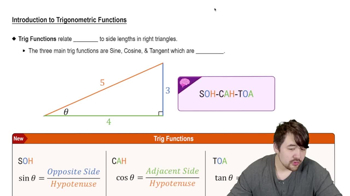
Introduction to Trigonometric Functions

L'Hรดpital's Rule

L'Hรดpital's Rule is a method for evaluating limits that result in indeterminate forms like 0/0 or โˆž/โˆž. It states that if such a form occurs, the limit of the ratio of two functions can be found by taking the derivative of the numerator and the derivative of the denominator. This rule can be applied to the limit in the question if direct substitution leads to an indeterminate form.
์ถ”์ฒœ ์˜์ƒ:
5:50
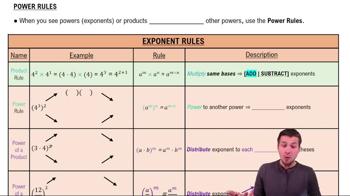
Power Rules