If fโฒ(x)=3x+2, find the slope of the line tangent to the curve y=f(x) at x=1, 2, and 3.
Ch. 3 - Derivatives
Briggs3rd EditionCalculus: Early TranscendentalsISBN: 9780136847243๋น์ ์ด ์ฌ์ฉํ๋ ๊ฒ ์๋๋ผ์?๊ต๊ณผ์ ๋ณ๊ฒฝ
3์ฅ, ๋ฌธ์ 3.5.17
Use Theorem 3.10 to evaluate the following limits.
lim x๐ 0 (tan 7x) / (sin x)
๊ฒ์ฆ๋ ๋จ๊ณ๋ณ ์๋ด1
Theorem 3.10 refers to the limit of a function as it approaches a point, often involving L'Hรดpital's Rule when dealing with indeterminate forms like 0/0. First, check if the limit results in an indeterminate form by substituting x = 0 into the expression (tan 7x) / (sin x).
Substitute x = 0 into tan(7x) and sin(x). Both tan(7x) and sin(x) approach 0 as x approaches 0, resulting in the indeterminate form 0/0. This indicates that L'Hรดpital's Rule can be applied.
Apply L'Hรดpital's Rule, which states that if the limit of f(x)/g(x) as x approaches a value results in 0/0 or โ/โ, then the limit can be found by differentiating the numerator and the denominator separately. Differentiate the numerator tan(7x) and the denominator sin(x) with respect to x.
The derivative of tan(7x) with respect to x is 7secยฒ(7x), and the derivative of sin(x) with respect to x is cos(x). Substitute these derivatives back into the limit expression, resulting in lim xโ0 (7secยฒ(7x)) / (cos(x)).
Evaluate the new limit expression as x approaches 0. Substitute x = 0 into the expression 7secยฒ(7x) / cos(x). Since sec(7x) = 1/cos(7x), and cos(0) = 1, the expression simplifies to 7 * (1/1)ยฒ / 1, which can be further simplified to find the limit.

๋น์ทํ ๋ฌธ์ ์ ๋ํ ๊ฒ์ฆ๋ ์์ ๋ต๋ณ:
์ด ์์ ํด๋ฒ์ ์ ๋ฌธ์ ์ ๋์์ด ๋๋ค๊ณ ํํฐ๋ค์ด ์ถ์ฒํ ๊ฒ์
๋๋ค.
์์ ๊ธธ์ด:
6m์ฃผ์ ๊ฐ๋
์ง๋ฌธ์ ์ฌ๋ฐ๋ฅด๊ฒ ๋ตํ๊ธฐ ์ํด ๋ฐ๋์ ์ดํดํด์ผ ํ๋ ํต์ฌ ๊ฐ๋
๋ค์ ๋ค์๊ณผ ๊ฐ์ต๋๋ค.
Limits
Limits are fundamental in calculus, representing the value that a function approaches as the input approaches a certain point. Understanding limits is crucial for evaluating expressions that may be indeterminate, such as 0/0. In this context, we need to analyze the behavior of the function as x approaches 0.
์ถ์ฒ ์์:
One-Sided Limits
Theorem 3.10 (L'Hรดpital's Rule)
Theorem 3.10, commonly known as L'Hรดpital's Rule, provides a method for evaluating limits of indeterminate forms like 0/0 or โ/โ. It states that if the limit of f(x)/g(x) results in an indeterminate form, the limit can be found by taking the derivative of the numerator and the derivative of the denominator separately, then re-evaluating the limit.
์ถ์ฒ ์์:
๊ฐ์ด๋ ์ฝ์ค
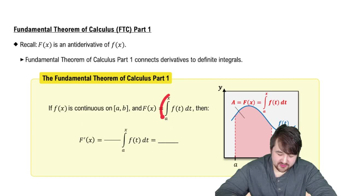
Fundamental Theorem of Calculus Part 1
Trigonometric Limits
Trigonometric limits involve the behavior of trigonometric functions as their arguments approach specific values. For example, limits involving sin(x) and tan(x) as x approaches 0 are particularly important, as they often simplify to well-known values, such as sin(x)/x approaching 1. Recognizing these standard limits can greatly aid in solving more complex limit problems.
์ถ์ฒ ์์:
๊ฐ์ด๋ ์ฝ์ค
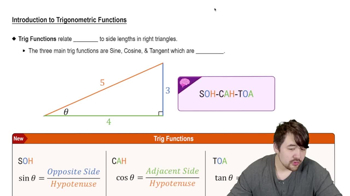
Introduction to Trigonometric Functions
๊ด๋ จ ์ค์ฒ
๊ต๊ณผ์ ์ง๋ฌธ
306
views
๊ต๊ณผ์ ์ง๋ฌธ
A circle has an initial radius of 50 ft when the radius begins decreasing at a rate of 2 ft/min. What is the rate of change of the area at the instant the radius is 10 ft?
303
views
๊ต๊ณผ์ ์ง๋ฌธ
Calculate the derivative of the following functions. In some cases, it is useful to use the properties of logarithms to simplify the functions before computing f'(x).
y = (cos x) In cosยฒx
206
views
๊ต๊ณผ์ ์ง๋ฌธ
47โ56. Derivatives of inverse functions at a point Consider the following functions. In each case, without finding the inverse, evaluate the derivative of the inverse at the given point.
f(x)=tan x; (1,ฯ/4)
148
views
๊ต๊ณผ์ ์ง๋ฌธ
Continuity of a piecewise function Let g(x) = <matrix 2x1> For what values of a is g continuous?
372
views
๊ต๊ณผ์ ์ง๋ฌธ
Find the slope of the curve xยฒ+yยณ=2 at each point where y=1 (see figure). <IMAGE>
262
views