Ch. 3 - Derivatives
3์žฅ, ๋ฌธ์ œ 3.11

Find the derivatives of the functions in Exercises 1โ€“42.


๐”‚ = 2 tanยฒ x - secยฒ x

๊ฒ€์ฆ๋œ ๋‹จ๊ณ„๋ณ„ ์•ˆ๋‚ด
1
Step 1: Identify the function components. The function given is ๐”‚ = 2 tanยฒ x - secยฒ x. This consists of two terms: 2 tanยฒ x and -secยฒ x.
Step 2: Apply the chain rule to differentiate 2 tanยฒ x. The chain rule states that if you have a function g(x) = f(u(x)), then g'(x) = f'(u(x)) * u'(x). Here, let u(x) = tan x, so tanยฒ x = (tan x)ยฒ. Differentiate using the chain rule: d/dx [2(tan x)ยฒ] = 2 * 2(tan x) * secยฒ x.
Step 3: Differentiate -secยฒ x. The derivative of sec x is sec x tan x, so the derivative of secยฒ x is 2 sec x * sec x tan x = 2 secยฒ x tan x. Therefore, d/dx [-secยฒ x] = -2 secยฒ x tan x.
Step 4: Combine the derivatives from steps 2 and 3. The derivative of the entire function ๐”‚ = 2 tanยฒ x - secยฒ x is the sum of the derivatives of its individual terms: 4 tan x secยฒ x - 2 secยฒ x tan x.
Step 5: Simplify the expression if possible. Notice that both terms have a common factor of secยฒ x tan x. Factor this out to simplify the expression: (4 tan x - 2) secยฒ x tan x.

๋น„์Šทํ•œ ๋ฌธ์ œ์— ๋Œ€ํ•œ ๊ฒ€์ฆ๋œ ์˜์ƒ ๋‹ต๋ณ€:

์ด ์˜์ƒ ํ•ด๋ฒ•์€ ์œ„ ๋ฌธ์ œ์— ๋„์›€์ด ๋œ๋‹ค๊ณ  ํŠœํ„ฐ๋“ค์ด ์ถ”์ฒœํ•œ ๊ฒƒ์ž…๋‹ˆ๋‹ค.
์˜์ƒ ๊ธธ์ด:
4m
๋„์›€์ด ๋˜์—ˆ๋‚˜์š”?

์ฃผ์š” ๊ฐœ๋…

์งˆ๋ฌธ์— ์˜ฌ๋ฐ”๋ฅด๊ฒŒ ๋‹ตํ•˜๊ธฐ ์œ„ํ•ด ๋ฐ˜๋“œ์‹œ ์ดํ•ดํ•ด์•ผ ํ•˜๋Š” ํ•ต์‹ฌ ๊ฐœ๋…๋“ค์€ ๋‹ค์Œ๊ณผ ๊ฐ™์Šต๋‹ˆ๋‹ค.

Derivative

The derivative of a function measures how the function's output value changes as its input value changes. It is a fundamental concept in calculus that represents the slope of the tangent line to the curve of the function at any given point. The derivative can be computed using various rules, such as the power rule, product rule, and chain rule.
์ถ”์ฒœ ์˜์ƒ:

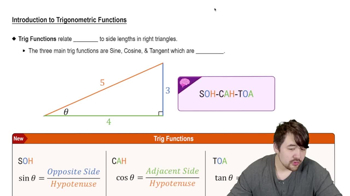
Trigonometric Functions

Trigonometric functions, such as sine, cosine, tangent, secant, and their inverses, are essential in calculus, especially when dealing with derivatives involving angles. Each function has specific derivatives that can be derived from their definitions or unit circle properties. Understanding these functions and their derivatives is crucial for solving problems involving angles and periodic behavior.
์ถ”์ฒœ ์˜์ƒ:
๊ฐ€์ด๋“œ ์ฝ”์Šค
6:04
Introduction to Trigonometric Functions

Chain Rule

The chain rule is a formula for computing the derivative of the composition of two or more functions. It states that if a function y is defined as a composition of two functions, say u(x) and v(u), then the derivative of y with respect to x can be found by multiplying the derivative of y with respect to u by the derivative of u with respect to x. This rule is particularly useful when differentiating functions like tanยฒ(x) or secยฒ(x) in the given problem.
์ถ”์ฒœ ์˜์ƒ:
05:02
Intro to the Chain Rule
๊ด€๋ จ ์‹ค์ฒœ