
Ch. 4 - Applications of Derivatives
Hass - Thomas' Calculus 15th Edition
Hass15th EditionThomas' CalculusISBN: 9780137616077당신이 사용하는 게 아니라요?교과서 변경
4장, 문제 51

Applications


Classical accounts tell us that a 170-oar trireme (ancient Greek or Roman warship) once covered 184 sea miles in 24 hours. Explain why at some point during this feat the trireme’s speed exceeded 7.5 knots (sea or nautical miles per hour).

검증된 단계별 안내
1
Recognize that this problem is an application of the Mean Value Theorem (MVT) from calculus, which states that for a continuous and differentiable function over a closed interval, there exists at least one point where the instantaneous rate of change (derivative) equals the average rate of change over that interval.
Define the function s(t) to represent the distance covered by the trireme at time t, where t is measured in hours and s(t) is in sea miles. The interval of interest is from t = 0 to t = 24 hours.
Calculate the average speed of the trireme over the 24-hour period. The average speed is given by the total distance traveled divided by the total time, which is 184 sea miles / 24 hours.
Apply the Mean Value Theorem: Since s(t) is continuous and differentiable over the interval [0, 24], there exists at least one time c in (0, 24) such that the derivative s'(c), representing the instantaneous speed, equals the average speed.
Compare the average speed to 7.5 knots. If the average speed is less than 7.5 knots, then at some point, the instantaneous speed s'(c) must have exceeded 7.5 knots to compensate for slower speeds at other times, ensuring the average speed is achieved.

비슷한 문제에 대한 검증된 영상 답변:

이 영상 해법은 위 문제에 도움이 된다고 튜터들이 추천한 것입니다.
영상 길이:
5m
도움이 되었나요?

주요 개념

질문에 올바르게 답하기 위해 반드시 이해해야 하는 핵심 개념들은 다음과 같습니다.

Mean Value Theorem

The Mean Value Theorem (MVT) in calculus states that for a continuous function on a closed interval [a, b] that is differentiable on the open interval (a, b), there exists at least one point c in (a, b) where the instantaneous rate of change (derivative) equals the average rate of change over [a, b]. This theorem is crucial for proving that the trireme's speed exceeded 7.5 knots at some point during its journey.
추천 영상:
가이드 코스
06:11
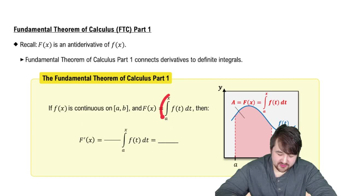
Fundamental Theorem of Calculus Part 1

Average Speed

Average speed is calculated by dividing the total distance traveled by the total time taken. In this scenario, the trireme covered 184 sea miles in 24 hours, resulting in an average speed of 184/24 = 7.67 knots. Understanding average speed helps establish a baseline to apply the Mean Value Theorem, indicating that the speed must have exceeded 7.5 knots at some point.
추천 영상:
가이드 코스
06:37
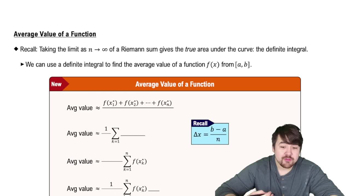
Average Value of a Function

Instantaneous Speed

Instantaneous speed refers to the speed of an object at a specific moment in time, which can be determined by the derivative of the position function with respect to time. In the context of the trireme, the Mean Value Theorem implies that if the average speed is 7.67 knots, there must be an instant where the instantaneous speed is exactly 7.67 knots, thus exceeding 7.5 knots at some point.
추천 영상:
가이드 코스
06:29
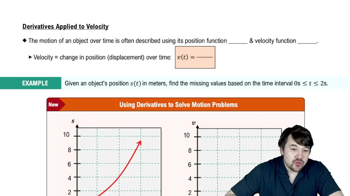
Derivatives Applied To Velocity