Skip to main content
Cell Biology
나의 코스
배우기
시험 준비
AI 튜터
학습 가이드
플래시카드
탐험해 보세요
앱을 사용해 보세요
나의 코스
배우기
시험 준비
AI 튜터
학습 가이드
플래시카드
탐험해 보세요
앱을 사용해 보세요
뒤로
Chemical Bonds definitions
카드를 뒤집기 위해 탭할 수 있습니다.
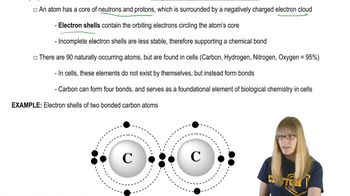
Atom
카드를 뒤집기 위해 탭할 수 있습니다.
👆
Atom
Basic unit of matter with a core of protons and neutrons, surrounded by electron shells that determine bonding behavior.
진행 상황 추적
컨트롤 버튼이 '내비게이션' 모드로 변경되었습니다.
1/17
관련 플래시카드
관련 실천
추천 영상
Chemical Bonds quiz #1
Chemical Bonds
10 용어
Chemical Bonds
2. Chemical Components of Cells
7 문제점
주제
Acids, Bases, and Buffers
2. Chemical Components of Cells
7 문제점
주제
2. Chemical Components of Cells
5 주제
14 문제점
장
VideoThumbView.guidedCourse
03:09
Covalent Bonds
513
views
12
rank
VideoThumbView.guidedCourse
06:21
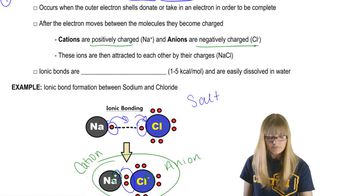
Noncovalent Bonds
478
views
8
rank
1
comments
VideoThumbView.guidedCourse
02:49
Properties of Atoms
624
views
11
rank
이 집합의 용어 (17)
하이드의 정의
Atom
Basic unit of matter with a core of protons and neutrons, surrounded by electron shells that determine bonding behavior.
Electron Shell
Region around an atomic nucleus where electrons orbit, influencing stability and bonding capacity.
Covalent Bond
Strong connection formed by sharing electrons between atoms, creating stable molecular structures.
Single Bond
Type of covalent linkage involving the sharing of two electrons between two atoms.
Double Bond
Covalent connection where four electrons are shared, resulting in a stronger and shorter bond than a single bond.
Triple Bond
Covalent interaction involving the sharing of six electrons, producing a very strong and short bond.
Polarity
Molecular property arising from unequal electron sharing, leading to partial positive and negative charges.
Electronegativity
Tendency of an atom to attract electrons toward itself within a chemical bond.
Bond Strength
Amount of energy required to break a chemical connection between atoms, reflecting its stability.
Ionic Bond
Attraction between oppositely charged ions formed by electron transfer, often called a salt bridge.
Cation
Positively charged ion resulting from the loss of one or more electrons.
Anion
Negatively charged ion produced by gaining one or more electrons.
Hydrogen Bond
Weak attraction between a partially positive hydrogen and an electronegative atom, crucial for water’s properties.
Van der Waals Attraction
Nonspecific, weak force arising when atoms approach closely, significant in both polar and nonpolar molecules.
Hydrophobic Effect
Tendency of nonpolar molecules to aggregate in water, minimizing disruption of hydrogen bonding among water molecules.
Molecular Complementarity
Precise fit between molecules, enabling strong binding through multiple interactions, similar to a lock and key.
Affinity
Degree of fit and strength of binding between molecules, increasing with the number and quality of interactions.
 뒤로뒤로
뒤로뒤로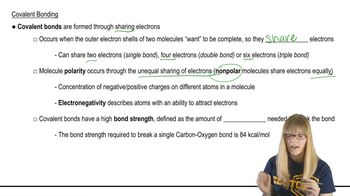
 03:09
03:09