Skip to main content
Cell Biology
나의 코스
배우기
시험 준비
AI 튜터
학습 가이드
플래시카드
탐험해 보세요
앱을 사용해 보세요
나의 코스
배우기
시험 준비
AI 튜터
학습 가이드
플래시카드
탐험해 보세요
앱을 사용해 보세요
뒤로
Model Organisms definitions
카드를 뒤집기 위해 탭할 수 있습니다.
Model Organism
카드를 뒤집기 위해 탭할 수 있습니다.
👆
Model Organism
An organism selected for research due to rapid reproduction, genetic manipulability, and biological similarity to humans.
진행 상황 추적
컨트롤 버튼이 '내비게이션' 모드로 변경되었습니다.
1/15
관련 플래시카드
관련 실천
추천 영상
Model Organisms quiz #1
Model Organisms
10 용어
Model Organisms
1. Overview of Cell Biology
7 문제점
주제
Viruses
1. Overview of Cell Biology
7 문제점
주제
1. Overview of Cell Biology - Part 1 of 2
5 주제
14 문제점
장
1. Overview of Cell Biology - Part 2 of 2
5 주제
13 문제점
장
VideoThumbView.guidedCourse
04:06
Cell Culture
475
views
7
rank
1
comments
VideoThumbView.guidedCourse
07:15
Top Main Model Organisms
615
views
9
rank
1
comments
VideoThumbView.guidedCourse
03:11
Purpose of Model Organisms
718
views
7
rank
이 집합의 용어 (15)
하이드의 정의
Model Organism
An organism selected for research due to rapid reproduction, genetic manipulability, and biological similarity to humans.
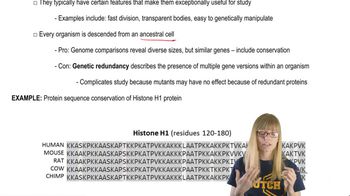
Genetic Redundancy
The presence of multiple gene copies with similar functions, complicating mutant analysis in research.
Conservation
A phenomenon where gene or protein sequences remain highly similar across different species.
E. coli
A prokaryotic bacterium used for rapid division, DNA replication, and protein production in labs.
Yeast
A single-celled eukaryote with a small genome, ideal for genetic screens and rapid laboratory growth.
Genetic Screen
A technique involving mutagenesis to identify genes responsible for specific phenotypes.
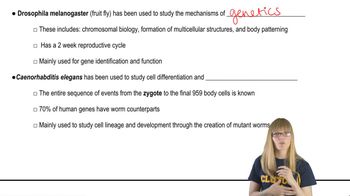
Drosophila melanogaster
A fruit fly model used for studying genetics, chromosomal biology, and developmental patterning.
C. elegans
A transparent nematode with a fully mapped cell lineage, valuable for developmental biology studies.
Arabidopsis
A small flowering plant with a genome size similar to humans, used for plant genetics research.
Zebrafish
A vertebrate with transparent embryos, facilitating observation of internal development and gene function.
Frog
An amphibian model with large eggs, useful for studying cell division and whole genome duplication.
Mouse
A mammalian model sharing 99% of protein-coding genes with humans, crucial for disease research.
Cell Culture
A laboratory method for growing cells in vitro to study cellular mechanisms and responses.
Retrovirus
An RNA virus capable of integrating its genetic material into host chromosomes, enabling gene insertion.
HeLa Cells
A human cervical cancer cell line widely used in cell culture for biological and medical research.
 뒤로뒤로
뒤로뒤로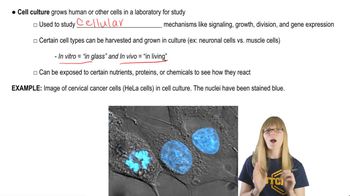
 04:06
04:06