Skip to main content
Cell Biology
나의 코스
배우기
시험 준비
AI 튜터
학습 가이드
플래시카드
탐험해 보세요
앱을 사용해 보세요
나의 코스
배우기
시험 준비
AI 튜터
학습 가이드
플래시카드
탐험해 보세요
앱을 사용해 보세요
뒤로
Passive Transport: Diffusion and Osmosis quiz #2
카드를 뒤집기 위해 탭할 수 있습니다.
What is an example of passive transport?
카드를 뒤집기 위해 탭할 수 있습니다.
👆
What is an example of passive transport?
Diffusion, osmosis, and facilitated diffusion are examples of passive transport.
진행 상황 추적
컨트롤 버튼이 '내비게이션' 모드로 변경되었습니다.
1/39
관련 플래시카드
관련 실천
추천 영상
Passive Transport: Diffusion and Osmosis quiz #1
Passive Transport: Diffusion and Osmosis
40 용어
Passive Transport: Diffusion and Osmosis quiz #3
Passive Transport: Diffusion and Osmosis
40 용어
Passive Transport: Diffusion and Osmosis quiz #4
Passive Transport: Diffusion and Osmosis
16 용어
Passive Transport: Diffusion and Osmosis
9. Transport Across Membranes
7 문제점
주제
Transporters
9. Transport Across Membranes
7 문제점
주제
9. Transport Across Membranes
5 주제
15 문제점
장
VideoThumbView.guidedCourse
02:29
GLUT1 Transporter
723
views
9
rank
2
comments
VideoThumbView.guidedCourse
04:12
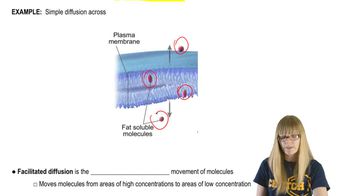
Diffusion
1101
views
11
rank
VideoThumbView.guidedCourse
03:15
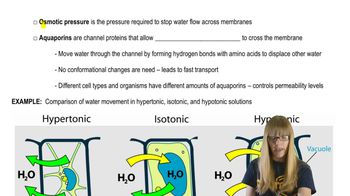
Osmosis
814
views
10
rank
1
comments
이 집합의 용어 (39)
하이드의 정의
What is an example of passive transport?
Diffusion, osmosis, and facilitated diffusion are examples of passive transport.
How does temperature affect the rate of diffusion?
Increasing temperature increases the rate of diffusion.
What happens to a cell in a hypertonic solution?
A cell in a hypertonic solution will shrink as water leaves the cell.
What does simple diffusion require?
Simple diffusion requires a concentration gradient but no energy or assistance.
Osmosis is a membrane passage process pertaining to which molecule?
Osmosis pertains to the movement of water molecules.
What is an example of passive transport?
Osmosis is an example of passive transport.
Osmosis refers to the movement of which molecule?
Osmosis refers to the movement of water molecules.
Osmosis is best defined as the movement of what?
Osmosis is best defined as the movement of water across a semipermeable membrane.
What are two variables that affect the rate of diffusion?
Temperature and concentration gradient affect the rate of diffusion.
During osmosis, how does water move?
During osmosis, water moves from low solute concentration to high solute concentration.
Describe how water moves during osmosis.
Water moves across a semipermeable membrane from an area of high water concentration to low water concentration.
When does passive transport occur?
Passive transport occurs when molecules move down their concentration gradient without energy input.
How does temperature affect the rate of diffusion?
Higher temperature increases the rate of diffusion.
Crenation takes place when a cell is placed in what type of solution?
Crenation occurs when a cell is placed in a hypertonic solution.
What happens to an Elodea cell in a hypertonic solution?
An Elodea cell in a hypertonic solution will lose water and shrink.
How do simple and facilitated diffusion differ?
Simple diffusion is unassisted, while facilitated diffusion requires transport proteins.
When does passive transport occur?
Passive transport occurs when molecules move down their concentration gradient without energy input.
What happens to an animal cell in a hypertonic solution?
An animal cell in a hypertonic solution will shrink as water leaves the cell.
How can temperature affect the rate of diffusion?
Increasing temperature increases the rate of diffusion.
The movement of water by osmosis is always from a region of what concentration?
The movement of water by osmosis is always from a region of high water concentration (low solute) to low water concentration (high solute).
Osmosis is defined as the movement of what?
Osmosis is defined as the movement of water across a semipermeable membrane.
Does temperature affect the rate of diffusion?
Yes, higher temperature increases the rate of diffusion.
Is facilitated diffusion active or passive?
Facilitated diffusion is passive.
Does osmosis refer to the diffusion of molecules across a membrane?
Osmosis refers specifically to the diffusion of water molecules across a semipermeable membrane.
What is the definition of osmosis?
Osmosis is the movement of water across a semipermeable membrane from low solute concentration to high solute concentration.
How does temperature affect the rate of diffusion?
Increasing temperature increases the rate of diffusion.
As temperature increases, what happens to the rate of diffusion?
As temperature increases, the rate of diffusion increases.
Which way will water molecules move during osmosis?
Water molecules move from an area of high water concentration to low water concentration during osmosis.
Which is an example of passive transport?
Osmosis is an example of passive transport.
What are examples of passive transport?
Diffusion, facilitated diffusion, and osmosis are examples of passive transport.
What is an example of osmosis?
Water moving across a semipermeable membrane from low solute to high solute concentration is an example of osmosis.
Which process requires no energy from the cell?
Passive transport processes such as diffusion, facilitated diffusion, and osmosis require no energy from the cell.
Which way does water move in osmosis?
Water moves from an area of high water concentration to low water concentration in osmosis.
What is the best definition of osmosis?
Osmosis is the movement of water across a semipermeable membrane from low solute concentration to high solute concentration.
Osmosis is what type of transport?
Osmosis is a passive transport process.
What process allows water to move across a cell membrane?
Osmosis allows water to move across a cell membrane.
What must water pass through during osmosis?
Water passes through aquaporin channel proteins during osmosis.
What is the diffusion of water called?
The diffusion of water is called osmosis.
What determines the direction of diffusion?
The concentration gradient determines the direction of diffusion.
 뒤로뒤로
뒤로뒤로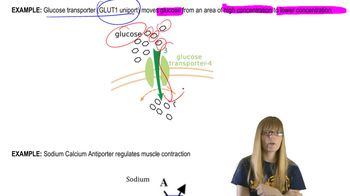
 02:29
02:29