Ch. 1 - Equations and Inequalities
Lial - College Algebra 13th Edition
Lial13th EditionCollege AlgebraISBN: 9780136881063당신이 사용하는 게 아니라요?교과서 변경
2장, 문제 105

Solve each equation for the specified variable. (Assume all denominators are nonzero.) d=k√h, for h

검증된 단계별 안내
1
Start with the given equation: \(d = k \sqrt{h}\).
Isolate the square root term by dividing both sides of the equation by \(k\): \(\frac{d}{k} = \sqrt{h}\).
To eliminate the square root, square both sides of the equation: \(\left( \frac{d}{k} \right)^2 = (\sqrt{h})^2\).
Simplify the right side since squaring the square root cancels out: \(\left( \frac{d}{k} \right)^2 = h\).
Rewrite the expression for \(h\) explicitly: \(h = \left( \frac{d}{k} \right)^2\).

비슷한 문제에 대한 검증된 영상 답변:

이 영상 해법은 위 문제에 도움이 된다고 튜터들이 추천한 것입니다.
영상 길이:
2m
도움이 되었나요?

주요 개념

질문에 올바르게 답하기 위해 반드시 이해해야 하는 핵심 개념들은 다음과 같습니다.

Isolating the Variable

Isolating the variable means rewriting the equation so that the variable of interest stands alone on one side. This often involves performing inverse operations such as division, multiplication, or taking roots to both sides to solve for the specified variable.
추천 영상:
05:28
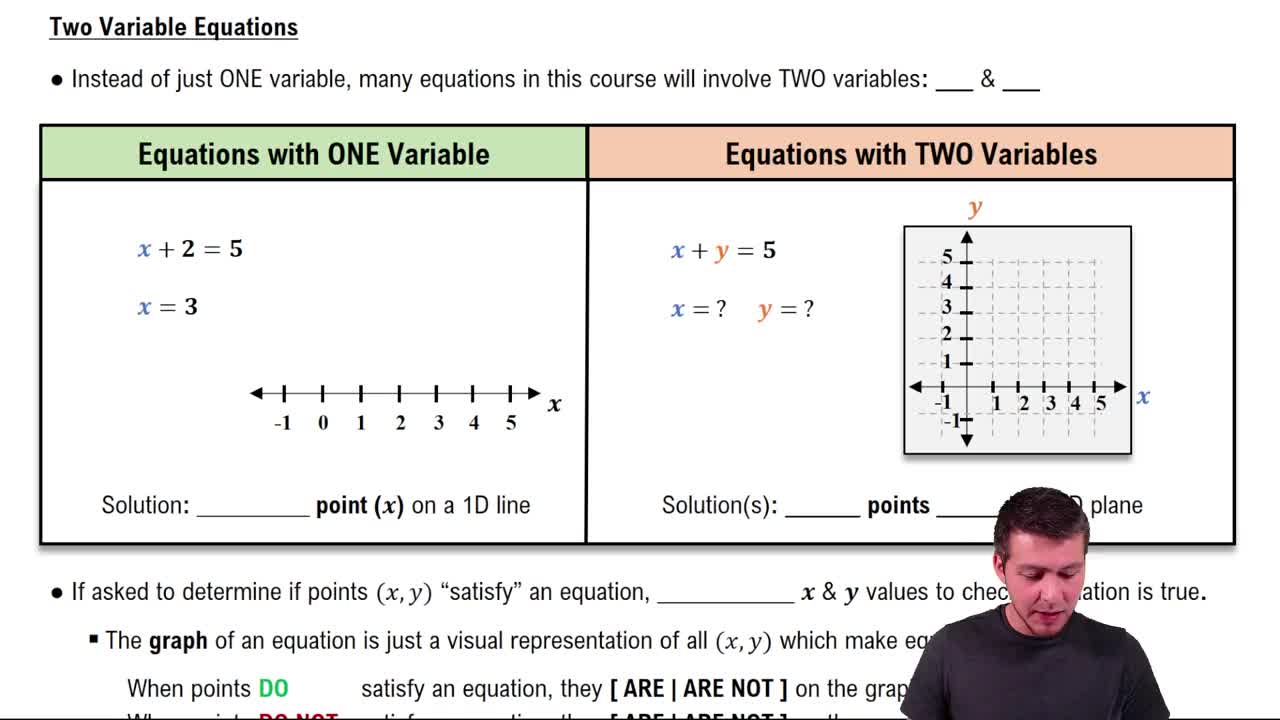
Equations with Two Variables

Square Root and Squaring

When a variable is under a square root, solving for it requires squaring both sides of the equation to eliminate the root. This step must be done carefully to maintain equality and consider the domain restrictions.
추천 영상:
02:20
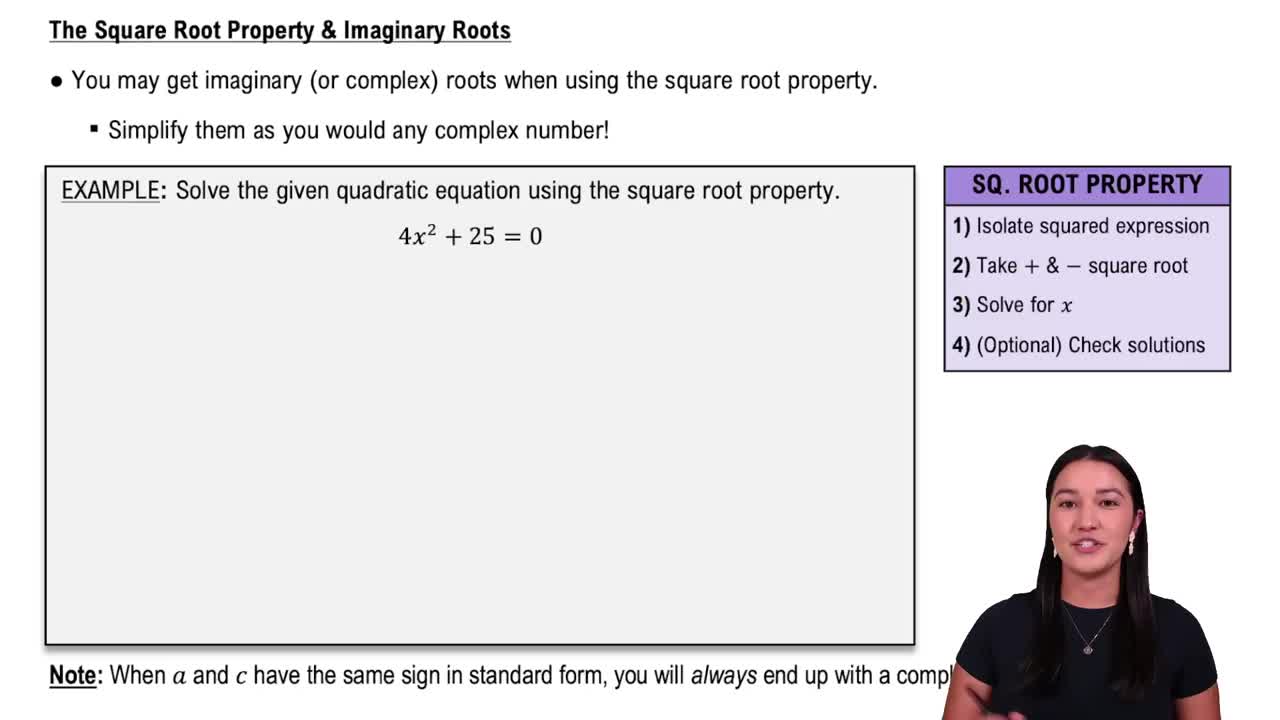
Imaginary Roots with the Square Root Property

Domain Restrictions and Nonzero Denominators

Equations involving denominators or roots have domain restrictions to avoid division by zero or undefined expressions. It is important to assume denominators are nonzero and consider the domain of variables when solving.
추천 영상:
02:58
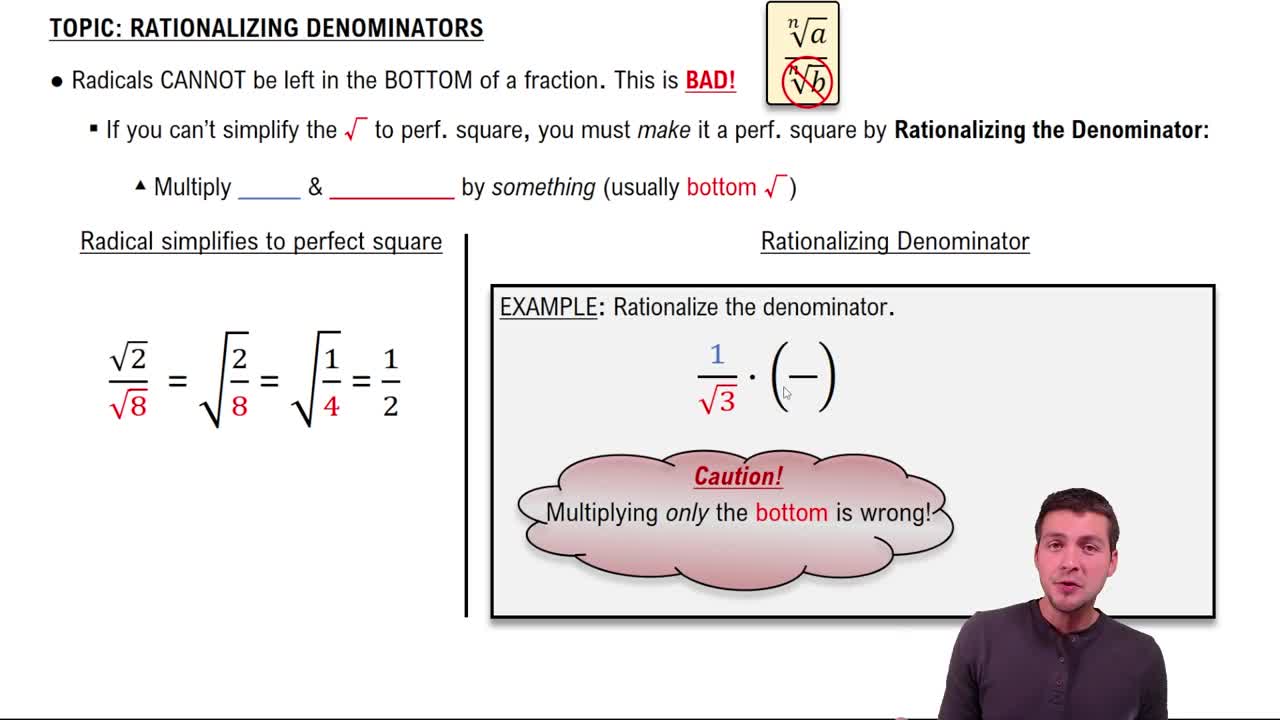
Rationalizing Denominators