Ch. 1 - Equations and Inequalities
Lial - College Algebra 13th Edition
Lial13th EditionCollege AlgebraISBN: 9780136881063당신이 사용하는 게 아니라요?교과서 변경
2장, 문제 50

Solve each equation. √(6x+7) - 9 = x-7

검증된 단계별 안내
1
Start by isolating the square root expression on one side of the equation. Add 9 to both sides to get: \(\sqrt{6x + 7} = x - 7 + 9\).
Simplify the right side of the equation: \(\sqrt{6x + 7} = x + 2\).
To eliminate the square root, square both sides of the equation: \((\sqrt{6x + 7})^2 = (x + 2)^2\).
Simplify both sides: \(6x + 7 = (x + 2)(x + 2) = x^2 + 4x + 4\).
Rearrange the equation to set it equal to zero: \(0 = x^2 + 4x + 4 - 6x - 7\), then combine like terms to form a quadratic equation.

비슷한 문제에 대한 검증된 영상 답변:

이 영상 해법은 위 문제에 도움이 된다고 튜터들이 추천한 것입니다.
영상 길이:
5m
도움이 되었나요?

주요 개념

질문에 올바르게 답하기 위해 반드시 이해해야 하는 핵심 개념들은 다음과 같습니다.

Solving Radical Equations

Radical equations involve variables inside a root, often a square root. To solve them, isolate the radical expression on one side before squaring both sides to eliminate the root. This process may introduce extraneous solutions, so checking all solutions in the original equation is essential.
추천 영상:
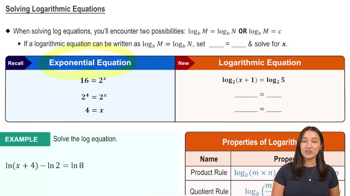
5:02
Solving Logarithmic Equations

Isolating Variables

Isolating the variable means manipulating the equation to get the variable alone on one side. This step is crucial before squaring both sides in radical equations to avoid complicating the expression and to simplify solving for the variable.
추천 영상:
가이드 코스
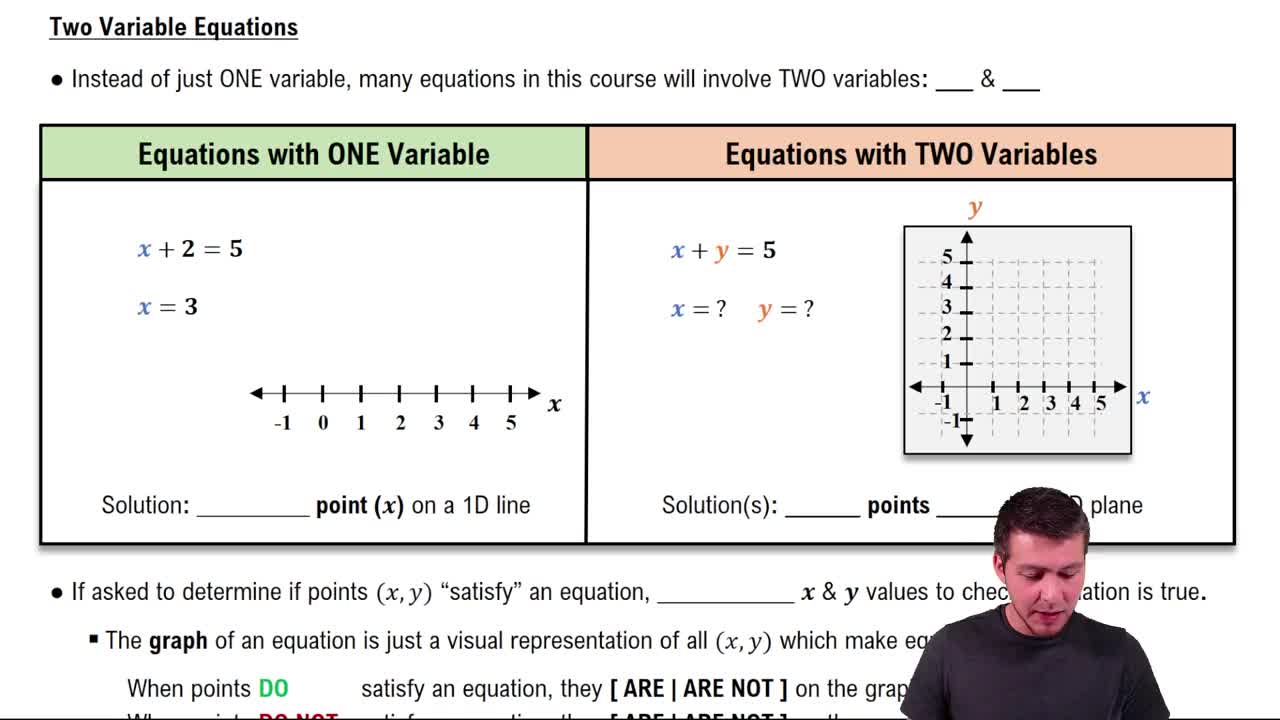
05:28
Equations with Two Variables

Checking for Extraneous Solutions

Squaring both sides of an equation can introduce solutions that do not satisfy the original equation. After finding potential solutions, substitute them back into the original equation to verify which are valid and discard any extraneous ones.
추천 영상:
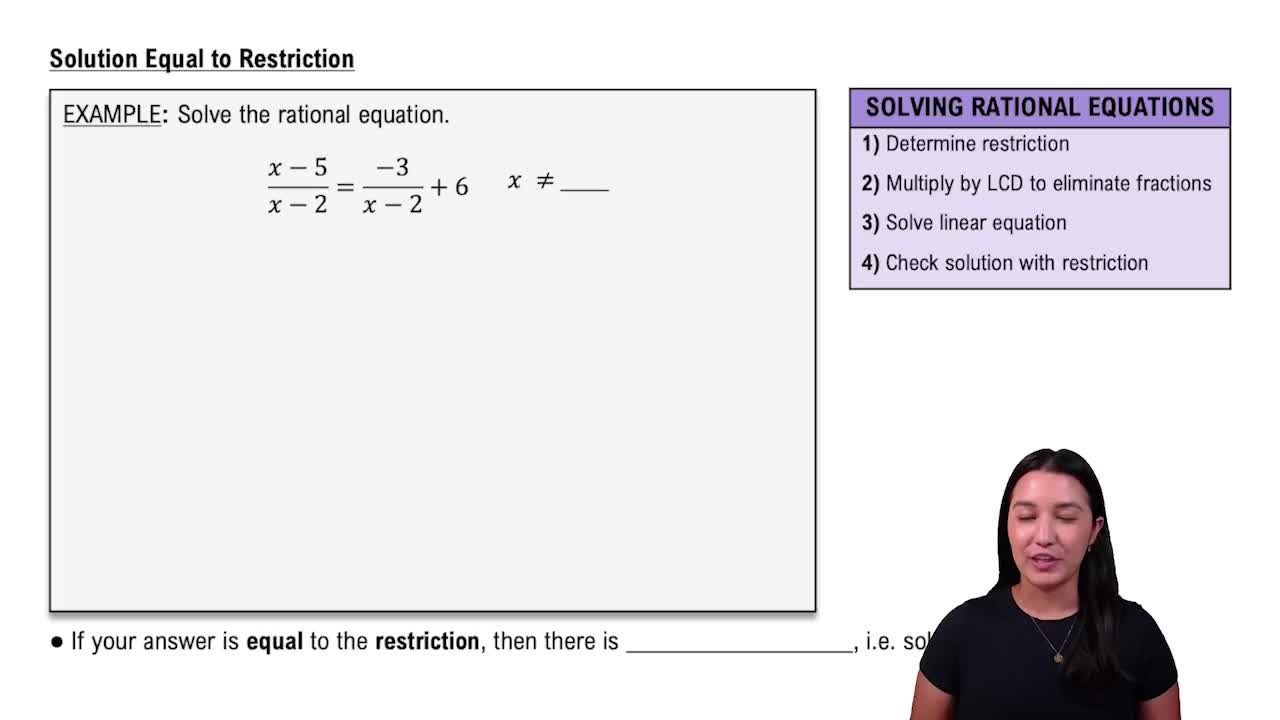
05:21
Restrictions on Rational Equations