Ch. 3 - Polynomial and Rational Functions
Lial - College Algebra 13th Edition
Lial13th EditionCollege AlgebraISBN: 9780136881063당신이 사용하는 게 아니라요?교과서 변경
4장, 문제 24

Use synthetic division to perform each division. x7+1 / x+1

검증된 단계별 안내
1
Identify the divisor and the dividend. Here, the divisor is \(x + 1\), and the dividend is \(x^7 + 1\).
Set up synthetic division by using the zero of the divisor. Since the divisor is \(x + 1\), the zero is \(-1\).
Write down the coefficients of the dividend polynomial \(x^7 + 1\). Since some powers of \(x\) are missing, include zeros for those terms: \$1, 0, 0, 0, 0, 0, 0, 1$.
Perform synthetic division: bring down the first coefficient, multiply it by \(-1\), add to the next coefficient, and repeat this process across all coefficients.
The numbers obtained at the end (except the last one) represent the coefficients of the quotient polynomial, and the last number is the remainder.

비슷한 문제에 대한 검증된 영상 답변:

이 영상 해법은 위 문제에 도움이 된다고 튜터들이 추천한 것입니다.
영상 길이:
6m
도움이 되었나요?

주요 개념

질문에 올바르게 답하기 위해 반드시 이해해야 하는 핵심 개념들은 다음과 같습니다.

Synthetic Division

Synthetic division is a shortcut method for dividing a polynomial by a linear binomial of the form x - c. It simplifies the long division process by using only the coefficients of the polynomial, making calculations faster and less error-prone.
추천 영상:
05:10
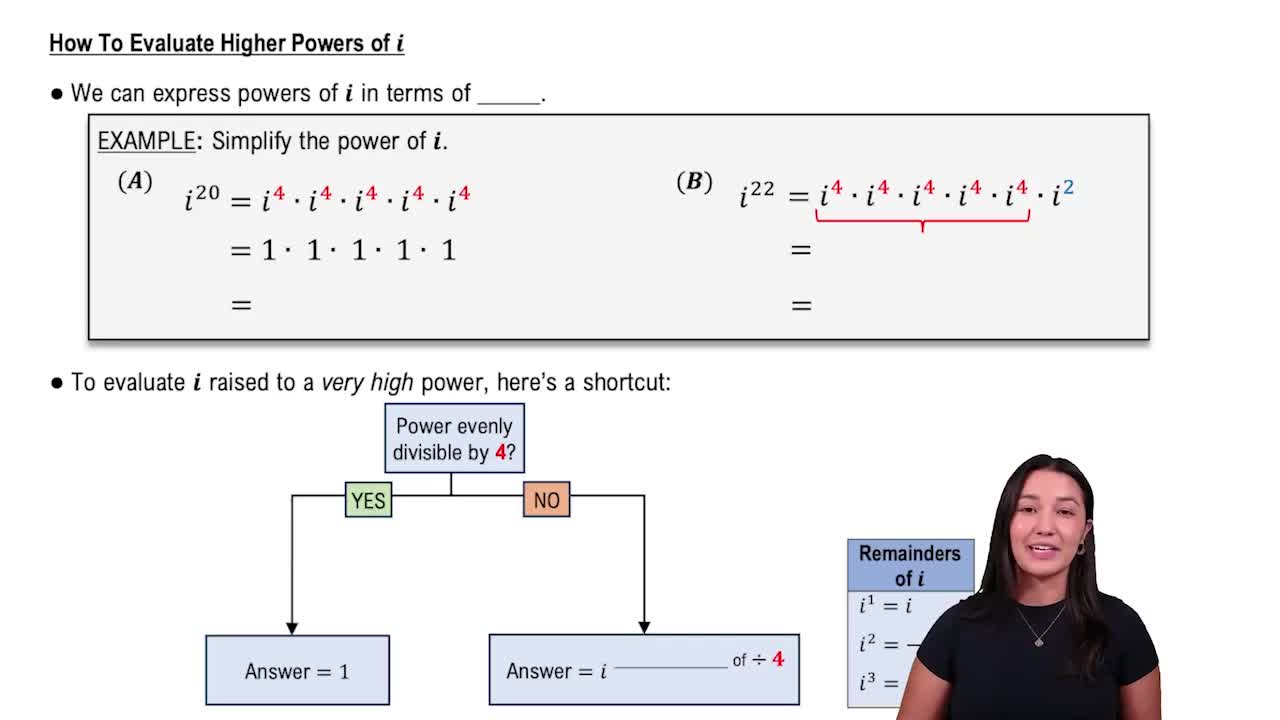
Higher Powers of i

Polynomial Coefficients and Setup

To use synthetic division, you must list all coefficients of the dividend polynomial in descending order of degree, including zeros for any missing terms. This ensures the division process accounts for every power of x correctly.
추천 영상:
가이드 코스
05:16
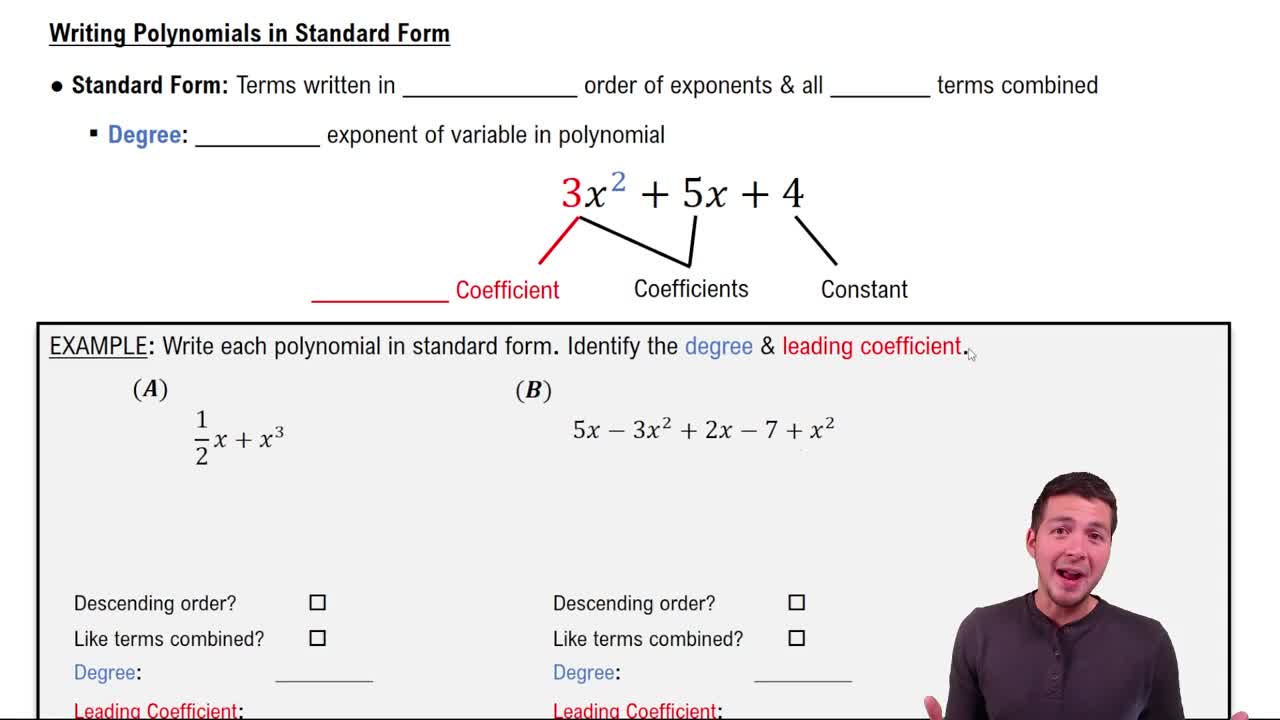
Standard Form of Polynomials

Interpreting the Result

The output of synthetic division includes the coefficients of the quotient polynomial and a remainder. Understanding how to write the quotient in polynomial form and interpret the remainder is essential for completing the division problem.
추천 영상:
2:57
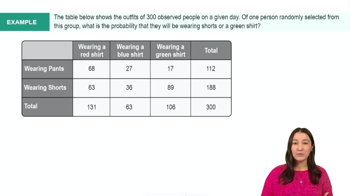
Probability of Non-Mutually Exclusive Events Example