Skip to main content
Financial Accounting
나의 코스
배우기
시험 준비
AI 튜터
학습 가이드
플래시카드
탐험해 보세요
앱을 사용해 보세요
나의 코스
배우기
시험 준비
AI 튜터
학습 가이드
플래시카드
탐험해 보세요
앱을 사용해 보세요
뒤로
Asset Impairments definitions
카드를 뒤집기 위해 탭할 수 있습니다.
Impairment
카드를 뒤집기 위해 탭할 수 있습니다.
👆
Impairment
A reduction in an asset's book value when expected future cash flows fall below its carrying amount on the balance sheet.
진행 상황 추적
컨트롤 버튼이 '내비게이션' 모드로 변경되었습니다.
1/15
관련 플래시카드
관련 실천
추천 영상
Asset Impairments quiz #1
Asset Impairments
10 용어
Asset Impairments
8. Long Lived Assets
9 문제점
주제
Exchange for Similar Assets
8. Long Lived Assets
10 문제점
주제
8. Long Lived Assets - Part 1 of 2
14 주제
15 문제점
장
8. Long Lived Assets - Part 2 of 2
1 주제
3 문제점
장
VideoThumbView.guidedCourse
10:02
Asset Impairment
853
views
16
rank
이 집합의 용어 (15)
하이드의 정의
Impairment
A reduction in an asset's book value when expected future cash flows fall below its carrying amount on the balance sheet.
Net Book Value
The value of an asset as shown on the balance sheet, calculated as original cost minus accumulated depreciation or amortization.
Future Cash Flows
Estimated monetary benefits expected to be received from an asset in future periods.
Fair Value
The price that would be received to sell an asset in an orderly transaction between market participants at the measurement date.
Impairment Loss
The amount by which the net book value of an asset exceeds its fair value, recognized as a loss on the income statement.
Rule of Conservatism
An accounting principle requiring losses to be recognized promptly, while gains are only recognized when realized.
Journal Entry
A formal accounting record documenting the debit and credit effects of a financial transaction.
Loss on Impairment
An income statement item reflecting the decrease in value of an asset due to impairment.
Asset Write-Down
The process of reducing the carrying amount of an asset to its fair value after impairment.
Balance Sheet
A financial statement presenting a company's assets, liabilities, and equity at a specific point in time.
Income Statement
A financial report showing a company's revenues, expenses, and profits or losses over a period.
Tangible Assets
Physical resources owned by a company, such as equipment or buildings, subject to impairment testing.
Intangible Assets
Non-physical resources like patents or trademarks, which must also be tested for impairment.
Fair Market Value
An asset's estimated worth in an open and competitive market, often used interchangeably with fair value.
Debit
An accounting entry that increases assets or expenses and decreases liabilities or equity.
 뒤로뒤로
뒤로뒤로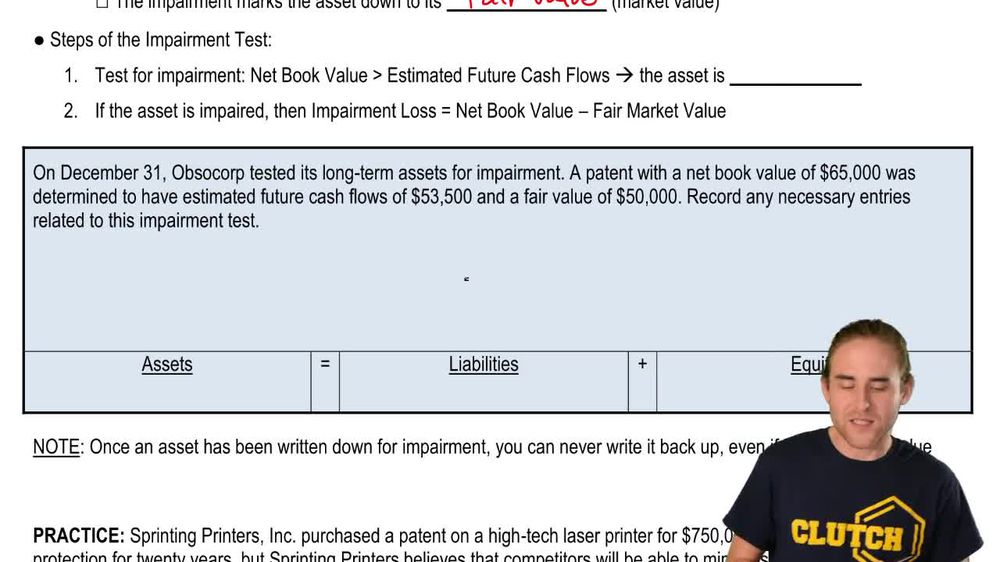
 10:02
10:02