Skip to main content
Financial Accounting
나의 코스
배우기
시험 준비
AI 튜터
학습 가이드
플래시카드
탐험해 보세요
앱을 사용해 보세요
나의 코스
배우기
시험 준비
AI 튜터
학습 가이드
플래시카드
탐험해 보세요
앱을 사용해 보세요
뒤로
Five Components of Internal Controls definitions
카드를 뒤집기 위해 탭할 수 있습니다.
Internal Controls
카드를 뒤집기 위해 탭할 수 있습니다.
👆
Internal Controls
Policies and procedures designed to safeguard assets, ensure reliable records, and promote compliance, primarily to prevent fraud.
진행 상황 추적
컨트롤 버튼이 '내비게이션' 모드로 변경되었습니다.
1/14
관련 플래시카드
관련 실천
추천 영상
Five Components of Internal Controls quiz #1
Five Components of Internal Controls
40 용어
Five Components of Internal Controls quiz #2
Five Components of Internal Controls
11 용어
Five Components of Internal Controls
6. Internal Controls and Reporting Cash
10 문제점
주제
Principles of Control Activities
6. Internal Controls and Reporting Cash
10 문제점
주제
6. Internal Controls and Reporting Cash
8 주제
15 문제점
장
VideoThumbView.guidedCourse
08:05
Five Components of Internal Controls
1912
views
62
rank
이 집합의 용어 (14)
하이드의 정의
Internal Controls
Policies and procedures designed to safeguard assets, ensure reliable records, and promote compliance, primarily to prevent fraud.
COSO Framework
A structured system dividing internal controls into five essential components for effective risk management and fraud prevention.
Control Environment
The ethical atmosphere set by management, including organizational structure and codes of conduct, influencing employee behavior.
Tone at the Top
The ethical example set by executives, shaping the honesty and integrity expectations throughout the organization.
Organizational Structure
The arrangement of roles, responsibilities, and authority within a company, impacting how controls are implemented.
Code of Conduct
A formal document outlining expected ethical behavior and standards for employees within an organization.
Risk Assessment
An ongoing process of identifying and evaluating internal and external threats that could exploit weaknesses in controls.
Control Activities
Specific procedures, such as physical safeguards and documentation practices, designed to address identified risks.
Physical Controls
Tangible measures like locks or safes used to protect assets from theft or unauthorized access.
Documentation Procedures
Processes such as using pre-numbered checks to ensure completeness and accuracy in financial records.
Separation of Duties
Dividing responsibilities among multiple people to reduce the risk of errors or fraud by any single individual.
Monitoring
Continuous evaluation to ensure internal controls are functioning as intended and remain effective over time.
Information and Communication
Systems ensuring timely and accurate capture, processing, and sharing of data necessary for effective operations.
CRIME Mnemonic
A memory aid representing the five components: Control Activities, Risk Assessment, Information and Communication, Monitoring, and Environment.
 뒤로뒤로
뒤로뒤로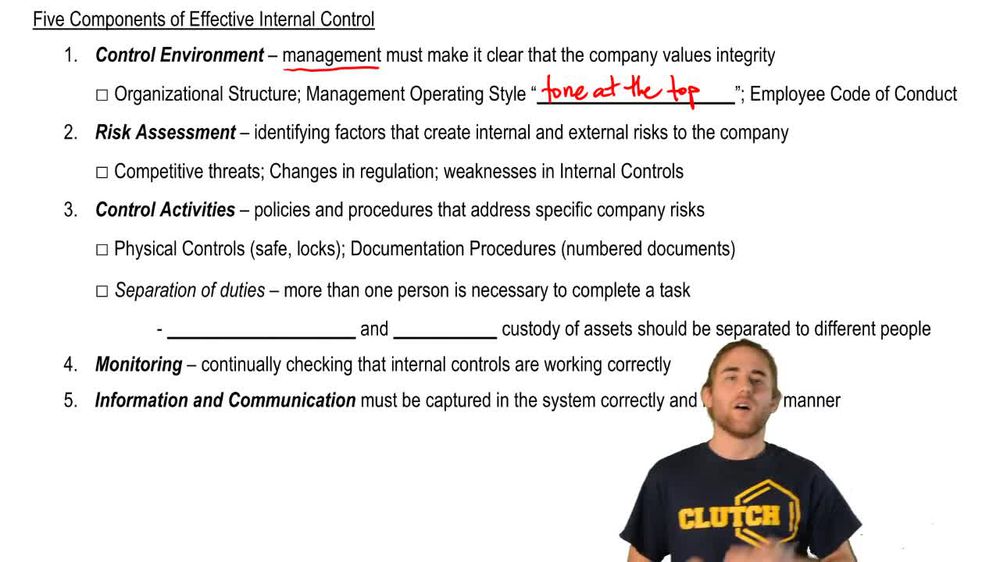
 08:05
08:05