Skip to main content
Financial Accounting
나의 코스
배우기
시험 준비
AI 튜터
학습 가이드
플래시카드
탐험해 보세요
앱을 사용해 보세요
나의 코스
배우기
시험 준비
AI 튜터
학습 가이드
플래시카드
탐험해 보세요
앱을 사용해 보세요
뒤로
Fundamental Accounting Equation definitions
2 학생들은 이 점이 도움이 되었다고 느꼈습니다
카드를 뒤집기 위해 탭할 수 있습니다.
Fundamental Accounting Equation
카드를 뒤집기 위해 탭할 수 있습니다.
👆
Fundamental Accounting Equation
Core formula stating that resources owned by a company are always balanced by claims from creditors and owners.
진행 상황 추적
컨트롤 버튼이 '내비게이션' 모드로 변경되었습니다.
1/15
관련 플래시카드
관련 실천
추천 영상
Fundamental Accounting Equation quiz #1
Fundamental Accounting Equation
24 용어
Fundamental Accounting Equation
1. Introduction to Accounting
10 문제점
주제
The Financial Statements
1. Introduction to Accounting
10 문제점
주제
1. Introduction to Accounting
7 주제
15 문제점
장
VideoThumbView.guidedCourse
02:47
Fundamental Accounting Equation
5650
views
232
rank
1
comments
VideoThumbView.guidedCourse
08:45
Fundamental Accounting Equation
10629
views
344
rank
1
comments
이 집합의 용어 (15)
하이드의 정의
Fundamental Accounting Equation
Core formula stating that resources owned by a company are always balanced by claims from creditors and owners.
Assets
Resources, tangible or intangible, owned by a business, providing future economic benefits.
Current Assets
Resources expected to be converted into cash or used up within one year, such as cash, inventory, or accounts receivable.
Long-term Assets
Resources intended for use over periods longer than one year, including land, buildings, and machinery.
Liabilities
Obligations representing amounts owed to outsiders, requiring future sacrifices of resources.
Current Liabilities
Obligations due within one year, such as accounts payable or short-term loans.
Long-term Liabilities
Obligations not due within the next year, including long-term loans and bonds.
Equity
Residual interest in company assets after deducting liabilities, representing ownership claims.
Paid-in Capital
Funds invested in a company by its owners at inception or through additional contributions.
Retained Earnings
Accumulated profits from previous years not distributed as dividends but reinvested in the business.
Revenue
Total inflows of resources from business operations, such as sales, before deducting expenses.
Expenses
Outflows or consumption of resources incurred to generate revenue during a specific period.
Dividends
Payments made to shareholders from retained earnings, not classified as an expense.
Income
Net result after subtracting expenses from revenue, also referred to as profit or net earnings.
Accounts Payable
Amounts owed to suppliers or creditors for goods and services received but not yet paid for.
 뒤로뒤로
뒤로뒤로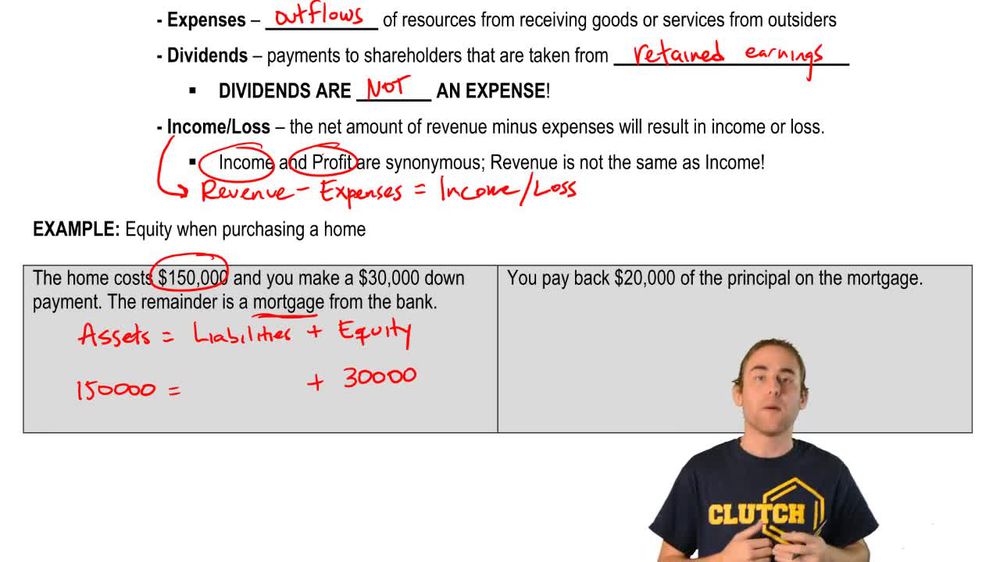
 02:47
02:47