Skip to main content
Financial Accounting
나의 코스
배우기
시험 준비
AI 튜터
학습 가이드
플래시카드
탐험해 보세요
앱을 사용해 보세요
나의 코스
배우기
시험 준비
AI 튜터
학습 가이드
플래시카드
탐험해 보세요
앱을 사용해 보세요
뒤로
GAAP vs. IFRS: Recording Differences definitions
카드를 뒤집기 위해 탭할 수 있습니다.
GAAP
카드를 뒤집기 위해 탭할 수 있습니다.
👆
GAAP
A set of accounting rules established by FASB, primarily used in the US, emphasizing consistency and historical cost.
진행 상황 추적
컨트롤 버튼이 '내비게이션' 모드로 변경되었습니다.
1/15
관련 플래시카드
관련 실천
추천 영상
GAAP vs. IFRS: Recording Differences quiz
GAAP vs. IFRS: Recording Differences
15 용어
GAAP vs. IFRS: Recording Differences
15. GAAP vs IFRS
10 문제점
주제
GAAP vs. IFRS: Adjusting Entries
15. GAAP vs IFRS
10 문제점
주제
15. GAAP vs IFRS
13 주제
13 문제점
장
VideoThumbView.guidedCourse
04:08
GAAP vs. IFRS: Recordkeeping
542
views
15
rank
이 집합의 용어 (15)
하이드의 정의
GAAP
A set of accounting rules established by FASB, primarily used in the US, emphasizing consistency and historical cost.
IFRS
A global set of accounting standards created by the International Accounting Standards Board, allowing more frequent asset revaluation.
Financial Accounting Standards Board
The US organization responsible for developing and maintaining generally accepted accounting principles.
International Accounting Standards Board
The international body that sets accounting standards used in many countries outside the US.
Journal Entry System
A method of recording business transactions using debits and credits to track financial activity.
Debits
Entries on the left side of an account, typically increasing assets or expenses and decreasing liabilities or equity.
Credits
Entries on the right side of an account, usually increasing liabilities or equity and decreasing assets or expenses.
Trial Balance
A list of all accounts and their balances at a specific time, used to verify that total debits equal total credits.
Historical Cost Principle
An accounting guideline requiring assets to be recorded at their original purchase price, regardless of market changes.
Fair Value Principle
A rule allowing assets to be reported at current market value, providing more up-to-date financial information.
Short-Term Investments
Assets expected to be converted to cash within a year, often valued at fair market value under both GAAP and IFRS.
Property, Plant, and Equipment
Long-term tangible assets such as land and buildings, subject to revaluation under IFRS but not typically under GAAP.
Unit of Measure Principle
A concept requiring all financial transactions to be recorded using a consistent currency throughout the accounting records.
Assets
Resources owned by a business, including cash, inventory, and property, listed on the balance sheet.
Liabilities
Obligations or debts owed by a business to outside parties, reported on the balance sheet.
 뒤로뒤로
뒤로뒤로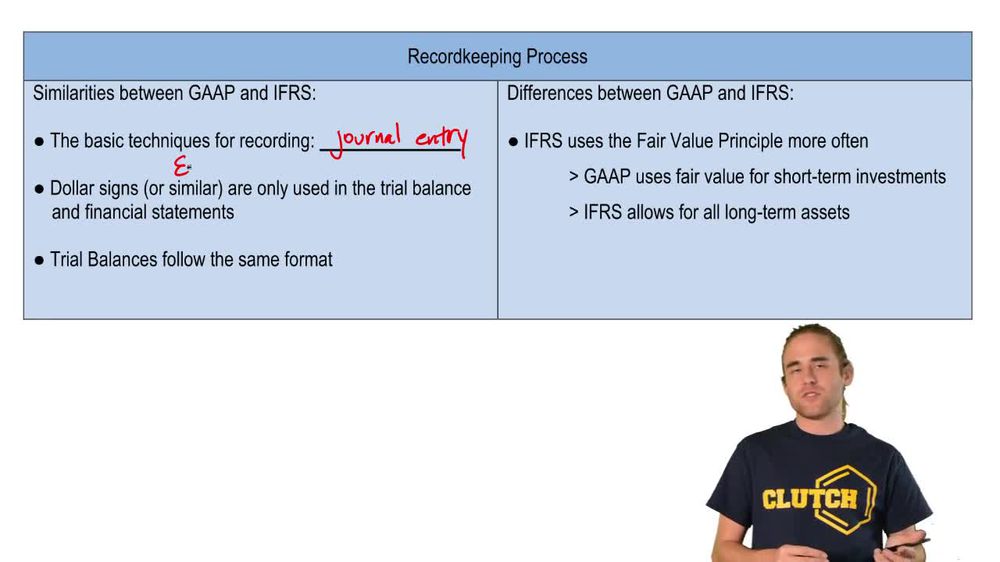
 04:08
04:08