Skip to main content
Financial Accounting
나의 코스
배우기
시험 준비
AI 튜터
학습 가이드
플래시카드
탐험해 보세요
앱을 사용해 보세요
나의 코스
배우기
시험 준비
AI 튜터
학습 가이드
플래시카드
탐험해 보세요
앱을 사용해 보세요
뒤로
Lower of Cost or Market definitions
카드를 뒤집기 위해 탭할 수 있습니다.
Rule of Conservatism
카드를 뒤집기 위해 탭할 수 있습니다.
👆
Rule of Conservatism
Accounting guideline prioritizing immediate recognition of losses over gains to ensure cautious financial reporting.
진행 상황 추적
컨트롤 버튼이 '내비게이션' 모드로 변경되었습니다.
1/15
관련 플래시카드
관련 실천
추천 영상
Lower of Cost or Market quiz #1
Lower of Cost or Market
10 용어
Lower of Cost or Market
5. Inventory
10 문제점
주제
Inventory Errors
5. Inventory
10 문제점
주제
5. Inventory - Part 1 of 2
7 주제
15 문제점
장
5. Inventory - Part 2 of 2
1 주제
3 문제점
장
VideoThumbView.guidedCourse
07:09
Lower of Cost or Market
1283
views
18
rank
이 집합의 용어 (15)
하이드의 정의
Rule of Conservatism
Accounting guideline prioritizing immediate recognition of losses over gains to ensure cautious financial reporting.
Historical Cost
Original amount paid for an asset, used as the basis for valuing inventory unless a decline in value occurs.
Lower of Cost or Market Rule
Inventory valuation method requiring reporting at the lesser of original cost or current market value.
Inventory Valuation
Process of determining the monetary value of goods held for sale, influenced by cost and market considerations.
Market Value
Current worth of inventory, determined by either net realizable value or replacement cost.
Net Realizable Value
Estimated selling price of inventory minus any costs necessary to complete and sell the item.
Replacement Cost
Amount required to acquire identical inventory in the current market.
Disposal Cost
Expenses incurred to sell inventory, such as commissions or other selling-related outlays.
Write-Down
Reduction in the book value of inventory to reflect a decrease in market value below historical cost.
Loss from Write-Down of Inventory
Expense recognized when inventory value is reduced to market, representing the difference between cost and lower market value.
Journal Entry
Formal accounting record documenting the debit and credit effects of a transaction, such as inventory write-downs.
Debit
Accounting entry increasing assets or expenses, or decreasing liabilities or equity, used here to record losses.
Credit
Accounting entry decreasing assets or expenses, or increasing liabilities or equity, used here to reduce inventory value.
Estimated Selling Price
Projected amount for which inventory can be sold before deducting any selling costs.
Financial Statements
Formal reports presenting a company's financial position, including inventory values adjusted under the lower of cost or market rule.
 뒤로뒤로
뒤로뒤로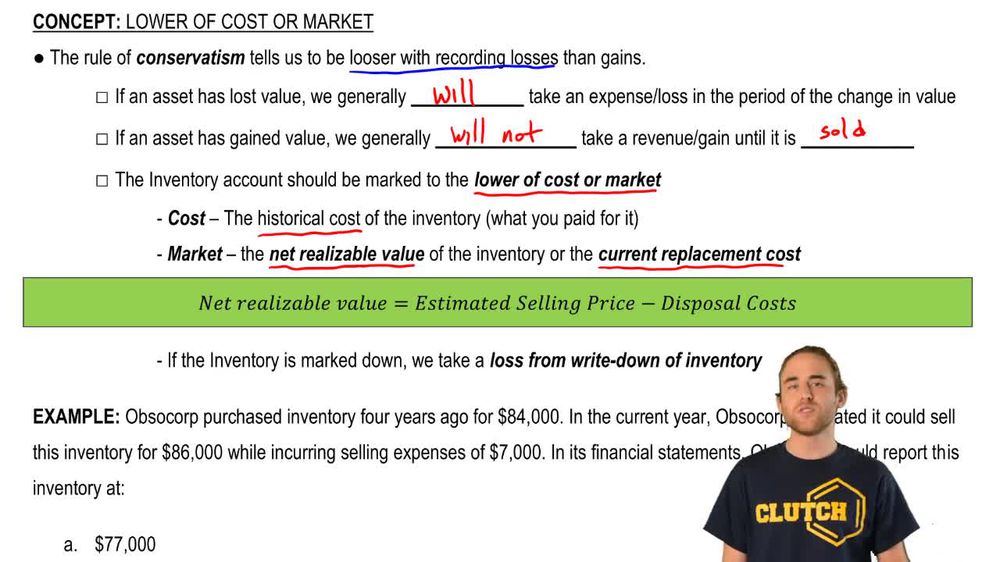
 07:09
07:09