Skip to main content
Financial Accounting
나의 코스
배우기
시험 준비
AI 튜터
학습 가이드
플래시카드
탐험해 보세요
앱을 사용해 보세요
나의 코스
배우기
시험 준비
AI 튜터
학습 가이드
플래시카드
탐험해 보세요
앱을 사용해 보세요
뒤로
Merchandising Company vs. Manufacturing Company definitions
카드를 뒤집기 위해 탭할 수 있습니다.
Merchandising Company
카드를 뒤집기 위해 탭할 수 있습니다.
👆
Merchandising Company
Business that purchases finished products for resale, maintaining a single inventory account for all goods held for sale.
진행 상황 추적
컨트롤 버튼이 '내비게이션' 모드로 변경되었습니다.
1/14
관련 플래시카드
관련 실천
추천 영상
Merchandising Company vs. Manufacturing Company quiz #1
Merchandising Company vs. Manufacturing Company
21 용어
Merchandising Company vs. Manufacturing Company
5. Inventory
8 문제점
주제
Physical Inventory Count, Ownership of Goods, and Consigned Goods
5. Inventory
10 문제점
주제
5. Inventory - Part 1 of 2
6 주제
13 문제점
장
5. Inventory - Part 2 of 2
1 주제
3 문제점
장
VideoThumbView.guidedCourse
02:03
Merchandising Companies
2404
views
40
rank
1
comments
VideoThumbView.guidedCourse
04:01
Manufacturing Companies
1692
views
57
rank
1
comments
이 집합의 용어 (14)
하이드의 정의
Merchandising Company
Business that purchases finished products for resale, maintaining a single inventory account for all goods held for sale.
Manufacturing Company
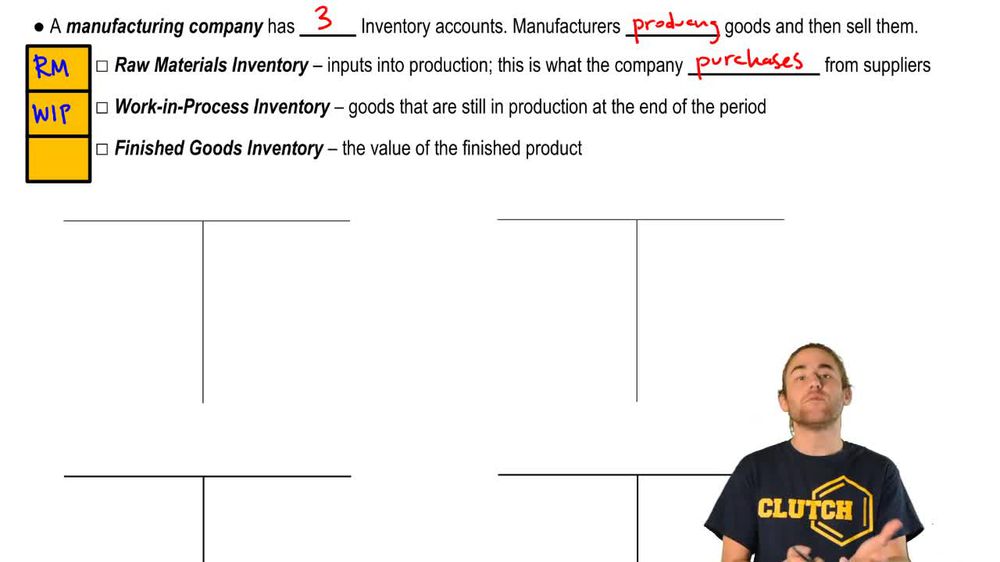
Business that produces goods from raw materials, maintaining separate inventory accounts for each production stage.
Inventory
Asset account representing goods held for sale or use in production, appearing on the balance sheet.
Merchandise Inventory
Single inventory account used by merchandisers to track all purchased goods intended for resale.
Raw Materials
Initial inputs acquired for production, such as ingredients or components, before any processing occurs.
Work in Process
Inventory account for goods currently being manufactured, including materials, labor, and overhead costs.
Finished Goods
Completed products ready for sale to customers, held in a separate inventory account by manufacturers.
Perpetual Inventory System
Method where inventory and related accounts are updated continuously with each purchase or sale transaction.
Accounts Payable
Liability account representing amounts owed to suppliers for goods or services purchased on credit.
Cost of Goods Sold
Expense on the income statement reflecting the cost of inventory sold during a period.
Balance Sheet
Financial statement displaying a company's assets, liabilities, and equity at a specific point in time.
Income Statement
Financial report summarizing revenues and expenses, including cost of goods sold, over a specific period.
Liabilities
Obligations or debts owed by a company to external parties, such as suppliers or lenders.
Overhead
Indirect production costs, such as utilities or supervision, included in the value of work in process inventory.
 뒤로뒤로
뒤로뒤로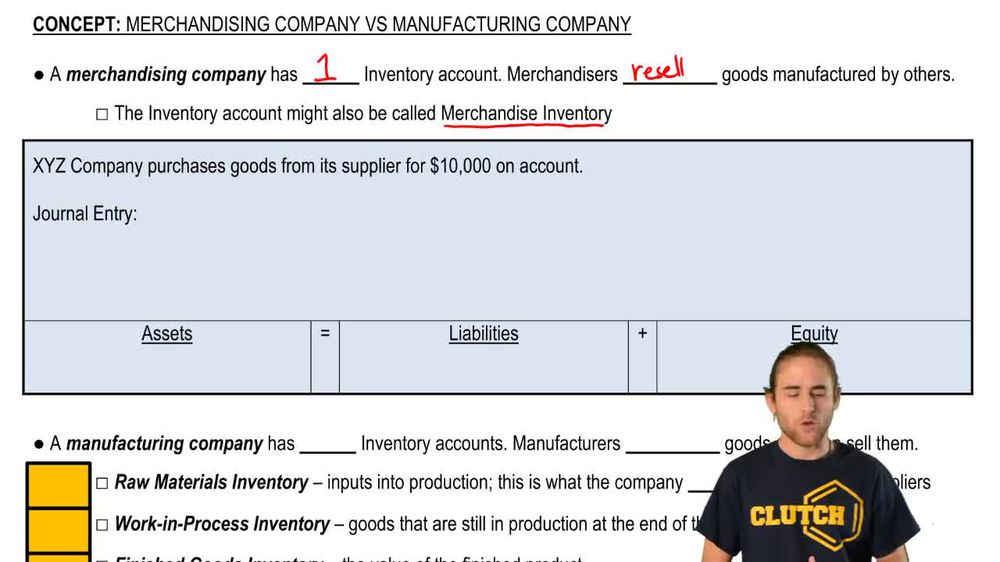
 02:03
02:03