Skip to main content
Financial Accounting
나의 코스
배우기
시험 준비
AI 튜터
학습 가이드
플래시카드
탐험해 보세요
앱을 사용해 보세요
나의 코스
배우기
시험 준비
AI 튜터
학습 가이드
플래시카드
탐험해 보세요
앱을 사용해 보세요
뒤로
Service Company vs. Merchandising Company definitions
카드를 뒤집기 위해 탭할 수 있습니다.
Service Company
카드를 뒤집기 위해 탭할 수 있습니다.
👆
Service Company
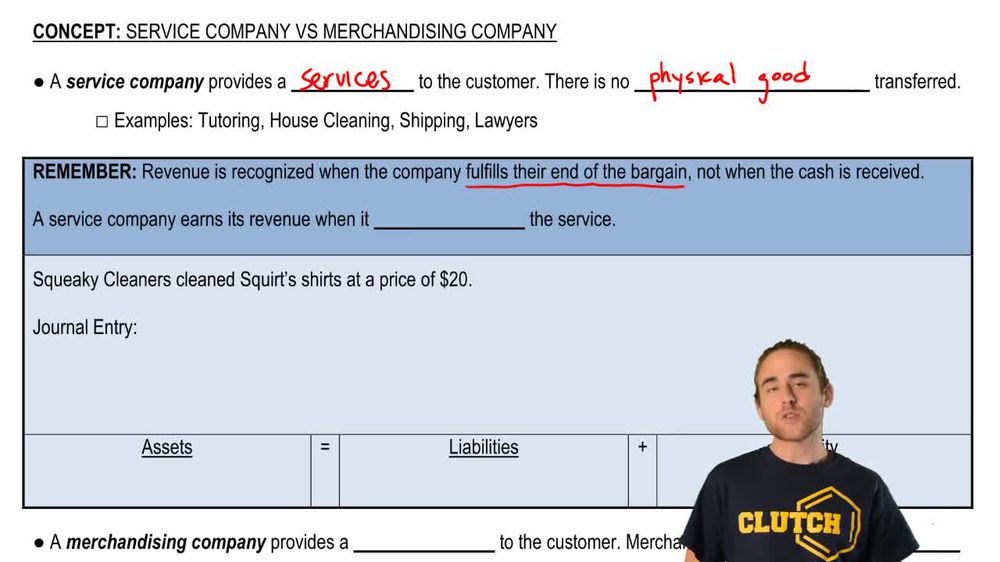
Business model focused on providing intangible services to customers, with revenue recognized upon completion of the service.
진행 상황 추적
컨트롤 버튼이 '내비게이션' 모드로 변경되었습니다.
1/15
관련 플래시카드
관련 실천
추천 영상
Service Company vs. Merchandising Company quiz #1
Service Company vs. Merchandising Company
28 용어
Service Company vs. Merchandising Company
4. Merchandising Operations
10 문제점
주제
Net Sales
4. Merchandising Operations
10 문제점
주제
4. Merchandising Operations
14 주제
14 문제점
장
VideoThumbView.guidedCourse
07:01
Merchandising Company
2331
views
124
rank
VideoThumbView.guidedCourse
03:43
Service Company
3297
views
80
rank
이 집합의 용어 (15)
하이드의 정의
Service Company
Business model focused on providing intangible services to customers, with revenue recognized upon completion of the service.
Merchandising Company
Business that resells tangible goods purchased from suppliers, earning revenue when goods are delivered to customers.
Intangible Service
Non-physical benefit provided to customers, such as tutoring or cleaning, with no transfer of physical goods.
Tangible Good
Physical item transferred from seller to buyer, forming the basis of sales in merchandising companies.
Revenue Recognition Principle
Accounting guideline requiring revenue to be recorded when a company fulfills its performance obligation, not when cash is received.
Journal Entry
Formal accounting record documenting the financial impact of business transactions, affecting accounts like revenue or inventory.
Accounts Receivable
Asset account representing amounts owed by customers for services or goods delivered on credit.
Service Revenue
Income earned from providing services, recorded when the service is completed, regardless of payment timing.
Sales Revenue
Income generated from selling goods, recognized when goods are delivered to the customer.
Cost of Goods Sold
Expense account reflecting the direct cost incurred by a merchandising company to acquire goods sold to customers.
Inventory
Current asset account representing goods held for resale by a merchandising company.
Matching Principle
Accounting concept requiring expenses to be recorded in the same period as the related revenues to accurately reflect profitability.
Asset
Resource owned by a company, such as cash, inventory, or accounts receivable, providing future economic benefit.
Equity
Owner's residual interest in the assets of a company after deducting liabilities, increased by revenues and decreased by expenses.
Expense
Outflow or using up of assets as part of operations, such as cost of goods sold in merchandising companies.
 뒤로뒤로
뒤로뒤로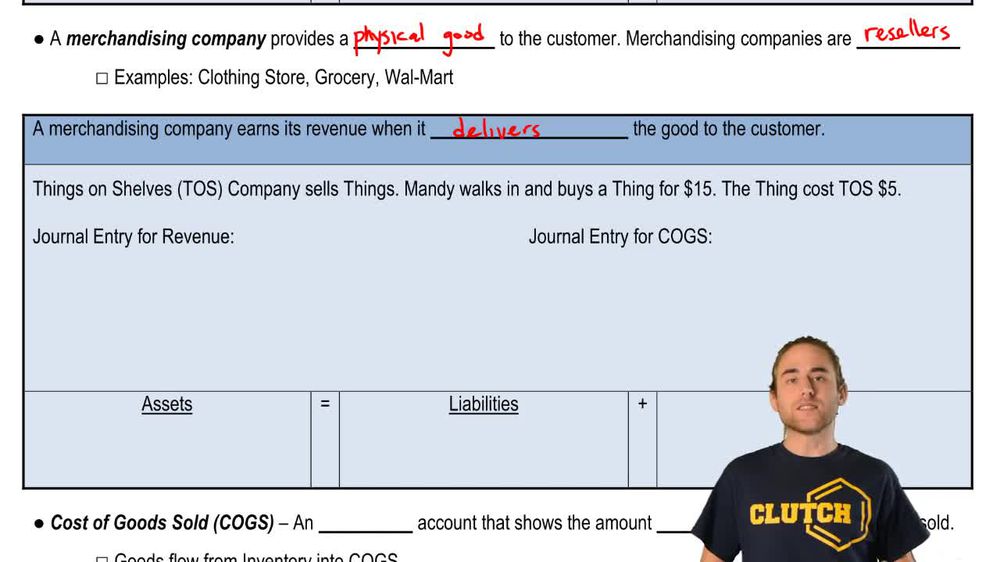
 07:01
07:01