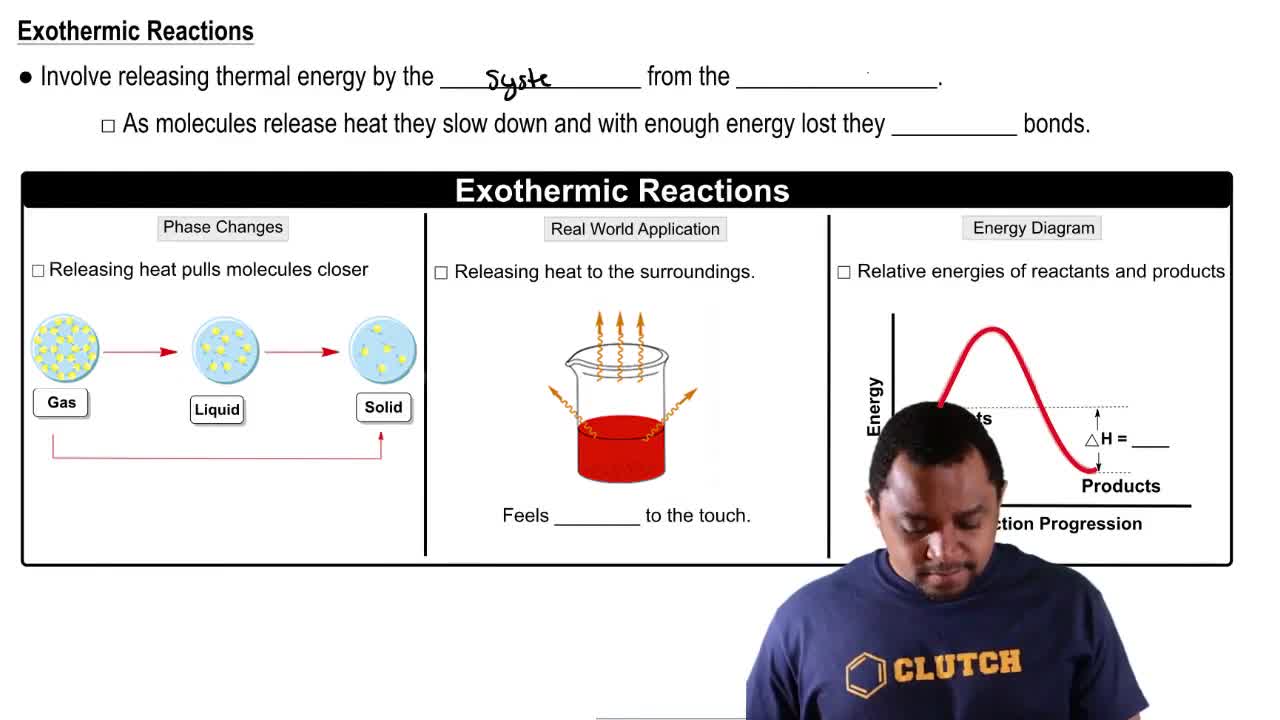
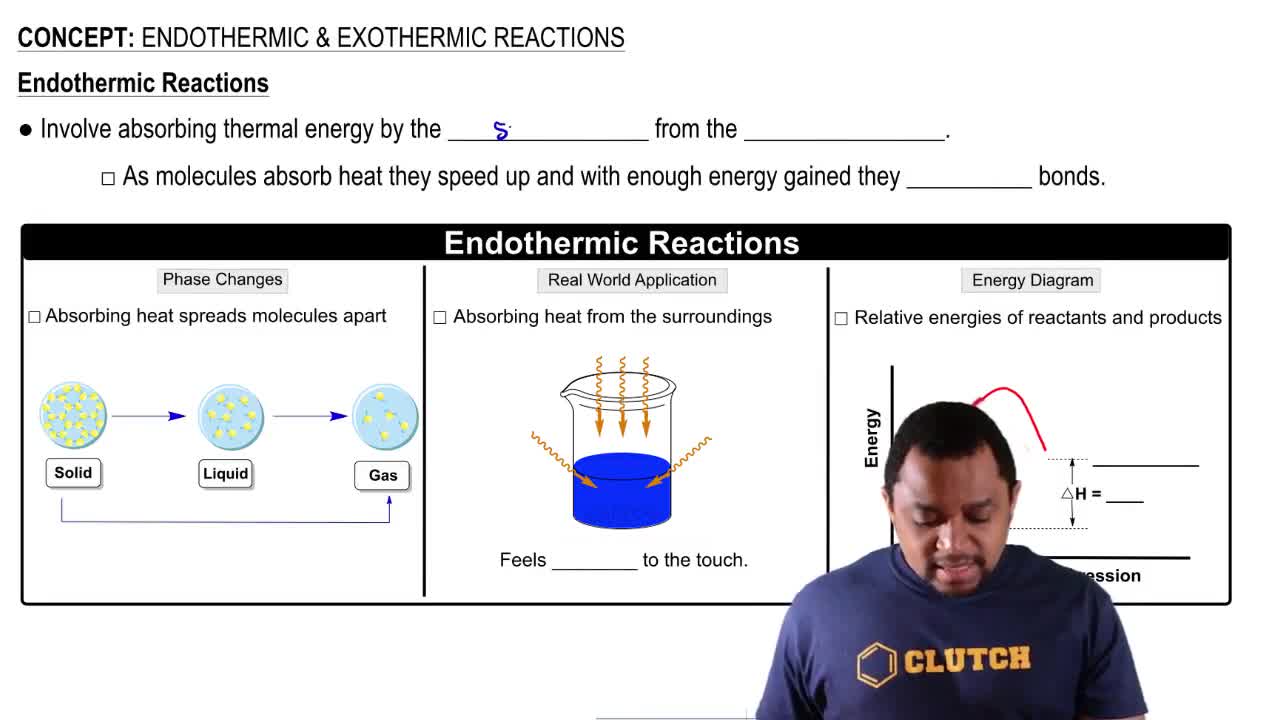
Exothermic reactions are those that release thermal energy, such as condensation, freezing, and deposition.
What is an accurate statement about exothermic reactions?
Exothermic reactions release thermal energy, causing molecules to slow down and form bonds, and they feel warm to the touch.
How is energy used in chemical reactions?
D) Both A and B
Which reaction is an example of an endergonic reaction?
A) Melting of ice
For an exothermic solution, what happens to the enthalpy change (ΔH)?
For an exothermic solution, the enthalpy change (ΔH) is negative, indicating that energy is released.
What is the basic difference between exergonic and endergonic reactions?
Exergonic reactions release energy, while endergonic reactions absorb energy.
What is an example of an endergonic reaction?
Photosynthesis
Which chemical reaction releases energy?
Combustion
What is an example of an endergonic process?
Melting of ice
In which scenario is chemical energy transformed into thermal energy?
Combustion of gasoline
Which reaction releases energy?
Combustion
What is true about exothermic reactions?
They release energy
What reaction releases a large amount of energy that the cell can use to do work? A) ATP hydrolysis, B) Photosynthesis, C) Melting of ice, D) Vaporization
A) ATP hydrolysis
Which chemical process requires an input of energy to occur?
A) Photosynthesis
Which process releases energy? A) Combustion, B) Photosynthesis, C) Melting, D) Vaporization
A) Combustion
Which chemical reaction releases energy?
A) Combustion
What type of reaction releases energy? A) Exothermic, B) Endothermic, C) Neutral, D) None of the above
 뒤로
뒤로
 1:48
1:48