Skip to main content
General Chemistry
나의 코스
배우기
시험 준비
AI 튜터
학습 가이드
교과서적 해결책
플래시카드
탐험해 보세요
앱을 사용해 보세요
나의 코스
배우기
시험 준비
AI 튜터
학습 가이드
교과서적 해결책
플래시카드
탐험해 보세요
앱을 사용해 보세요
뒤로
Energy Diagrams quiz
카드를 뒤집기 위해 탭할 수 있습니다.
What does an energy diagram visually represent in a chemical reaction?
카드를 뒤집기 위해 탭할 수 있습니다.
👆
What does an energy diagram visually represent in a chemical reaction?
It shows the energy changes of reactants, products, and the transition state as the reaction progresses.
진행 상황 추적
컨트롤 버튼이 '내비게이션' 모드로 변경되었습니다.
1/15
관련 플래시카드
관련 실천
추천 영상
Energy Diagrams definitions
Energy Diagrams
13 용어
Energy Diagrams quiz #1
Energy Diagrams
10 용어
Energy Diagrams
15. Chemical Kinetics
5 문제점
주제
Jules
Catalyst
15. Chemical Kinetics
4 문제점
주제
Jules
15. Chemical Kinetics - Part 1 of 3
5 주제
12 문제점
장
Jules
15. Chemical Kinetics - Part 2 of 3
4 주제
11 문제점
장
Jules
15. Chemical Kinetics - Part 3 of 3
4 주제
11 문제점
장
Jules
VideoThumbView.guidedCourse
01:57
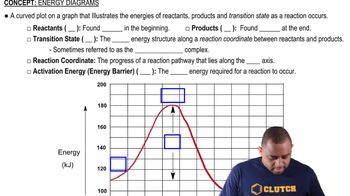
Energy Diagrams
6834
views
96
rank
1
comments
VideoThumbView.guidedCourse
00:40
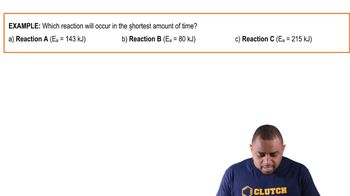
Speed of Reactions Example
5212
views
58
rank
VideoThumbView.guidedCourse
01:02
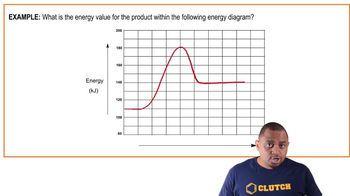
Energy Diagram Example
5917
views
74
rank
1
comments
이 집합의 용어 (15)
하이드의 정의
What does an energy diagram visually represent in a chemical reaction?
It shows the energy changes of reactants, products, and the transition state as the reaction progresses.
Where are reactants and products typically located on an energy diagram?
Reactants are on the left at the beginning, and products are on the right at the end of the diagram.
What is the transition state in an energy diagram?
It is the highest energy point along the reaction coordinate, representing the maximum energy structure between reactants and products.
What is another term for the transition state?
The transition state is also called the activated complex.
What does the x-axis of an energy diagram represent?
The x-axis shows the reaction coordinate, which is the progress of the reaction pathway.
How is activation energy (Ea) defined on an energy diagram?
Activation energy is the minimum energy required for the reaction to occur, measured from the reactant line up to the transition state.
How do you calculate activation energy from an energy diagram?
Subtract the energy of the reactants from the energy of the transition state (Ea = TS - Reactants).
What does a higher activation energy indicate about the reaction rate?
A higher activation energy means the reaction is slower because fewer molecules have enough energy to react.
What does a lower activation energy indicate about the reaction rate?
A lower activation energy means the reaction is faster because more molecules can overcome the energy barrier.
How is the overall energy change (ΔE) of a reaction calculated?
ΔE is calculated as the energy of the products minus the energy of the reactants (ΔE = Products - Reactants).
What does a negative ΔE (or ΔH) value indicate about a reaction?
A negative ΔE means the reaction is exothermic, releasing energy and forming more stable, lower-energy products.
What does a positive ΔE (or ΔH) value indicate about a reaction?
A positive ΔE means the reaction is endothermic, absorbing energy and forming less stable, higher-energy products.
How does the energy of products relate to their stability?
Lower energy products are more stable, while higher energy products are less stable.
Why is an exothermic process generally more favorable in terms of stability?
Because it results in products that are lower in energy and thus more stable than the reactants.
What does the term 'energy barrier' refer to in the context of energy diagrams?
It refers to the activation energy that must be overcome for reactants to be converted into products.
 뒤로
뒤로
 01:57
01:57