Skip to main content
General Chemistry
나의 코스
배우기
시험 준비
AI 튜터
학습 가이드
교과서적 해결책
플래시카드
탐험해 보세요
앱을 사용해 보세요
나의 코스
배우기
시험 준비
AI 튜터
학습 가이드
교과서적 해결책
플래시카드
탐험해 보세요
앱을 사용해 보세요
뒤로
Heat Capacity quiz
카드를 뒤집기 위해 탭할 수 있습니다.
What explains why water has a high specific heat?
카드를 뒤집기 위해 탭할 수 있습니다.
👆
What explains why water has a high specific heat?
Water's molecular structure, specifically hydrogen bonding, helps explain why water has a high specific heat.
진행 상황 추적
컨트롤 버튼이 '내비게이션' 모드로 변경되었습니다.
1/10
관련 플래시카드
관련 실천
추천 영상
Heat Capacity definitions
Heat Capacity
15 용어
Heat Capacity quiz #1
Heat Capacity
40 용어
Heat Capacity quiz #2
Heat Capacity
10 용어
Heat Capacity
8. Thermochemistry
7 문제점
주제
Jules
Constant-Pressure Calorimetry
8. Thermochemistry
4 문제점
주제
Jules
8. Thermochemistry - Part 1 of 3
5 주제
13 문제점
장
Jules
8. Thermochemistry - Part 2 of 3
5 주제
13 문제점
장
Jules
8. Thermochemistry - Part 3 of 3
5 주제
13 문제점
장
Jules
VideoThumbView.guidedCourse
00:44
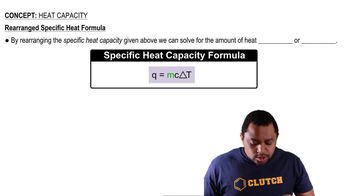
Heat Capacity
10253
views
63
rank
VideoThumbView.guidedCourse
02:08
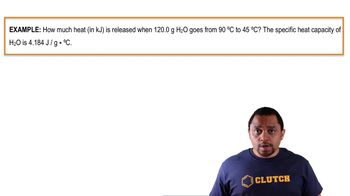
Heat Capacity Example 3
9603
views
72
rank
4
comments
VideoThumbView.guidedCourse
01:47
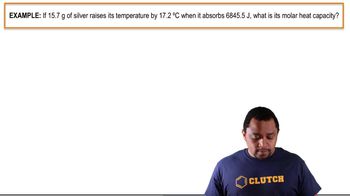
Heat Capacity Example 2
10039
views
81
rank
3
comments
이 집합의 용어 (10)
하이드의 정의
What explains why water has a high specific heat?
Water's molecular structure, specifically hydrogen bonding, helps explain why water has a high specific heat.
What is the amount of energy required to raise one gram of water by 1 degree Celsius?
The amount of energy required to raise one gram of water by 1 degree Celsius is 4.18 joules.
Which best explains why water has a high specific heat?
Water has a high specific heat due to the hydrogen bonds between water molecules, which require more energy to break.
What is the amount of energy required to raise one gram of water by 1∘C?
The amount of energy required to raise one gram of water by 1∘C is 4.18 joules.
What is the amount of heat required to raise the temperature of water referred to as?
The amount of heat required to raise the temperature of water is referred to as specific heat capacity.
What is the formula for calculating heat absorbed or released using specific heat capacity?
The formula is Q = mcΔT, where Q is heat, m is mass, c is specific heat capacity, and ΔT is the temperature change.
What does the symbol 'c' represent in the context of heat capacity?
In the context of heat capacity, 'c' represents specific heat capacity.
How does molar heat capacity differ from specific heat capacity?
Molar heat capacity refers to the heat required to change the temperature of one mole of a substance, while specific heat capacity refers to one gram.
What units are used for specific heat capacity?
Specific heat capacity is measured in joules per gram per degree Celsius (J/g°C) or joules per gram per Kelvin (J/gK).
What is the relationship between heat and temperature change?
Heat is directly proportional to temperature change; more heat results in a greater temperature increase.
 뒤로뒤로
뒤로뒤로
 00:44
00:44