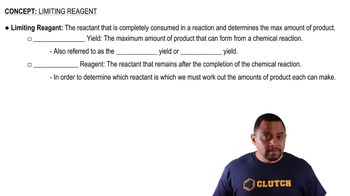
What is a limiting reagent in a chemical reaction?
A limiting reagent is the reactant that is completely consumed first and determines the maximum amount of product that can be formed.
How do you identify the limiting reagent in a chemical reaction?
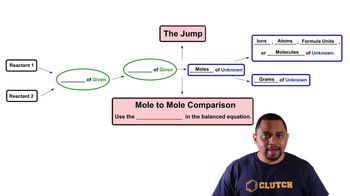
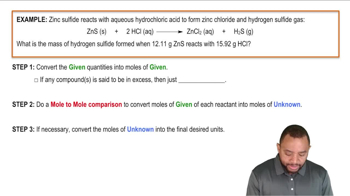
Perform stoichiometry for each reactant to calculate the amount of product each can produce; the reactant yielding the least amount of product is the limiting reagent.
What is the theoretical yield in a chemical reaction?
The theoretical yield is the maximum amount of product that can be formed from a chemical reaction, determined by the limiting reagent.
What happens to the excess reagent in a chemical reaction?
The excess reagent is the reactant that remains after the completion of the chemical reaction.
Why is understanding the limiting reagent important in chemical processes?
Understanding the limiting reagent is essential for predicting reaction outcomes and optimizing the use of materials.
Which nutrient is limiting for plant growth?
Nitrogen is a limiting nutrient for plant growth.
Which element is most likely to limit primary production in freshwater lakes?
Phosphorus is most likely to limit primary production in freshwater lakes.
Which limiting factor is directly affected by a drought?
Water availability would be directly affected by a drought.
Which factor is not an example of a density-dependent limiting factor?
Natural disaster is not an example of a density-dependent limiting factor.
What is the role of stoichiometry in determining the limiting reagent?
Stoichiometry is used to calculate the amount of product each reactant can produce, helping to identify the limiting reagent.
 뒤로
뒤로
 4:53
4:53