뒤로

Physical & Chemical Changes definitions

54 학생들은 이 점이 도움이 되었다고 느꼈습니다
컨트롤 버튼이 '내비게이션' 모드로 변경되었습니다.
1/15
  • Physical Change

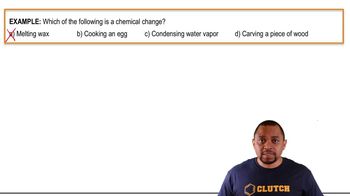
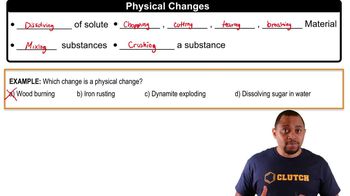
    An alteration in the physical state of a substance without changing its chemical composition.
  • Chemical Change

    A transformation that alters the chemical composition, forming new substances with different identities.
  • Solute

    A substance that is dissolved in a liquid to form a solution.
  • Rusting

    A chemical change where metal reacts with oxygen to form a metal oxide.
  • Metabolism

    A chemical process in living organisms that converts food into energy and new materials.
  • Phase Change

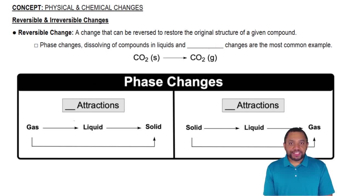
    A reversible transition between different states of matter, such as solid, liquid, and gas.
  • Condensation

    The process where gas transforms into a liquid, often observed as water vapor on surfaces.
  • Deposition

    A phase change where a gas turns directly into a solid without passing through the liquid state.
  • Fusion

    Another term for melting, where a solid becomes a liquid.
  • Vaporization

    The process of a liquid changing into a gas, also known as evaporation.
  • Sublimation

    A phase change where a solid turns directly into a gas without becoming a liquid.
  • Reversible Change

    A change that can be undone to restore the original substance, often involving phase changes.
  • Irreversible Change

    A permanent transformation that cannot be undone to restore the original material.
  • Chemical Reaction

    A process where substances undergo chemical changes to form new chemical bonds.
  • Color Change

    An indicator of a chemical change, where a substance changes color due to a reaction.