Ch.1 - Introduction: Matter, Energy, and Measurement
Brown - Chemistry: The Central Science 14th Edition
Brown14th EditionChemistry: The Central ScienceISBN: 9780134414232당신이 사용하는 게 아니라요?교과서 변경
1장, 문제 14d

Classify each of the following as a pure substance or a mixture. If a mixture, indicate whether it is homogeneous or heterogeneous: (d) mayonnaise.

검증된 단계별 안내
1
Understand the definitions: A pure substance has a uniform and definite composition, while a mixture contains two or more substances physically combined. A homogeneous mixture has a uniform composition throughout, whereas a heterogeneous mixture has a non-uniform composition.
Identify the components of mayonnaise: Mayonnaise is made from ingredients like oil, egg yolk, vinegar or lemon juice, and seasonings.
Determine if mayonnaise is a pure substance or a mixture: Since mayonnaise is made from multiple ingredients, it is a mixture.
Assess the uniformity of mayonnaise: Mayonnaise appears uniform and consistent throughout, without visible separation of its components.
Classify mayonnaise: Based on its uniform appearance, mayonnaise is a homogeneous mixture.

비슷한 문제에 대한 검증된 영상 답변:

이 영상 해법은 위 문제에 도움이 된다고 튜터들이 추천한 것입니다.
영상 길이:
4m

주요 개념

질문에 올바르게 답하기 위해 반드시 이해해야 하는 핵심 개념들은 다음과 같습니다.

Pure Substances

A pure substance consists of a single type of particle and has a uniform composition throughout. Examples include elements like oxygen and compounds like water. Pure substances have distinct physical and chemical properties that do not change regardless of the sample size.
추천 영상:
가이드 코스
02:58
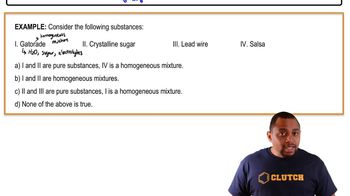
Classification of Matter Example

Mixtures

A mixture is a combination of two or more substances where each retains its individual properties. Mixtures can be classified as homogeneous, where the components are evenly distributed (like saltwater), or heterogeneous, where the components are not uniformly distributed (like salad).
추천 영상:
가이드 코스
01:03
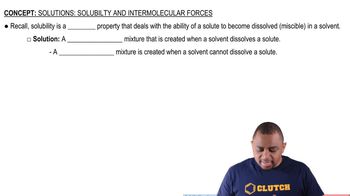
Solubility and Mixtures

Homogeneous vs. Heterogeneous Mixtures

Homogeneous mixtures have a consistent composition throughout, making it difficult to distinguish the individual components, while heterogeneous mixtures contain visibly different substances or phases. Mayonnaise, for example, is considered a heterogeneous mixture because it contains oil, egg yolk, and vinegar, which do not blend uniformly.
추천 영상:
가이드 코스
01:03
Solubility and Mixtures