Ch.1 - Introduction: Matter, Energy, and Measurement
Brown - Chemistry: The Central Science 14th Edition
Brown14th EditionChemistry: The Central ScienceISBN: 9780134414232당신이 사용하는 게 아니라요?교과서 변경
1장, 문제 87

The total rate at which power is used by humans worldwide is approximately 15 TW (terawatts). The solar flux averaged over the sunlit half of Earth is 680 W>m2 (assuming no clouds). The area of Earth's disc as seen from the Sun is 1.28 * 1014 m2. The surface area of Earth is approximately 197,000,000 square miles. How much of Earth's surface would we need to cover with solar energy collectors to power the planet for use by all humans? Assume that the solar energy collectors can convert only 10% of the available sunlight into useful power

검증된 단계별 안내
1
Calculate the total solar power received by Earth by multiplying the solar flux (680 W/m^2) by the area of Earth's disc (1.28 * 10^{14} m^2).
Determine the useful power output from the solar energy collectors by multiplying the total solar power received by the conversion efficiency (10%).
Compare the useful power output from the solar collectors to the total power used by humans worldwide (15 TW) to find the fraction of Earth's disc area needed.
Convert the fraction of Earth's disc area needed into the actual area by multiplying it by the total surface area of Earth (197,000,000 square miles).
Convert the area from square miles to a more convenient unit if necessary, such as square kilometers or square meters, for better understanding.

비슷한 문제에 대한 검증된 영상 답변:

이 영상 해법은 위 문제에 도움이 된다고 튜터들이 추천한 것입니다.
영상 길이:
3m

주요 개념

질문에 올바르게 답하기 위해 반드시 이해해야 하는 핵심 개념들은 다음과 같습니다.

Solar Flux

Solar flux refers to the amount of solar energy received per unit area, typically measured in watts per square meter (W/m²). In this context, the average solar flux over the sunlit half of Earth is 680 W/m², indicating how much solar power is available for conversion into usable energy. Understanding solar flux is crucial for calculating the potential energy that can be harnessed from sunlight.
추천 영상:
가이드 코스
02:46
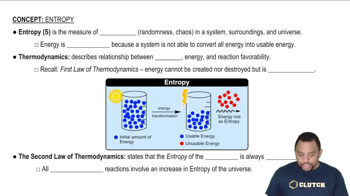
Entropy in Thermodynamics

Energy Conversion Efficiency

Energy conversion efficiency is the ratio of useful energy output to the total energy input, expressed as a percentage. In this scenario, the solar energy collectors are assumed to convert only 10% of the available sunlight into usable power. This concept is essential for determining how much solar energy must be collected to meet the total energy demand of humanity, as it directly impacts the required surface area of solar collectors.
추천 영상:
가이드 코스
01:56
Conversion Factors

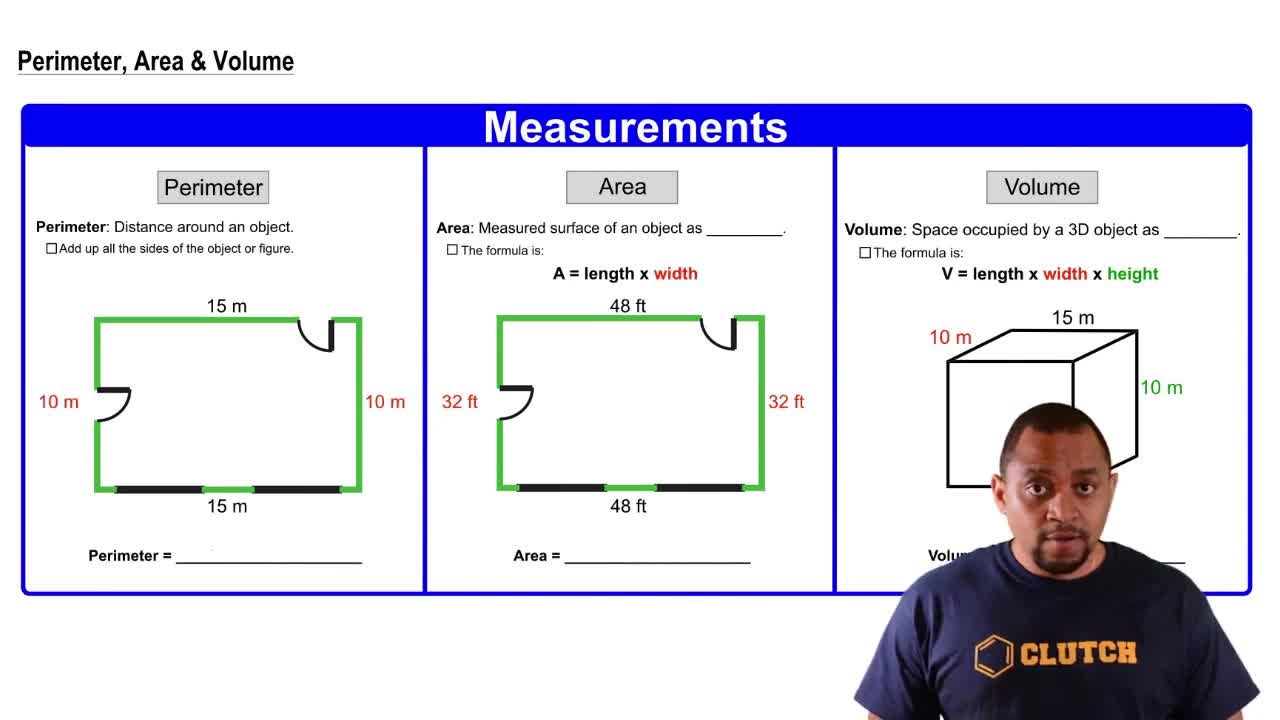
Surface Area Calculations

Surface area calculations involve determining the total area available for solar energy collection. The area of Earth's disc as seen from the Sun is given as 1.28 x 10^14 m², which is critical for understanding how much solar energy can be captured. Additionally, knowing the total surface area of Earth helps in assessing the proportion of land that would need to be covered by solar collectors to meet global energy needs.
추천 영상:
가이드 코스
03:47
Perimeter, Area, Volume