
Ch.1 - Introduction: Matter, Energy, and Measurement
Brown - Chemistry: The Central Science 14th Edition
Brown14th EditionChemistry: The Central ScienceISBN: 9780134414232당신이 사용하는 게 아니라요?교과서 변경
1장, 문제 27a

Two positively charged particles are first brought close together and then released. Once released, the repulsion between particles causes them to move away from each other. (a) This is an example of potential energy being converted into what form of energy?

검증된 단계별 안내
1
Identify the type of potential energy involved: Since the particles are charged and initially brought close together, they possess electrostatic potential energy due to their charges.
Understand the conversion of energy: When the particles are released, the electrostatic potential energy is converted into another form of energy as they move apart.
Recognize the force involved: The repulsive electrostatic force between the similarly charged particles causes them to move away from each other.
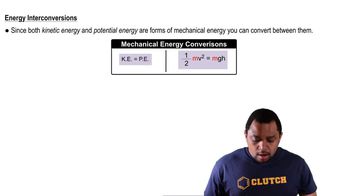
Determine the form of energy resulting from movement: As the particles move away from each other, their potential energy decreases and is converted into kinetic energy, which is the energy of motion.
Conclude the type of energy conversion: The scenario described is an example of electrostatic potential energy being converted into kinetic energy.

비슷한 문제에 대한 검증된 영상 답변:

이 영상 해법은 위 문제에 도움이 된다고 튜터들이 추천한 것입니다.
영상 길이:
1m

주요 개념

질문에 올바르게 답하기 위해 반드시 이해해야 하는 핵심 개념들은 다음과 같습니다.

Potential Energy

Potential energy is the stored energy in a system due to its position or configuration. In the context of charged particles, potential energy arises from the electrostatic forces between them. When two like-charged particles are brought close together, they possess high potential energy due to their repulsion, which can be converted into kinetic energy when they are released.
추천 영상:
가이드 코스
00:34
Kinetic & Potential Energy

Kinetic Energy

Kinetic energy is the energy of an object in motion. It is directly related to the mass of the object and the square of its velocity, expressed mathematically as KE = 1/2 mv². In the scenario of the charged particles, once they are released, the potential energy they had is transformed into kinetic energy as they accelerate away from each other due to the repulsive force.
추천 영상:
가이드 코스
00:34
Kinetic & Potential Energy

Conservation of Energy

The conservation of energy principle states that energy cannot be created or destroyed, only transformed from one form to another. In this case, the potential energy associated with the electrostatic repulsion between the charged particles is converted into kinetic energy as they move apart. This principle is fundamental in understanding energy transformations in physical systems.
추천 영상:
가이드 코스
01:48
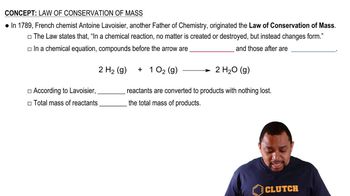
Law of Conservation of Mass