Ch.1 - Introduction: Matter, Energy, and Measurement
Brown - Chemistry: The Central Science 14th Edition
Brown14th EditionChemistry: The Central ScienceISBN: 9780134414232당신이 사용하는 게 아니라요?교과서 변경
1장, 문제 54c

Using your knowledge of metric units, English units, and the information on the back inside cover, write down the conversion factors needed to convert (c) mi to km

검증된 단계별 안내
1
Identify the conversion factor between miles and kilometers. The standard conversion is 1 mile = 1.60934 kilometers.
Set up the conversion equation using the identified conversion factor. If you have a distance in miles (mi), you can convert it to kilometers (km) by multiplying by the conversion factor.
Write the equation: \( \text{distance in km} = \text{distance in mi} \times 1.60934 \).
Ensure that the units cancel appropriately, leaving you with the desired unit of kilometers.
Apply this conversion factor to any given distance in miles to find the equivalent distance in kilometers.

비슷한 문제에 대한 검증된 영상 답변:

이 영상 해법은 위 문제에 도움이 된다고 튜터들이 추천한 것입니다.
영상 길이:
1m

주요 개념

질문에 올바르게 답하기 위해 반드시 이해해야 하는 핵심 개념들은 다음과 같습니다.

Metric and English Units

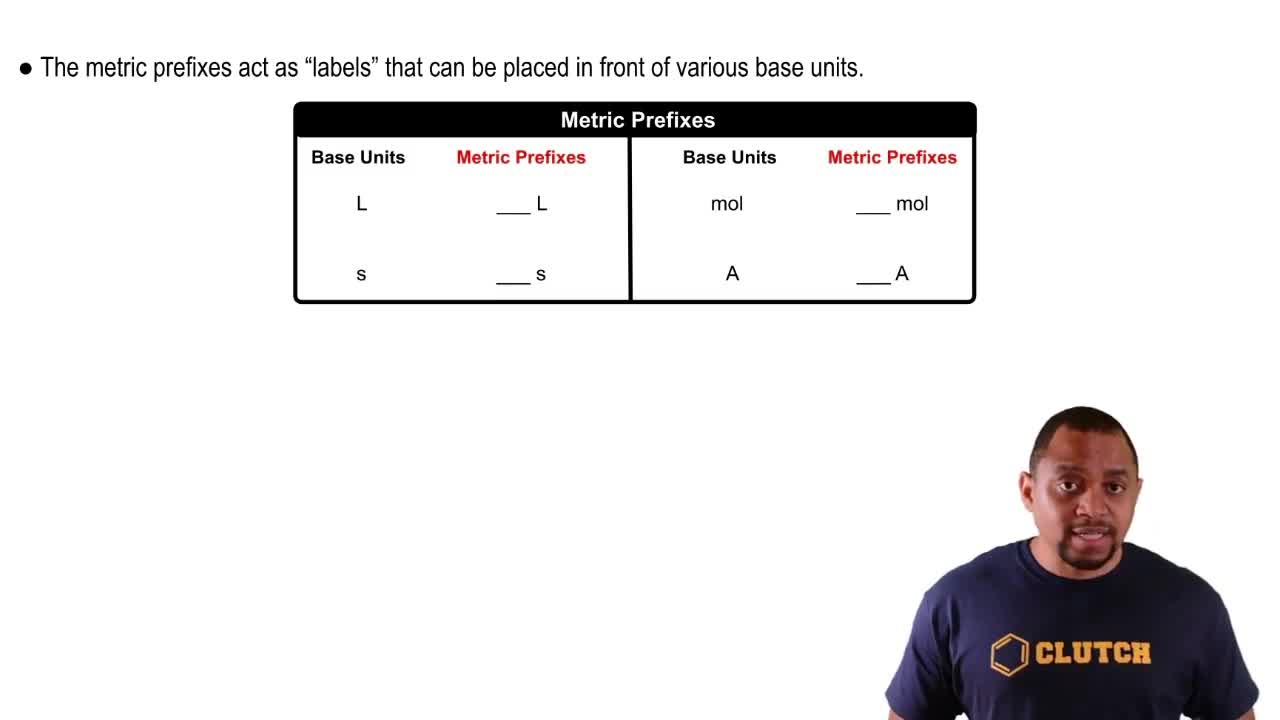
Metric units, such as kilometers (km), are part of the International System of Units (SI) and are based on powers of ten, making conversions straightforward. English units, like miles (mi), are part of the imperial system and do not follow a consistent base, requiring specific conversion factors to translate between systems.
추천 영상:
가이드 코스
01:16
Metric Prefixes Usage

Conversion Factors

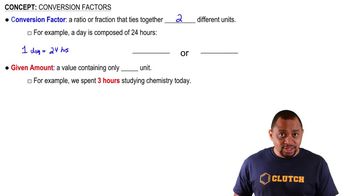
A conversion factor is a numerical ratio used to express a quantity in one unit as an equivalent quantity in another unit. For example, to convert miles to kilometers, the conversion factor is approximately 1.60934 km per 1 mi, allowing for the accurate transformation of measurements between the two systems.
추천 영상:
가이드 코스
01:56
Conversion Factors

Dimensional Analysis

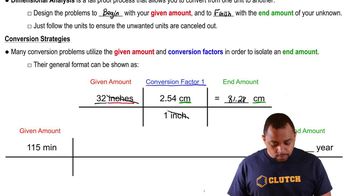
Dimensional analysis is a mathematical technique used to convert units by multiplying by conversion factors that cancel out the original units. This method ensures that the final result is expressed in the desired units, facilitating accurate calculations and understanding of the relationships between different measurement systems.
추천 영상:
가이드 코스
06:11
Dimensional Analysis