
Ch.11 - Liquids and Intermolecular Forces
Brown - Chemistry: The Central Science 14th Edition
Brown14th EditionChemistry: The Central ScienceISBN: 9780134414232당신이 사용하는 게 아니라요?교과서 변경
11장, 문제 47

Indicate whether each statement is true or false: (a) The critical pressure of a substance is the pressure at which it turns into a solid at room temperature. (b) The critical temperature of a substance is the highest temperature at which the liquid phase can form. (c) Generally speaking, the higher the critical temperature of a substance, the lower its critical pressure. (d) In general, the more intermolecular forces there are in a substance, the higher its critical temperature and pressure.

검증된 단계별 안내
1
Step 1: Understand the definition of critical pressure. Critical pressure is the pressure required to liquefy a gas at its critical temperature, not the pressure at which a substance turns into a solid.
Step 2: Understand the definition of critical temperature. Critical temperature is the highest temperature at which a substance can exist as a liquid, above which it cannot be liquefied regardless of pressure.
Step 3: Analyze the relationship between critical temperature and critical pressure. Generally, substances with higher critical temperatures tend to have higher critical pressures due to stronger intermolecular forces.
Step 4: Consider the effect of intermolecular forces on critical temperature and pressure. Substances with stronger intermolecular forces typically have higher critical temperatures and pressures because more energy is required to overcome these forces.
Step 5: Evaluate each statement based on the definitions and relationships discussed. Compare each statement to the correct definitions and principles to determine if they are true or false.

주요 개념

질문에 올바르게 답하기 위해 반드시 이해해야 하는 핵심 개념들은 다음과 같습니다.

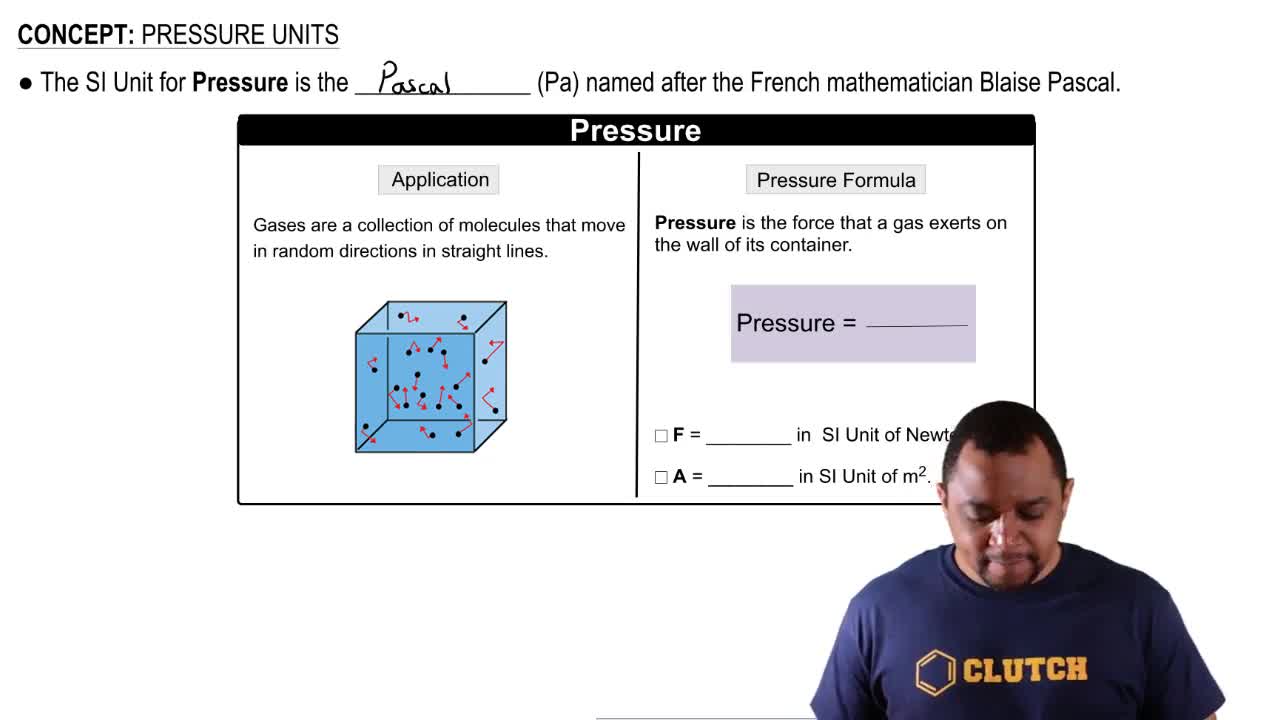
Critical Pressure

Critical pressure is the pressure required to liquefy a substance at its critical temperature. It is not related to the formation of solids at room temperature, which is a misconception. Instead, it defines the conditions under which a substance can exist as a liquid and gas in equilibrium.
추천 영상:

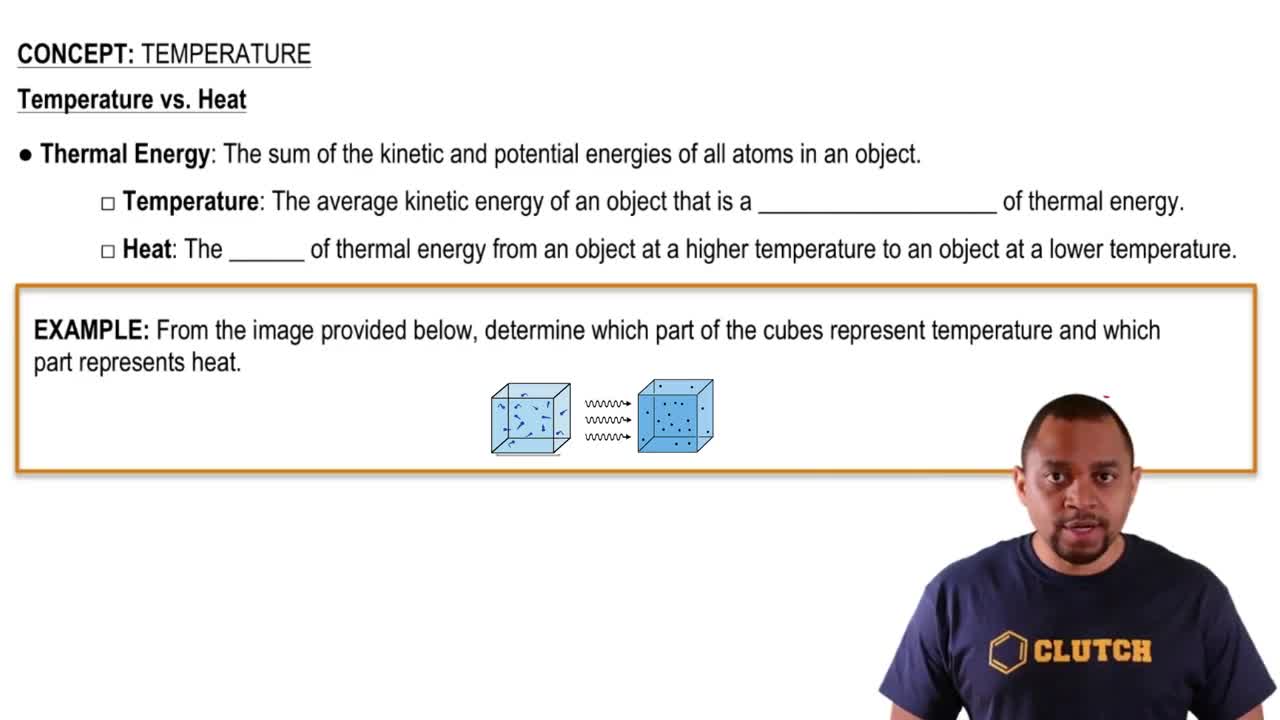
Critical Temperature

Critical temperature is the maximum temperature at which a substance can exist as a liquid, regardless of the pressure applied. Above this temperature, the substance cannot be liquefied, no matter how much pressure is applied. This concept is crucial for understanding phase transitions and the behavior of substances under varying conditions.
추천 영상:
가이드 코스
03:48
Temperature vs Heat

Intermolecular Forces

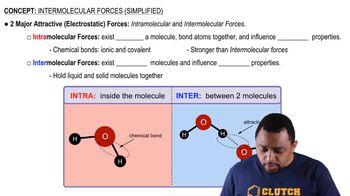
Intermolecular forces are the attractive forces between molecules that influence the physical properties of substances, including boiling and melting points. Generally, stronger intermolecular forces lead to higher critical temperatures and pressures, as more energy is required to overcome these forces during phase changes.
추천 영상:
가이드 코스
01:59
Intermolecular vs Intramolecular Forces