
Ch.13 - Properties of Solutions
Brown - Chemistry: The Central Science 14th Edition
Brown14th EditionChemistry: The Central ScienceISBN: 9780134414232당신이 사용하는 게 아니라요?교과서 변경
13장, 문제 2b

This figure shows the interaction of a cation with surrounding water molecules. (b) Which of the following explanations accounts for the fact that the ion–solvent interaction is greater for Li+ than for K+? a. Li+ is of lower mass than K+. b. The ionization energy of Li is higher than that for K. c. Li+ has a smaller ionic radius than K+. d. Li has a lower density than K. e. Li reacts with water more slowly than K. [Section 13.1]

검증된 단계별 안내
1
Identify the key concept: ion–solvent interaction, which is influenced by the size and charge of the ion.
Consider the ionic radius: Smaller ions can get closer to the solvent molecules, leading to stronger interactions.
Compare the ionic radii of Li+ and K+: Li+ has a smaller ionic radius than K+.
Evaluate the options: The option that mentions the ionic radius is likely the correct explanation.
Select the correct explanation: Li+ has a smaller ionic radius than K+, leading to stronger ion–solvent interactions.

비슷한 문제에 대한 검증된 영상 답변:

이 영상 해법은 위 문제에 도움이 된다고 튜터들이 추천한 것입니다.
영상 길이:
1m
도움이 되었나요?

주요 개념

질문에 올바르게 답하기 위해 반드시 이해해야 하는 핵심 개념들은 다음과 같습니다.

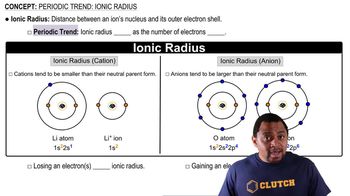
Ionic Radius

The ionic radius refers to the size of an ion in a crystal lattice. Smaller ions, like Li<sup>+</sup>, have a greater charge density, which allows them to interact more strongly with surrounding solvent molecules, such as water. This increased interaction leads to a higher solvation energy, making the ion-solvent interaction stronger compared to larger ions like K<sup>+</sup>.
추천 영상:

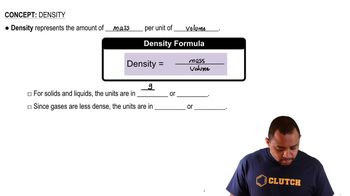
Charge Density

Charge density is defined as the amount of charge per unit volume. Cations with higher charge density, such as Li<sup>+</sup>, exert a stronger electrostatic attraction on polar solvent molecules like water. This results in more significant ion-dipole interactions, enhancing the solvation process compared to cations with lower charge density, like K<sup>+</sup>.
추천 영상:
가이드 코스
01:56
Density Concepts

Ion-Solvent Interactions

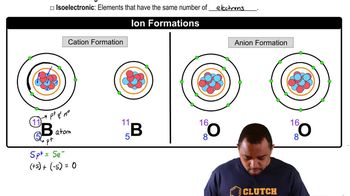
Ion-solvent interactions are the forces that occur between ions and solvent molecules. These interactions are crucial in determining the solubility and stability of ions in solution. The strength of these interactions is influenced by factors such as ionic size, charge, and the polar nature of the solvent, which in this case is water.
추천 영상: