


Ch.14 - Chemical Kinetics
Brown - Chemistry: The Central Science 14th Edition
Brown14th EditionChemistry: The Central ScienceISBN: 9780134414232당신이 사용하는 게 아니라요?교과서 변경
14장, 문제 82

(b) Automobile catalytic converters have to work at high temperatures, as hot exhaust gases stream through them. In what ways could this be an advantage? In what ways a disadvantage? (c) Why is the rate of flow of exhaust gases over a catalytic converter important?

검증된 단계별 안내
1
Step 1: Understand the function of a catalytic converter. Catalytic converters are devices used in automobiles to reduce harmful emissions by converting pollutants in exhaust gases into less harmful substances through chemical reactions.
Step 2: Consider the advantages of high temperatures in catalytic converters. High temperatures can increase the rate of chemical reactions, making the catalytic converter more efficient at converting pollutants into less harmful substances.
Step 3: Consider the disadvantages of high temperatures in catalytic converters. High temperatures can lead to thermal degradation of the catalyst materials, reducing the lifespan of the catalytic converter and potentially leading to the release of pollutants if the converter fails.
Step 4: Analyze the importance of the rate of flow of exhaust gases. The rate of flow affects the contact time between the exhaust gases and the catalyst. Optimal flow rates ensure sufficient contact time for effective conversion of pollutants.
Step 5: Discuss the balance needed in the flow rate. If the flow rate is too high, there may not be enough time for the reactions to occur, reducing efficiency. If too low, it could lead to back pressure and reduced engine performance.

주요 개념

질문에 올바르게 답하기 위해 반드시 이해해야 하는 핵심 개념들은 다음과 같습니다.

Catalytic Converters

Catalytic converters are devices in automobiles that facilitate chemical reactions to convert harmful exhaust gases into less harmful emissions. They typically contain catalysts, such as platinum, palladium, and rhodium, which accelerate reactions without being consumed. Understanding their function is crucial for evaluating their advantages and disadvantages in terms of efficiency and environmental impact.
추천 영상:
가이드 코스
00:34
Kinetic & Potential Energy

Temperature Effects on Reaction Rates

Temperature significantly influences the rate of chemical reactions, as higher temperatures generally increase the kinetic energy of molecules, leading to more frequent and effective collisions. In the context of catalytic converters, high temperatures can enhance the efficiency of the catalytic reactions, but they may also lead to catalyst degradation over time, presenting a trade-off between performance and longevity.
추천 영상:
가이드 코스
02:03
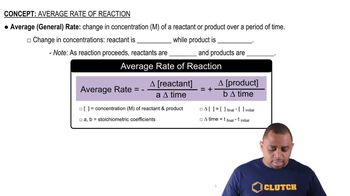
Average Rate of Reaction

Flow Rate of Exhaust Gases

The flow rate of exhaust gases over a catalytic converter is critical because it affects the contact time between the gases and the catalyst. A higher flow rate can lead to insufficient time for reactions to occur, reducing the converter's effectiveness. Conversely, too low a flow rate may cause overheating and inefficient conversion, highlighting the need for optimal flow conditions to maximize catalytic performance.
추천 영상:
가이드 코스
01:30
Instantaneous Rate