Consider the reaction 4 NH3(๐) + 5 O2(๐) โ 4 NO(๐) + 6 H2O(๐), ฮ๐ป = โ904.4 kJ Does each of the following increase, decrease, or leave unchanged the yield of NO at equilibrium? (e) add a catalyst
Ch.15 - Chemical Equilibrium
Brown14th EditionChemistry: The Central ScienceISBN: 9780134414232๋น์ ์ด ์ฌ์ฉํ๋ ๊ฒ ์๋๋ผ์?๊ต๊ณผ์ ๋ณ๊ฒฝ
15์ฅ, ๋ฌธ์ 62f
Consider the reaction 4 NH3(๐) + 5 O2(๐) โ 4 NO(๐) + 6 H2O(๐), ฮ๐ป = โ904.4 kJ Does each of the following increase, decrease, or leave unchanged the yield of NO at equilibrium? (f) increase temperature.
๊ฒ์ฆ๋ ๋จ๊ณ๋ณ ์๋ด1
Identify the type of reaction: The given reaction is exothermic, as indicated by the negative \( \Delta H = -904.4 \) kJ.
Apply Le Chatelier's Principle: In an exothermic reaction, increasing the temperature will shift the equilibrium position to favor the endothermic direction, which is the reverse reaction in this case.
Determine the effect on NO yield: Since the equilibrium shifts towards the reactants (reverse reaction), the yield of NO will decrease.
Consider the overall impact: Increasing temperature in an exothermic reaction generally decreases the yield of products formed in the forward reaction.
Conclude: Therefore, increasing the temperature will decrease the yield of NO at equilibrium.

๋น์ทํ ๋ฌธ์ ์ ๋ํ ๊ฒ์ฆ๋ ์์ ๋ต๋ณ:
์ด ์์ ํด๋ฒ์ ์ ๋ฌธ์ ์ ๋์์ด ๋๋ค๊ณ ํํฐ๋ค์ด ์ถ์ฒํ ๊ฒ์
๋๋ค.
์์ ๊ธธ์ด:
3m์ฃผ์ ๊ฐ๋
์ง๋ฌธ์ ์ฌ๋ฐ๋ฅด๊ฒ ๋ตํ๊ธฐ ์ํด ๋ฐ๋์ ์ดํดํด์ผ ํ๋ ํต์ฌ ๊ฐ๋
๋ค์ ๋ค์๊ณผ ๊ฐ์ต๋๋ค.
Le Chatelier's Principle
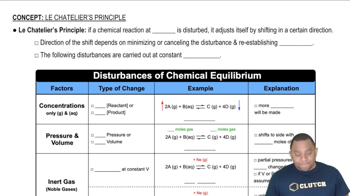
Le Chatelier's Principle states that if a dynamic equilibrium is disturbed by changing the conditions, the position of equilibrium shifts to counteract the change. In the context of temperature changes, if the reaction is exothermic (releases heat), increasing the temperature will shift the equilibrium to favor the reactants, thereby decreasing the yield of products.
์ถ์ฒ ์์:
๊ฐ์ด๋ ์ฝ์ค
Le Chatelier's Principle
Exothermic Reactions
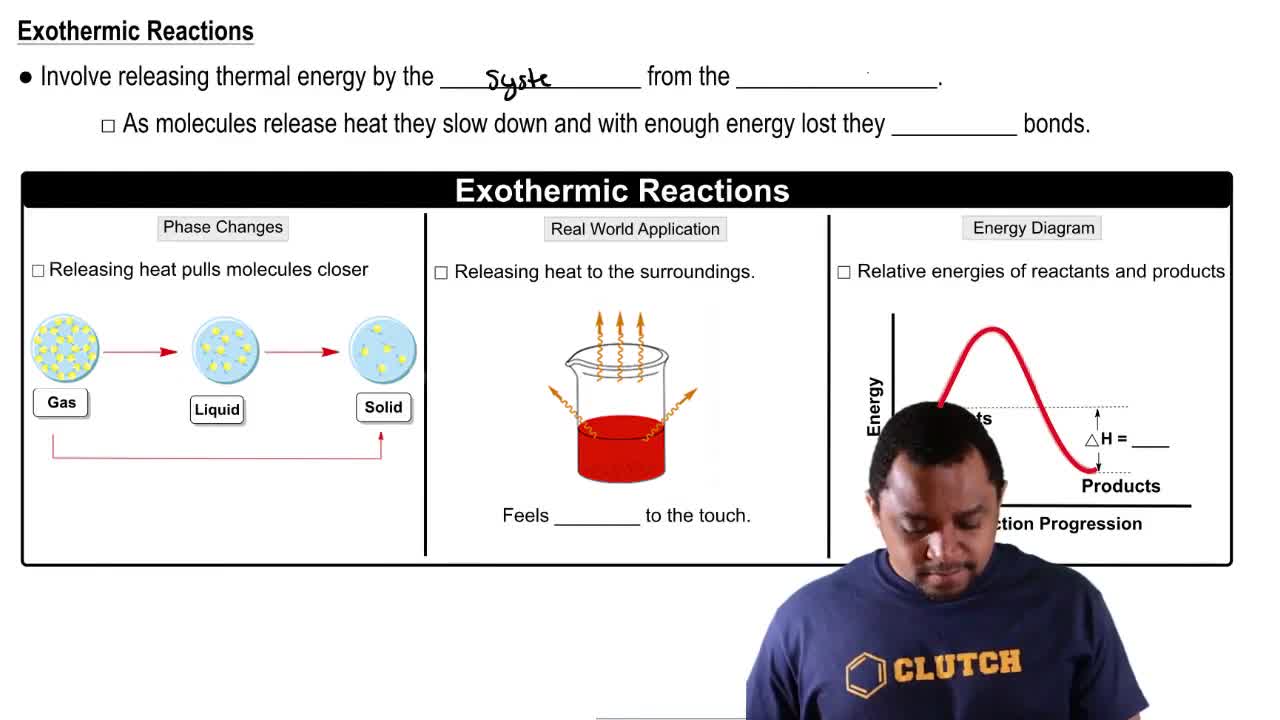
An exothermic reaction is one that releases energy in the form of heat. In the given reaction, the negative ฮH value indicates that it is exothermic. When the temperature is increased, the system will respond by favoring the endothermic direction (the reverse reaction) to absorb the added heat, which reduces the production of NO.
์ถ์ฒ ์์:
๊ฐ์ด๋ ์ฝ์ค
Endothermic & Exothermic Reactions
Equilibrium Constant (K)
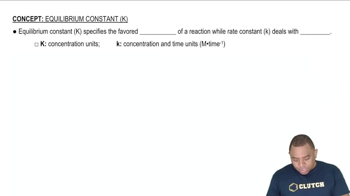
The equilibrium constant (K) quantifies the ratio of the concentrations of products to reactants at equilibrium for a given reaction at a specific temperature. Changes in temperature can alter the value of K, affecting the position of equilibrium. For exothermic reactions, increasing temperature decreases K, leading to a lower concentration of products like NO at equilibrium.
์ถ์ฒ ์์:
๊ฐ์ด๋ ์ฝ์ค
Equilibrium Constant K
๊ด๋ จ ์ค์ฒ
๊ต๊ณผ์ ์ง๋ฌธ
304
views
๊ต๊ณผ์ ์ง๋ฌธ
Consider the following equilibrium between oxides of nitrogen 3 NO(g) โ NO2(g) + N2O(g) (a) Use data in Appendix C to calculate ฮHยฐ for this reaction.
470
views
๊ต๊ณผ์ ์ง๋ฌธ
Consider the reaction 4 NH3(๐) + 5 O2(๐) โ 4 NO(๐) + 6 H2O(๐), ฮ๐ป = โ904.4 kJ Does each of the following increase, decrease, or leave unchanged the yield of NO at equilibrium? (d) decrease the volume of the container in which the reaction occurs
487
views
๊ต๊ณผ์ ์ง๋ฌธ
Consider the reaction 4 NH3(๐) + 5 O2(๐) โ 4 NO(๐) + 6 H2O(๐), ฮ๐ป = โ904.4 kJ Does each of the following increase, decrease, or leave unchanged the yield of NO at equilibrium? (a) increase [NH3] (b) increase [H2O] (c) decrease [O2]
296
views