
Ch.20 - Electrochemistry
Brown - Chemistry: The Central Science 14th Edition
Brown14th EditionChemistry: The Central ScienceISBN: 9780134414232당신이 사용하는 게 아니라요?교과서 변경
20장, 문제 27

Indicate whether each statement is true or false: (a) The cathode is the electrode at which oxidation takes place. (b) A galvanic cell is another name for a voltaic cell. (c) Electrons flow spontaneously from anode to cathode in a voltaic cell.

검증된 단계별 안내
1
Step 1: Understand the role of the cathode and anode in electrochemical cells. The cathode is where reduction occurs, and the anode is where oxidation occurs. Therefore, statement (a) is false.
Step 2: Recognize that a galvanic cell and a voltaic cell are two terms for the same type of electrochemical cell, which generates electrical energy from spontaneous redox reactions. Thus, statement (b) is true.
Step 3: Recall that in a voltaic cell, electrons flow spontaneously from the anode, where oxidation occurs, to the cathode, where reduction occurs. Therefore, statement (c) is true.
Step 4: Review the definitions: Oxidation is the loss of electrons, and reduction is the gain of electrons. This helps confirm the roles of the anode and cathode.
Step 5: Summarize the findings: (a) False, (b) True, (c) True, based on the principles of electrochemistry and the definitions of galvanic/voltaic cells.

주요 개념

질문에 올바르게 답하기 위해 반드시 이해해야 하는 핵심 개념들은 다음과 같습니다.

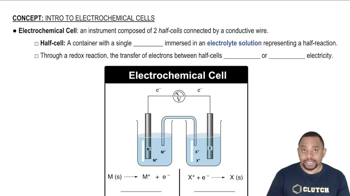
Electrochemical Cells

Electrochemical cells are devices that convert chemical energy into electrical energy or vice versa. They consist of two electrodes: the anode, where oxidation occurs, and the cathode, where reduction takes place. Understanding the roles of these electrodes is crucial for analyzing the flow of electrons and the overall reaction in the cell.
추천 영상:
가이드 코스
02:46
Electrochemical Cells

Galvanic (Voltaic) Cells

A galvanic cell, also known as a voltaic cell, is a type of electrochemical cell that generates electrical energy from spontaneous chemical reactions. In these cells, the anode is negatively charged and the cathode is positively charged, allowing for the spontaneous flow of electrons from the anode to the cathode, which is essential for producing electric current.
추천 영상:
가이드 코스
01:08
The Galvanic Cell

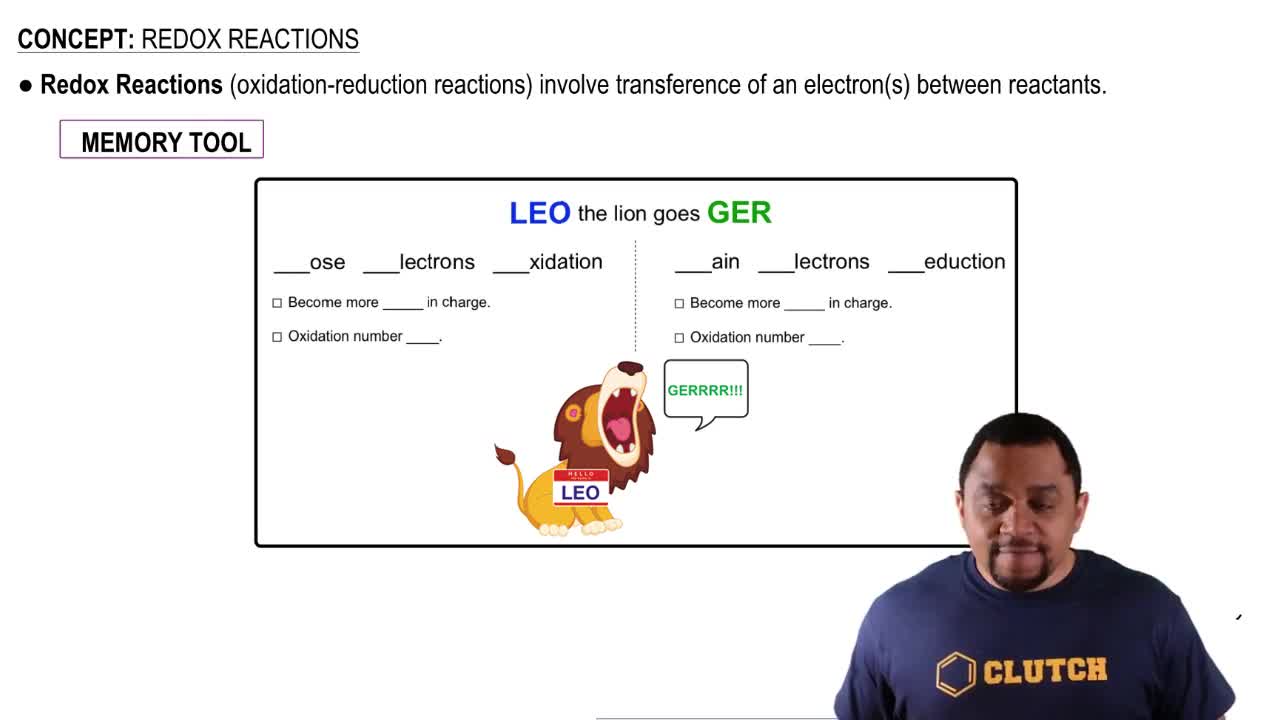
Oxidation and Reduction

Oxidation and reduction are complementary chemical processes that involve the transfer of electrons. Oxidation refers to the loss of electrons, while reduction refers to the gain of electrons. In electrochemical cells, identifying which species is oxidized and which is reduced is vital for understanding the direction of electron flow and the overall cell operation.
추천 영상:
가이드 코스
01:53
Oxidation and Reduction Reactions