
Ch.5 - Thermochemistry
Brown - Chemistry: The Central Science 14th Edition
Brown14th EditionChemistry: The Central ScienceISBN: 9780134414232당신이 사용하는 게 아니라요?교과서 변경
5장, 문제 111

From the following data for three prospective fuels, calculate which could provide the most energy per unit mass and per unit volume:

검증된 단계별 안내
1
insert step 1: Identify the data provided for each fuel, such as the energy content per unit mass (e.g., kJ/g) and the density (e.g., g/mL or kg/L).
insert step 2: Calculate the energy per unit mass for each fuel by using the given energy content per unit mass. This will help determine which fuel provides the most energy per gram.
insert step 3: Calculate the energy per unit volume for each fuel by multiplying the energy per unit mass by the density of the fuel. This will help determine which fuel provides the most energy per liter or milliliter.
insert step 4: Compare the calculated energy per unit mass and energy per unit volume for each fuel to identify which one provides the most energy in each category.
insert step 5: Conclude which fuel is the most efficient based on both energy per unit mass and energy per unit volume, considering the context of the application (e.g., transportation, storage).

비슷한 문제에 대한 검증된 영상 답변:

이 영상 해법은 위 문제에 도움이 된다고 튜터들이 추천한 것입니다.
영상 길이:
7m
도움이 되었나요?

주요 개념

질문에 올바르게 답하기 위해 반드시 이해해야 하는 핵심 개념들은 다음과 같습니다.

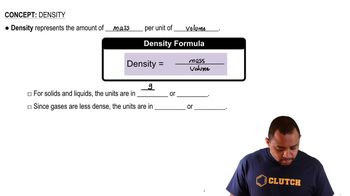
Energy Density

Energy density refers to the amount of energy stored in a given system or region of space per unit volume or mass. It is a crucial concept in evaluating fuels, as it determines how much energy can be extracted from a specific quantity of fuel. Higher energy density means that less fuel is needed to produce the same amount of energy, making it more efficient for applications like transportation.
추천 영상:
가이드 코스
01:56
Density Concepts

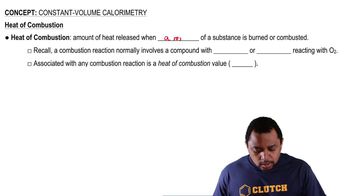
Calorimetry

Calorimetry is the science of measuring the heat of chemical reactions or physical changes. In the context of fuels, calorimetry helps determine the heat of combustion, which is the energy released when a fuel is burned. Understanding calorimetry allows for the comparison of different fuels based on their energy output, which is essential for identifying the most efficient fuel.
추천 영상:
가이드 코스
00:50
Constant-Volume Calorimetry

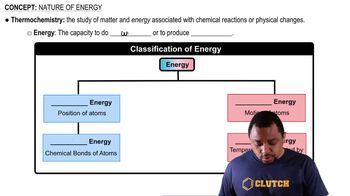
Specific Energy vs. Volumetric Energy Density

Specific energy is the amount of energy per unit mass of fuel, while volumetric energy density is the amount of energy per unit volume. These two metrics are important for evaluating fuels in different contexts; for instance, specific energy is critical for weight-sensitive applications like aviation, whereas volumetric energy density is more relevant for storage and transportation considerations. Analyzing both helps in making informed decisions about fuel selection.
추천 영상:
가이드 코스
01:26
Nature of Energy