Ch.6 - Electronic Structure of Atoms
Brown - Chemistry: The Central Science 14th Edition
Brown14th EditionChemistry: The Central ScienceISBN: 9780134414232당신이 사용하는 게 아니라요?교과서 변경
6장, 문제 96

In the television series Star Trek, the transporter beam is a device used to “beam down” people from the Starship Enterprise to another location, such as the surface of a planet. The writers of the show put a “Heisenberg compensator” into the transporter beam mechanism. Explain why such a compensator (which is entirely fictional) would be necessary to get around Heisenberg’s uncertainty principle.

검증된 단계별 안내
1
The Heisenberg Uncertainty Principle is a fundamental concept in quantum mechanics that states it is impossible to simultaneously know both the exact position and exact momentum of a particle. This principle is mathematically expressed as \( \Delta x \cdot \Delta p \geq \frac{\hbar}{2} \), where \( \Delta x \) is the uncertainty in position, \( \Delta p \) is the uncertainty in momentum, and \( \hbar \) is the reduced Planck's constant.
In the context of the Star Trek transporter, the device would need to know the exact position and momentum of every particle in a person's body to accurately reconstruct them at a different location. This is because the transporter would need to disassemble and then reassemble the person atom by atom.
Due to the Heisenberg Uncertainty Principle, it is fundamentally impossible to measure both the position and momentum of all particles with absolute precision. This would make it impossible to perfectly reconstruct a person after transport.
The fictional 'Heisenberg compensator' is a plot device that supposedly allows the transporter to bypass the limitations imposed by the Heisenberg Uncertainty Principle, enabling precise measurement and reconstruction of particles.
In reality, such a compensator does not exist, as it would violate the fundamental principles of quantum mechanics. However, it serves as a creative solution within the science fiction narrative to allow the transporter technology to function.

주요 개념

질문에 올바르게 답하기 위해 반드시 이해해야 하는 핵심 개념들은 다음과 같습니다.

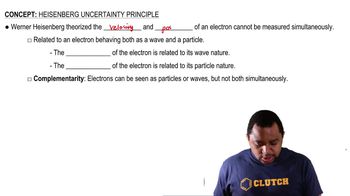
Heisenberg's Uncertainty Principle

Heisenberg's Uncertainty Principle is a fundamental concept in quantum mechanics stating that it is impossible to simultaneously know both the exact position and momentum of a particle. This principle implies that the more precisely one property is measured, the less precisely the other can be controlled or known. In the context of the transporter beam, this uncertainty poses a challenge for accurately determining the location and state of a person being transported.
추천 영상:
가이드 코스
01:09
Heisenberg Uncertainty Principle

Quantum State

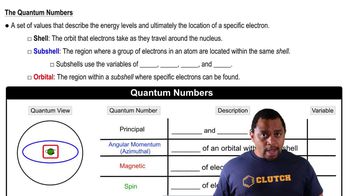
A quantum state describes the state of a quantum system, encapsulating all the information about a particle's properties, such as position, momentum, and spin. In quantum mechanics, particles exist in a superposition of states until measured, which complicates the process of transporting matter. The transporter beam would need to account for these quantum states to ensure that the person is accurately reconstructed at the destination.
추천 영상:
가이드 코스
03:22
Quantum Numbers

Measurement Problem in Quantum Mechanics

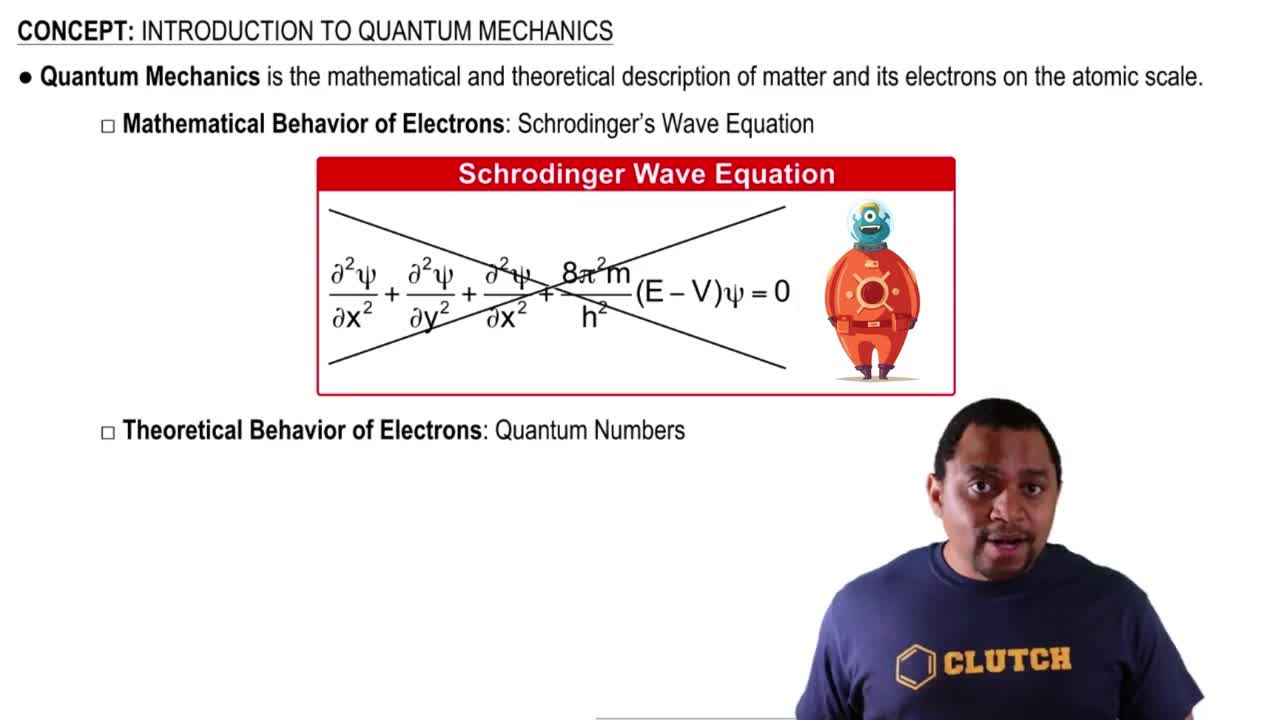
The measurement problem in quantum mechanics refers to the difficulty in understanding how and why observations lead to a definite outcome from a range of possibilities. When a quantum system is measured, it collapses from a superposition of states to a single state. A fictional 'Heisenberg compensator' would theoretically resolve this issue by ensuring that the measurement process does not disturb the quantum state of the person being transported, allowing for accurate and reliable beaming.
추천 영상:
가이드 코스
01:
Introduction to Quantum Mechanics