Ch.6 - Electronic Structure of Atoms
Brown - Chemistry: The Central Science 14th Edition
Brown14th EditionChemistry: The Central ScienceISBN: 9780134414232당신이 사용하는 게 아니라요?교과서 변경
6장, 문제 15b

Label each of the following statements as true or false. For those that are false, correct the statement. (b) Ultraviolet light has longer wavelengths than visible light.

검증된 단계별 안내
1
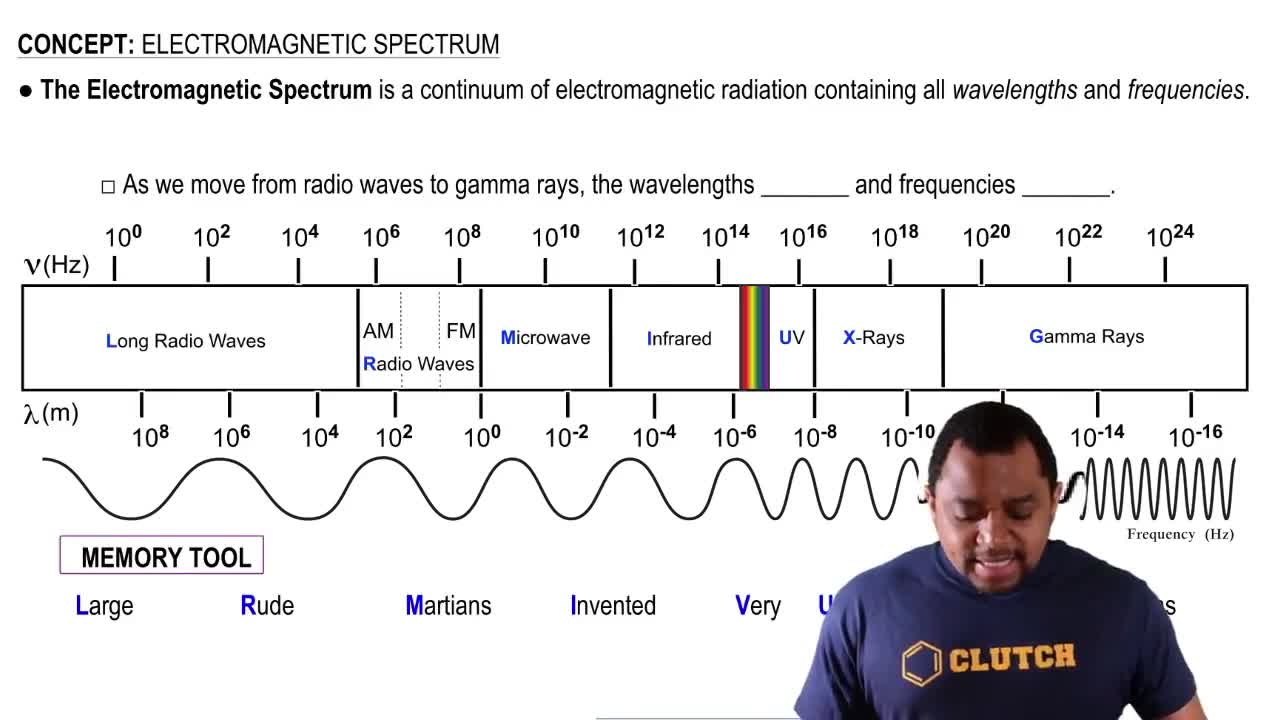
Understand the electromagnetic spectrum: The electromagnetic spectrum is a range of all types of electromagnetic radiation, which includes, in order of increasing wavelength, gamma rays, X-rays, ultraviolet (UV) light, visible light, infrared (IR) light, microwaves, and radio waves.
Identify the position of ultraviolet and visible light: In the electromagnetic spectrum, ultraviolet light is located just before visible light, meaning it has shorter wavelengths than visible light.
Recall the relationship between wavelength and energy: Wavelength and energy are inversely related. This means that shorter wavelengths correspond to higher energy, and longer wavelengths correspond to lower energy.
Evaluate the statement: The statement 'Ultraviolet light has longer wavelengths than visible light' is false because ultraviolet light actually has shorter wavelengths than visible light.
Correct the false statement: The correct statement is 'Ultraviolet light has shorter wavelengths than visible light.'

비슷한 문제에 대한 검증된 영상 답변:

이 영상 해법은 위 문제에 도움이 된다고 튜터들이 추천한 것입니다.
영상 길이:
1m

주요 개념

질문에 올바르게 답하기 위해 반드시 이해해야 하는 핵심 개념들은 다음과 같습니다.

Electromagnetic Spectrum

The electromagnetic spectrum encompasses all types of electromagnetic radiation, arranged by wavelength. It includes gamma rays, X-rays, ultraviolet (UV) light, visible light, infrared radiation, microwaves, and radio waves. Understanding the spectrum is crucial for distinguishing between different types of light and their properties.
추천 영상:
가이드 코스
02:53
Electromagnetic Spectrum

Wavelength and Frequency

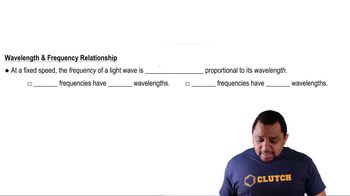
Wavelength is the distance between successive peaks of a wave, while frequency is the number of waves that pass a point in one second. These two properties are inversely related; as wavelength increases, frequency decreases. This relationship is fundamental in understanding the characteristics of different types of light.
추천 영상:
가이드 코스
00:31
Frequency-Wavelength Relationship

Visible Light Range

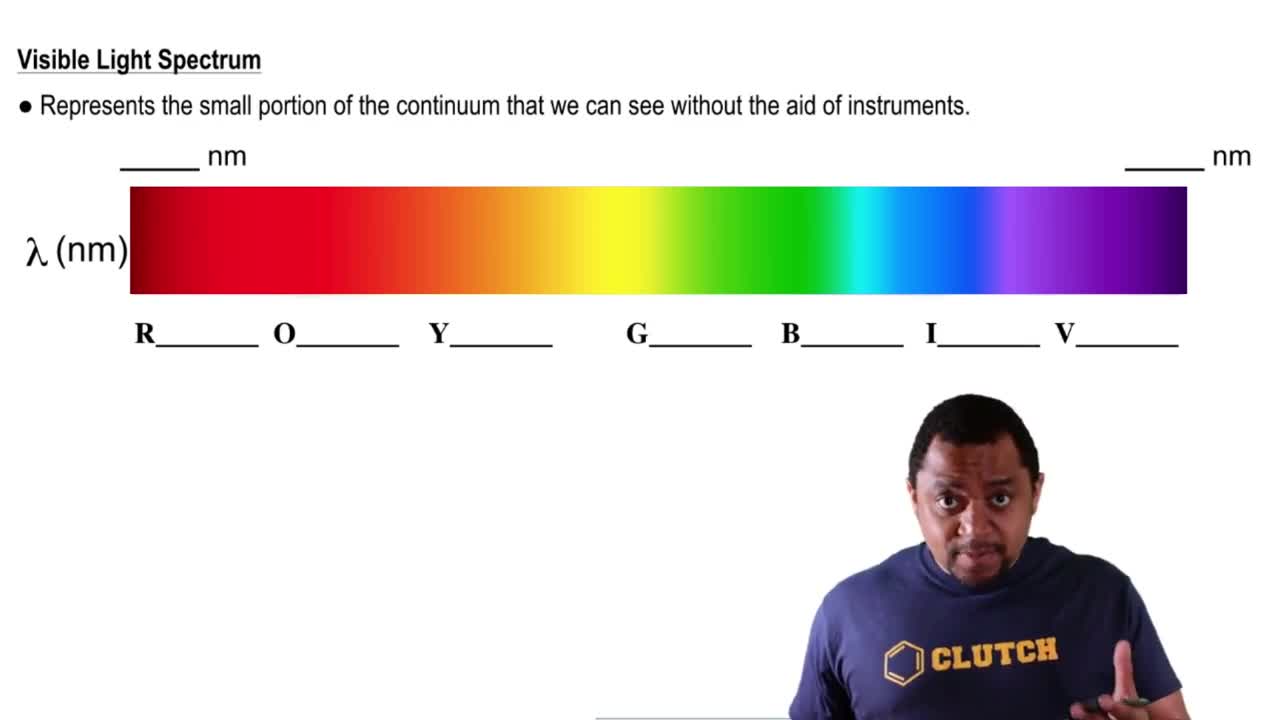
Visible light is the portion of the electromagnetic spectrum that can be detected by the human eye, typically ranging from about 400 nm (violet) to 700 nm (red). Ultraviolet light, which lies just beyond the visible spectrum, has shorter wavelengths (10 nm to 400 nm) than visible light, making the statement in the question false.
추천 영상:
가이드 코스
01:24
Visible Light Spectrum