
교과서 질문
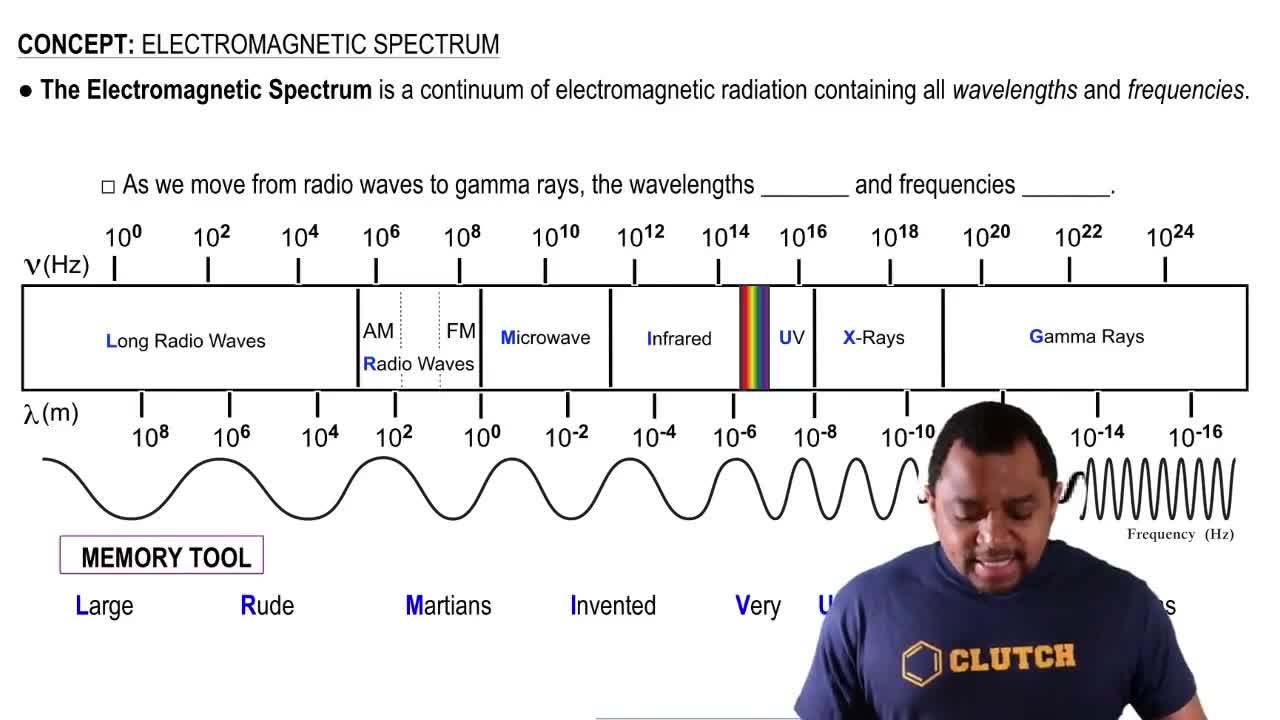
The hydrogen atom can absorb light of wavelength 1094 nm. (a) In what region of the electromagnetic spectrum is this absorption found?
 검증된 단계별 안내

 02:53

 00:31
 02:52
The hydrogen atom can absorb light of wavelength 1094 nm. (a) In what region of the electromagnetic spectrum is this absorption found?
One of the emission lines of the hydrogen atom has a wavelength of 94.974 nm. (b) Determine the initial and final values of n associated with this emission.
The Lyman series of emission lines of the hydrogen atom are those for which nf = 1. (a) Determine the region of the electromagnetic spectrum in which the lines of the Lyman series are observed.
The visible emission lines observed by Balmer all involved nf = 2. (b) Calculate the wavelengths of the first three lines in the Balmer series—those for which ni = 3, 4, and 5—and identify these lines in the emission spectrum shown in Figure 6.11.
The Lyman series of emission lines of the hydrogen atom are those for which nf = 1. (b) Calculate the wavelengths of the first three lines in the Lyman series—those for which ni = 2, 3, and 4.
The hydrogen atom can absorb light of wavelength 1094 nm. (b) Determine the final value of n associated with this absorption.