Ch.7 - Periodic Properties of the Elements
Brown - Chemistry: The Central Science 14th Edition
Brown14th EditionChemistry: The Central ScienceISBN: 9780134414232당신이 사용하는 게 아니라요?교과서 변경
7장, 문제 41b

(b) Which element in the periodic table has the largest ionization energy? Which has the smallest?

검증된 단계별 안내
1
1. Ionization energy is the energy required to remove an electron from an atom or ion. It is an indication of how tightly an atom holds onto its electrons. The larger the ionization energy, the harder it is to remove an electron.
2. In general, ionization energy increases from left to right across a period (horizontal row) in the periodic table. This is because as you move across a period, the number of protons in the nucleus increases, which means the positive charge of the nucleus increases. This stronger positive charge pulls the electrons in the atom closer to the nucleus, making them harder to remove.
3. Ionization energy also generally decreases from top to bottom down a group (vertical column) in the periodic table. This is because as you move down a group, the electrons are further from the nucleus and are therefore easier to remove.
4. Therefore, the element with the largest ionization energy is typically found in the top right corner of the periodic table (excluding the noble gases). This is because it is furthest to the right (so it has a high nuclear charge) and at the top (so the electrons are close to the nucleus).
5. Conversely, the element with the smallest ionization energy is typically found in the bottom left corner of the periodic table. This is because it is furthest to the left (so it has a low nuclear charge) and at the bottom (so the electrons are far from the nucleus).

비슷한 문제에 대한 검증된 영상 답변:

이 영상 해법은 위 문제에 도움이 된다고 튜터들이 추천한 것입니다.
영상 길이:
2m
도움이 되었나요?

주요 개념

질문에 올바르게 답하기 위해 반드시 이해해야 하는 핵심 개념들은 다음과 같습니다.

Ionization Energy

Ionization energy is the energy required to remove an electron from an atom or ion in its gaseous state. It is a key indicator of how strongly an atom holds onto its electrons. Generally, ionization energy increases across a period from left to right due to increasing nuclear charge and decreases down a group as the distance between the nucleus and the outermost electrons increases.
추천 영상:
가이드 코스
01:19
Ionization Energy

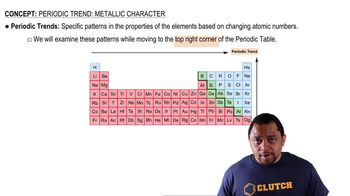
Periodic Trends

Periodic trends refer to the predictable patterns observed in the properties of elements as you move across or down the periodic table. Key trends include ionization energy, electronegativity, and atomic radius. Understanding these trends helps in predicting the behavior of elements, including which will have the highest or lowest ionization energies.
추천 영상:
가이드 코스
00:38
Periodic Trends

Noble Gases and Alkali Metals

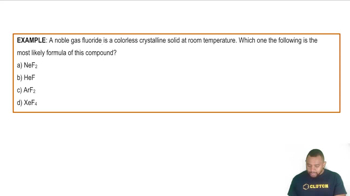
Noble gases, located in Group 18 of the periodic table, typically have the highest ionization energies due to their stable electron configurations. In contrast, alkali metals in Group 1 have the lowest ionization energies because they have a single electron in their outermost shell, which is easily removed. This distinction is crucial for identifying the elements with the largest and smallest ionization energies.
추천 영상:
가이드 코스
00:44
Noble Gas Compounds Example