Ch.7 - Periodic Properties of the Elements
Brown - Chemistry: The Central Science 14th Edition
Brown14th EditionChemistry: The Central ScienceISBN: 9780134414232당신이 사용하는 게 아니라요?교과서 변경
7장, 문제 51

Which of the following, I or I-, will have a negative electron affinity?

검증된 단계별 안내
1
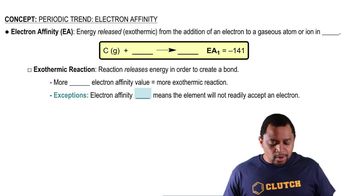
Step 1: Understand the concept of electron affinity. Electron affinity is the energy change that occurs when an electron is added to a neutral atom to form a negative ion. It is usually exothermic, meaning it releases energy and thus has a negative value.
Step 2: Consider the neutral iodine atom (I). When an electron is added to it, it forms a negative ion (I-). The process of adding an electron to a neutral atom is usually exothermic, so iodine (I) will have a negative electron affinity.
Step 3: Now consider the iodine ion (I-). If we try to add another electron to it, the process will be endothermic because the incoming electron will be repelled by the negative charge of the ion. Therefore, the electron affinity of I- will be positive.
Step 4: Therefore, among I and I-, only I will have a negative electron affinity.

비슷한 문제에 대한 검증된 영상 답변:

이 영상 해법은 위 문제에 도움이 된다고 튜터들이 추천한 것입니다.
영상 길이:
2m
도움이 되었나요?

주요 개념

질문에 올바르게 답하기 위해 반드시 이해해야 하는 핵심 개념들은 다음과 같습니다.

Electron Affinity

Electron affinity is the amount of energy released when an electron is added to a neutral atom in the gas phase to form a negative ion. A negative electron affinity indicates that energy is required to add an electron, meaning the process is endothermic. Understanding this concept is crucial for determining the stability of anions and the tendency of elements to gain electrons.
추천 영상:
가이드 코스
01:34
Electron Affinity

Iodine and Iodide Ion

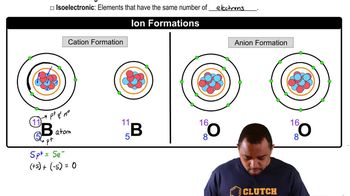
Iodine (I) is a neutral atom, while the iodide ion (I-) is the anion formed when iodine gains an electron. The electron affinity of iodine can be compared to that of the iodide ion to understand their respective tendencies to accept electrons. This comparison is essential for predicting the behavior of these species in chemical reactions.
추천 영상:

Trends in Electron Affinity

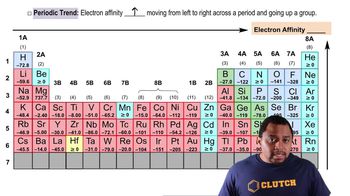
Electron affinity varies across the periodic table, generally increasing from left to right and decreasing from top to bottom. Halogens, like iodine, typically have high electron affinities due to their desire to achieve a stable electron configuration. Recognizing these trends helps in predicting which species will have a negative electron affinity based on their position in the periodic table.
추천 영상:
가이드 코스
01:42
Electron Affinity Trends