Predict the length of the carbon–carbon bond you would expect if two H2C molecules reacted with each other by a combination reaction.
검증된 단계별 안내
1
Step 1: Understand the structure of the H2C molecule. H2C is a simplified representation of a methylene group, which is a CH2 group. In organic chemistry, methylene groups can form double bonds with other carbon atoms.
Step 2: Consider the type of bond formed in a combination reaction between two CH2 groups. When two CH2 groups react, they typically form a double bond, resulting in a molecule like ethylene (C2H4).
Step 3: Recall the typical bond length for a carbon-carbon double bond. In organic chemistry, the average bond length for a C=C double bond is approximately 1.34 Å (angstroms).
Step 4: Compare this bond length to other types of carbon-carbon bonds. For context, a single C-C bond is about 1.54 Å, and a triple C≡C bond is about 1.20 Å.
Step 5: Conclude that the expected bond length for the carbon-carbon bond formed in this reaction is characteristic of a double bond, approximately 1.34 Å.
주요 개념
질문에 올바르게 답하기 위해 반드시 이해해야 하는 핵심 개념들은 다음과 같습니다.
Bond Length
Bond length is the average distance between the nuclei of two bonded atoms. It is influenced by factors such as atomic size, bond order, and the presence of lone pairs. In the case of carbon–carbon bonds, the length can vary depending on whether the bond is a single, double, or triple bond, with single bonds being the longest and triple bonds the shortest.
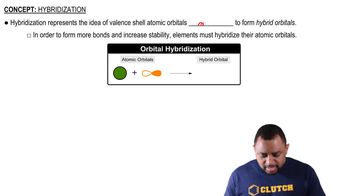
Hybridization is the concept of mixing atomic orbitals to form new hybrid orbitals that can accommodate bonding. In the case of H2C (ethylene), the carbon atoms undergo sp2 hybridization, resulting in three sp2 hybrid orbitals that form sigma bonds and one unhybridized p orbital that can participate in pi bonding. This hybridization affects the bond angles and lengths in the molecule.
A combination reaction, also known as a synthesis reaction, occurs when two or more reactants combine to form a single product. In the context of H2C molecules reacting, the combination of two ethylene molecules would lead to the formation of a larger hydrocarbon. The nature of the resulting bonds and the molecular structure will influence the predicted bond lengths in the product.


 검증된 단계별 안내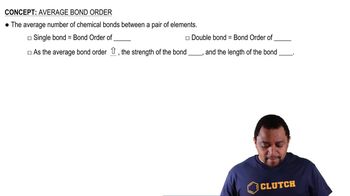
 00:36
00:36