Draw Lewis structures for the following: (d) H2SO4 (H is bonded to O) (e) OF2
Ch.8 - Basic Concepts of Chemical Bonding
8장, 문제 47f
Draw Lewis structures for the following: (f) NH2OH
검증된 단계별 안내1
Step 1: Determine the total number of valence electrons. Nitrogen (N) has 5 valence electrons, Hydrogen (H) has 1 valence electron, and Oxygen (O) has 6 valence electrons. Since there are 2 Hydrogen atoms and 1 Oxygen atom, the total number of valence electrons is 5 (from N) + 2*1 (from 2 H) + 6 (from O) = 14 valence electrons.
Step 2: Draw a skeleton structure of the molecule. Nitrogen is the least electronegative atom (excluding Hydrogen), so it will be the central atom. Connect the Nitrogen atom to the Oxygen atom and each Hydrogen atom with a single bond. Each single bond represents 2 electrons.
Step 3: Distribute the remaining electrons as lone pairs. Start from the outer atoms. Hydrogen atoms are already filled because they can hold only 2 electrons. So, place the remaining electrons on the Oxygen and Nitrogen atoms. Each atom should have 8 electrons (octet rule) except Hydrogen which can only hold 2 electrons.
Step 4: If there are not enough electrons to give every atom an octet, try multiple bonds (double, triple). In this case, all atoms satisfy the octet rule, so no need for multiple bonds.
Step 5: Verify the structure. Check that the total number of electrons in the Lewis structure is the same as the total number of valence electrons calculated in step 1. Also, make sure each atom satisfies the octet rule (or duet rule for Hydrogen).

비슷한 문제에 대한 검증된 영상 답변:
이 영상 해법은 위 문제에 도움이 된다고 튜터들이 추천한 것입니다.
영상 길이:
3m도움이 되었나요?
주요 개념
질문에 올바르게 답하기 위해 반드시 이해해야 하는 핵심 개념들은 다음과 같습니다.
Lewis Structures
Lewis structures are diagrams that represent the bonding between atoms in a molecule and the lone pairs of electrons that may exist. They use dots to represent valence electrons and lines to represent bonds between atoms. Understanding how to draw Lewis structures is essential for visualizing molecular geometry and predicting reactivity.
추천 영상:
가이드 코스
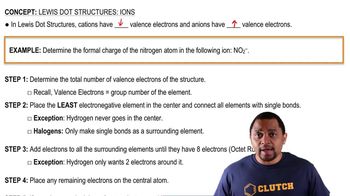
Lewis Dot Structures: Ions
Valence Electrons
Valence electrons are the outermost electrons of an atom and are crucial in determining how atoms bond with each other. The number of valence electrons influences the molecule's structure and stability. For NH2OH, knowing the valence electrons of nitrogen, oxygen, and hydrogen helps in accurately constructing its Lewis structure.
추천 영상:
가이드 코스
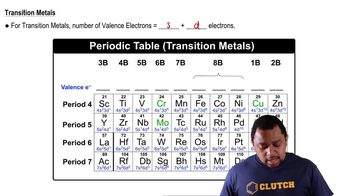
Transition Metals Valence Electrons
Octet Rule
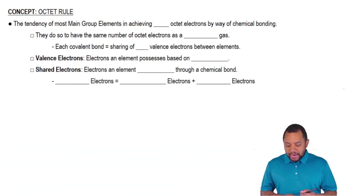
The octet rule states that atoms tend to form bonds in such a way that they each have eight electrons in their valence shell, achieving a stable electron configuration similar to that of noble gases. This rule guides the arrangement of electrons in Lewis structures, ensuring that each atom, particularly carbon, nitrogen, and oxygen, satisfies this rule when possible.
추천 영상:
가이드 코스
Octet Rule
관련 실천
교과서 질문
1031
views
1
comments
교과서 질문
In the following pairs of binary compounds, determine which one is a molecular substance and which one is an ionic substance. Use the appropriate naming convention (for ionic or molecular substances) to assign a name to each compound: (c) SbCl5 and AlF3.
1021
views
교과서 질문
Which one of these statements about formal charge is true? (a) Formal charge is the same as oxidation number. (b) To draw the best Lewis structure, you should minimize formal charge. (c) Formal charge takes into account the different electronegativities of the atoms in a molecule. (d) Formal charge is most useful for ionic compounds. (e) Formal charge is used in calculating the dipole moment of a diatomic molecule.
1355
views
교과서 질문
Write Lewis structures for the following: (a) H2CO (both
H atoms are bonded to C), (b) H2O2, (c) C2F6 (contains
a C¬C bond), (d) AsO33 - , (e) H2SO3 (H is bonded to O), (f) NH2Cl.
1033
views
교과서 질문
Draw Lewis structures for the following: (a) CH2Cl2 (b) ClCN (c) SF2
617
views