
교과서 질문
What type of quantity (for example, length, volume, density) do the following units indicate? a. mL
2
views

 검증된 단계별 안내
 04:19
04:19
 02:11
02:11 02:26
02:26What type of quantity (for example, length, volume, density) do the following units indicate? a. mL
Two students determine the percentage of iron in a sample as a laboratory exercise. The true percentage is 34.43%. The students’ results for three determinations are as follows: 1. 34.44, 34.41, 34.46 2. 34.51, 34.56, 34.48 b. Precision can be judged by examining the average of the deviations from the average value for that data set. (Calculate the average value for each data set; then calculate the average value of the absolute deviations of each measurement from the average.) Which set is more precise?
What type of quantity (for example, length, volume, density) do the following units indicate? f. nm
(b) A(n) _________ reliably predicts the behavior of matter, while a(n) _________ provides an explanation for that behavior.
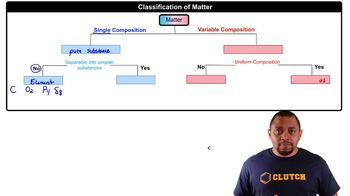
Classify each of the following as a pure substance, a solution, or a heterogeneous mixture: c. a wood plank
(a) Which is more likely to eventually be shown to be incorrect: an hypothesis or a theory?