
Ch.2 - Atoms, Molecules, and Ions
Brown - Chemistry: The Central Science 15th Edition
Brown15th EditionChemistry: The Central ScienceISBN: 9780137542970당신이 사용하는 게 아니라요?교과서 변경
2장, 문제 100d

There are two different isotopes of bromine atoms. Under normal conditions, elemental bromine consists of molecules, and the mass of a molecule is the sum of the masses of the two atoms in the molecule. The mass spectrum of consists of three peaks: m/zRelative Peak Intensity157.836 0.2569 159.834 0.4999 161.832 0.2431
d. Determine the average atomic mass of a bromine atom.

검증된 단계별 안내
1
Identify the isotopes of bromine involved in the molecule. The peaks in the mass spectrum correspond to different combinations of these isotopes.
Recognize that the mass spectrum peaks represent the mass-to-charge ratio (m/z) of the bromine molecules, which are diatomic (Br2).
Use the relative peak intensities to determine the relative abundance of each isotope combination. The peaks correspond to Br-79/Br-79, Br-79/Br-81, and Br-81/Br-81.
Calculate the average mass of a Br2 molecule using the formula: \( \text{Average mass} = \sum (\text{m/z value} \times \text{relative intensity}) \).
Divide the average mass of a Br2 molecule by 2 to find the average atomic mass of a single bromine atom.

비슷한 문제에 대한 검증된 영상 답변:

이 영상 해법은 위 문제에 도움이 된다고 튜터들이 추천한 것입니다.
영상 길이:
4m

주요 개념

질문에 올바르게 답하기 위해 반드시 이해해야 하는 핵심 개념들은 다음과 같습니다.

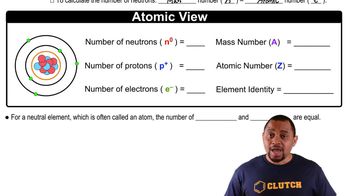
Isotopes

Isotopes are variants of a chemical element that have the same number of protons but different numbers of neutrons, resulting in different atomic masses. For bromine, the two common isotopes are bromine-79 and bromine-81. Understanding isotopes is crucial for calculating average atomic mass, as each isotope contributes to the overall mass based on its relative abundance.
추천 영상:

Mass Spectrum

A mass spectrum is a graphical representation of the mass-to-charge ratio (m/z) of ions, which helps identify the composition of a sample. In the context of bromine, the mass spectrum shows peaks corresponding to the isotopes and their relative intensities, which indicate their abundance. Analyzing the mass spectrum is essential for determining the average atomic mass by weighing the contributions of each isotope.
추천 영상:
가이드 코스
02:53
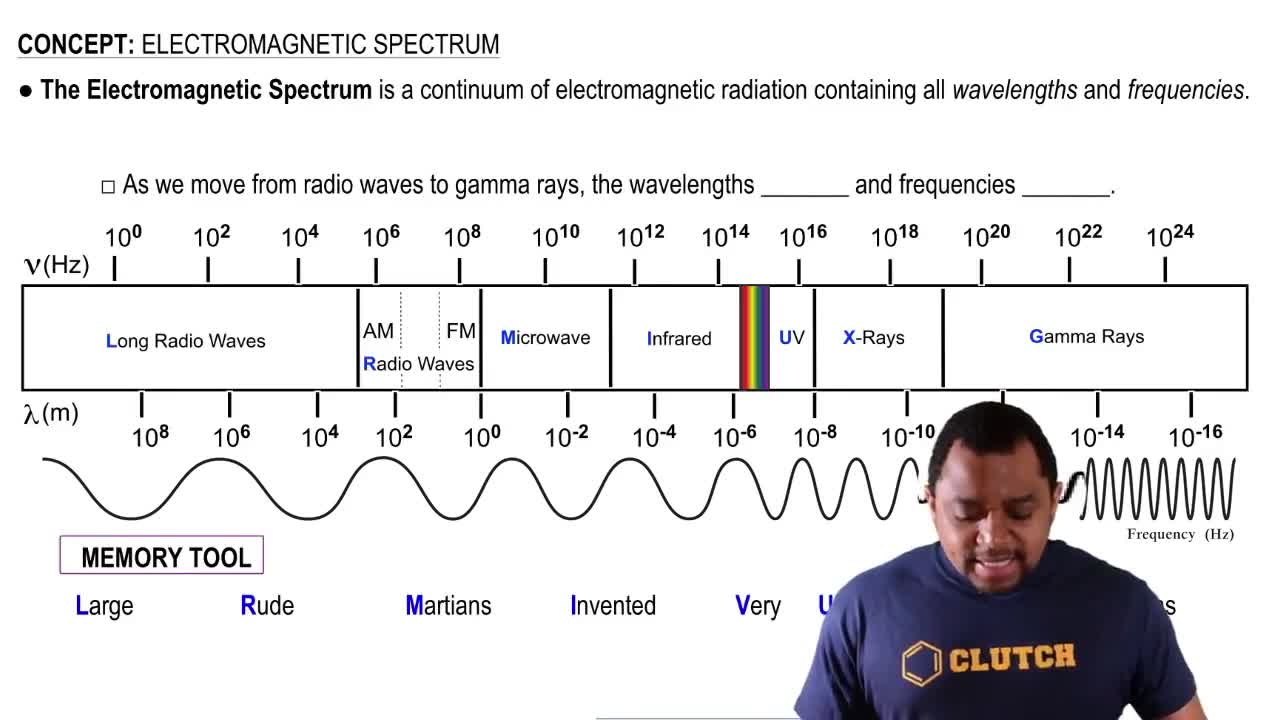
Electromagnetic Spectrum

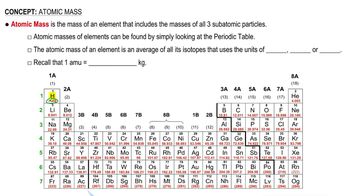
Average Atomic Mass

The average atomic mass of an element is calculated by taking the weighted average of the masses of its isotopes, considering their relative abundances. This value reflects the mass of a typical atom of the element found in nature. For bromine, the average atomic mass can be determined using the data from the mass spectrum, where each isotope's mass is multiplied by its relative peak intensity and summed.
추천 영상:
관련 실천
교과서 질문

There are two different isotopes of bromine atoms. Under normal conditions, elemental bromine consists of molecules, and the mass of a molecule is the sum of the masses of the two atoms in the molecule. The mass spectrum of consists of three peaks: m/zRelative Peak Intensity157.836 0.2569 159.834 0.4999 161.832 0.2431

e. Calculate the abundances of the two isotopes.

2
views
교과서 질문

There are two different isotopes of bromine atoms. Under normal conditions, elemental bromine consists of molecules, and the mass of a molecule is the sum of the masses of the two atoms in the molecule. The mass spectrum of consists of three peaks: m/zRelative Peak Intensity157.836 0.2569 159.834 0.4999 161.832 0.2431

b. What is the mass of each isotope?

2
views
교과서 질문

From the following list of elements—Ar, H, Ga, Al, Ca, Br, Ge, K, O—pick the one that best fits each description. Use each element only once: (a) an alkali metal, (b) an alkaline earth metal, (c) a noble gas, (d) a halogen, (e) a metalloid, (f) a nonmetal listed in group 1A, (g) a metal that forms a 3+ ion, (h) a nonmetal that forms a 2- ion, (i) an element that resembles aluminum.

2
views
교과서 질문

There are two different isotopes of bromine atoms. Under normal conditions, elemental bromine consists of molecules, and the mass of a molecule is the sum of the masses of the two atoms in the molecule. The mass spectrum of consists of three peaks: m/zRelative Peak Intensity157.836 0.2569 159.834 0.4999 161.832 0.2431

c. Determine the average molecular mass of a molecule.

2
views
교과서 질문

It is common in mass spectrometry to assume that the mass of a cation is the same as that of its parent atom. (b) What percentage of the mass of an 1H atom does the electron represent?

305
views
교과서 질문

There are two different isotopes of bromine atoms. Under normal conditions, elemental bromine consists of molecules, and the mass of a molecule is the sum of the masses of the two atoms in the molecule. The mass spectrum of consists of three peaks: m/zRelative Peak Intensity157.836 0.2569 159.834 0.4999 161.832 0.2431

a. What is the origin of each peak (of what isotopes does each consist)?

3
views