
교과서 질문
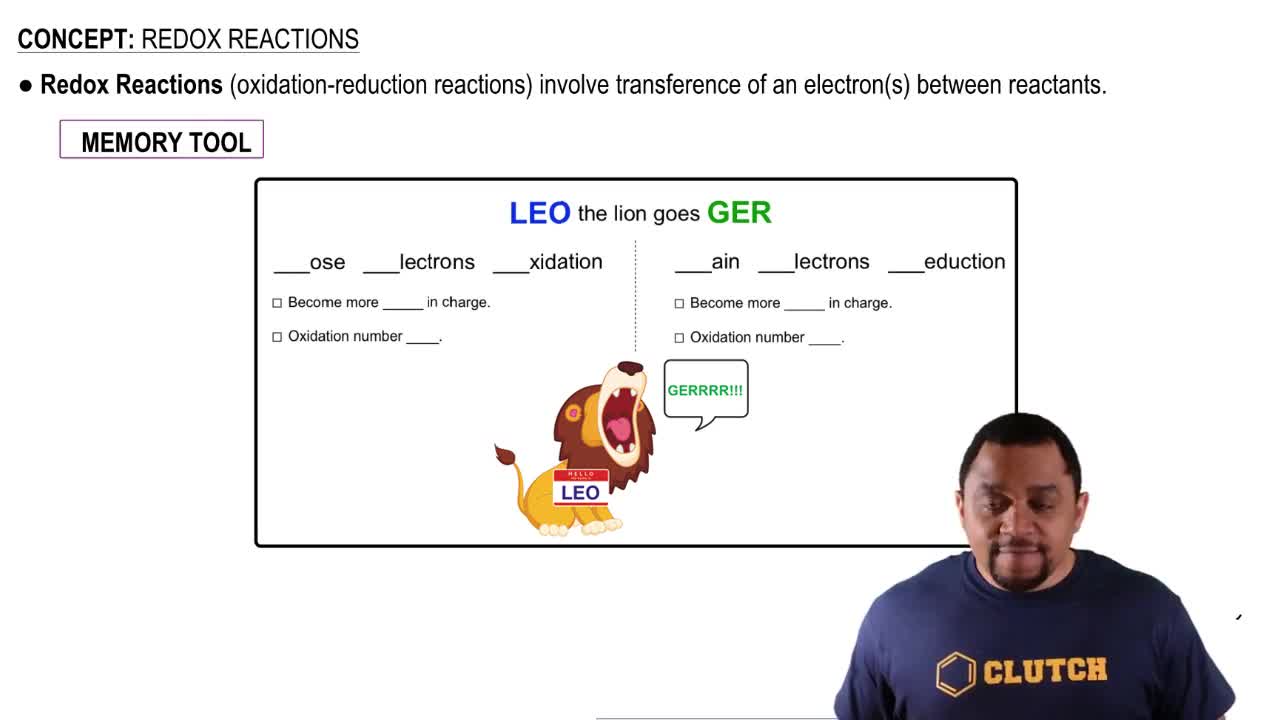
Indicate whether each of the following statements is true or false: (a) If something is oxidized, it is formally losing electrons.
578
views

 검증된 단계별 안내
 01:53
01:53
 02:42
02:42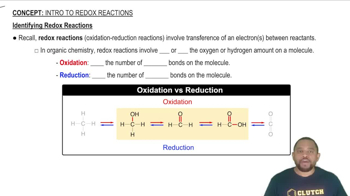 03:12
03:12Indicate whether each of the following statements is true or false: (a) If something is oxidized, it is formally losing electrons.
Indicate whether each of the following statements is true or false: (c) An oxidizing agent is needed to convert CO into CO2.
For each of the following balanced oxidation–reduction reactions, (i) identify the oxidation numbers for all the elements in the reactants and products and (ii) state the total number of electrons transferred in each reaction. (a) I2O5(s) + 5 CO(g) → I2(s) + 5 CO2(g) (b) 2 Hg2+(aq) + N2H4(aq) → 2 Hg(l) + N2(g) + 4 H+(aq) (c) 3 H2S(aq) + 2 H+(aq) + 2 NO3-(aq) → 3 S(s) + 2 NO(g) + 4 H2O(l)
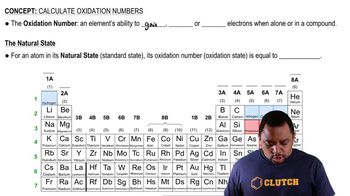
(b) On which side of an oxidation half-reaction do the electrons appear?
For each of the following balanced oxidation–reduction reactions, (i) identify the oxidation numbers for all the elements in the reactants and products and (ii) state the total number of electrons transferred in each reaction. (a) 2 MnO4-(aq) + 3 S2-(aq + 4 H2O(l) → 3 S(s) + 2 MnO2(s) + 8 OH-(aq) (b) 4 H2O2(aq) + Cl2O7(g) + 2 OH-(aq) → 2 ClO2-(aq) + 5 H2O(l) + 4 O2(g) (c) Ba2+(aq) + 2 OH-(aq) + H2O2(aq) + 2 ClO2(aq) → Ba(ClO2)2(s) + 2 H2O(l) + O2(g)