Ch.3 - Chemical Reactions and Reaction Stoichiometry
3์žฅ, ๋ฌธ์ œ 13b

Balance the following equations: b. C5H10O2(๐‘™)+O2(๐‘”)โŸถCO2(๐‘”)+H2O(๐‘”)

๊ฒ€์ฆ๋œ ๋‹จ๊ณ„๋ณ„ ์•ˆ๋‚ด
1
Identify the type of chemical reaction. This is a combustion reaction where an organic compound reacts with oxygen to produce carbon dioxide and water.
Write down the unbalanced equation: \( \text{C}_5\text{H}_{10}\text{O}_2(\ell) + \text{O}_2(g) \rightarrow \text{CO}_2(g) + \text{H}_2\text{O}(g) \).
Balance the carbon atoms first. There are 5 carbon atoms in \( \text{C}_5\text{H}_{10}\text{O}_2 \), so place a coefficient of 5 in front of \( \text{CO}_2 \).
Next, balance the hydrogen atoms. There are 10 hydrogen atoms in \( \text{C}_5\text{H}_{10}\text{O}_2 \), so place a coefficient of 5 in front of \( \text{H}_2\text{O} \).
Finally, balance the oxygen atoms. Count the total oxygen atoms on the right side and adjust the coefficient of \( \text{O}_2 \) on the left side to balance the equation.

๋น„์Šทํ•œ ๋ฌธ์ œ์— ๋Œ€ํ•œ ๊ฒ€์ฆ๋œ ์˜์ƒ ๋‹ต๋ณ€:

์ด ์˜์ƒ ํ•ด๋ฒ•์€ ์œ„ ๋ฌธ์ œ์— ๋„์›€์ด ๋œ๋‹ค๊ณ  ํŠœํ„ฐ๋“ค์ด ์ถ”์ฒœํ•œ ๊ฒƒ์ž…๋‹ˆ๋‹ค.
์˜์ƒ ๊ธธ์ด:
59s

์ฃผ์š” ๊ฐœ๋…

์งˆ๋ฌธ์— ์˜ฌ๋ฐ”๋ฅด๊ฒŒ ๋‹ตํ•˜๊ธฐ ์œ„ํ•ด ๋ฐ˜๋“œ์‹œ ์ดํ•ดํ•ด์•ผ ํ•˜๋Š” ํ•ต์‹ฌ ๊ฐœ๋…๋“ค์€ ๋‹ค์Œ๊ณผ ๊ฐ™์Šต๋‹ˆ๋‹ค.

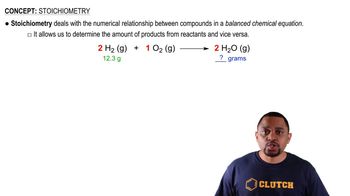
Stoichiometry

Stoichiometry is the branch of chemistry that deals with the quantitative relationships between the reactants and products in a chemical reaction. It involves using balanced chemical equations to determine the amounts of substances consumed and produced. Understanding stoichiometry is essential for balancing equations, as it ensures that the law of conservation of mass is upheld.
์ถ”์ฒœ ์˜์ƒ:

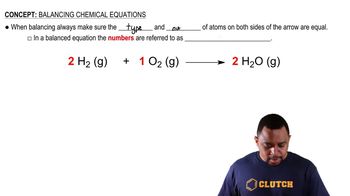
Balancing Chemical Equations

Balancing chemical equations involves adjusting the coefficients of reactants and products to ensure that the number of atoms for each element is the same on both sides of the equation. This process reflects the conservation of mass, where matter is neither created nor destroyed. It is crucial for accurately representing the reaction and predicting the amounts of products formed.
์ถ”์ฒœ ์˜์ƒ:

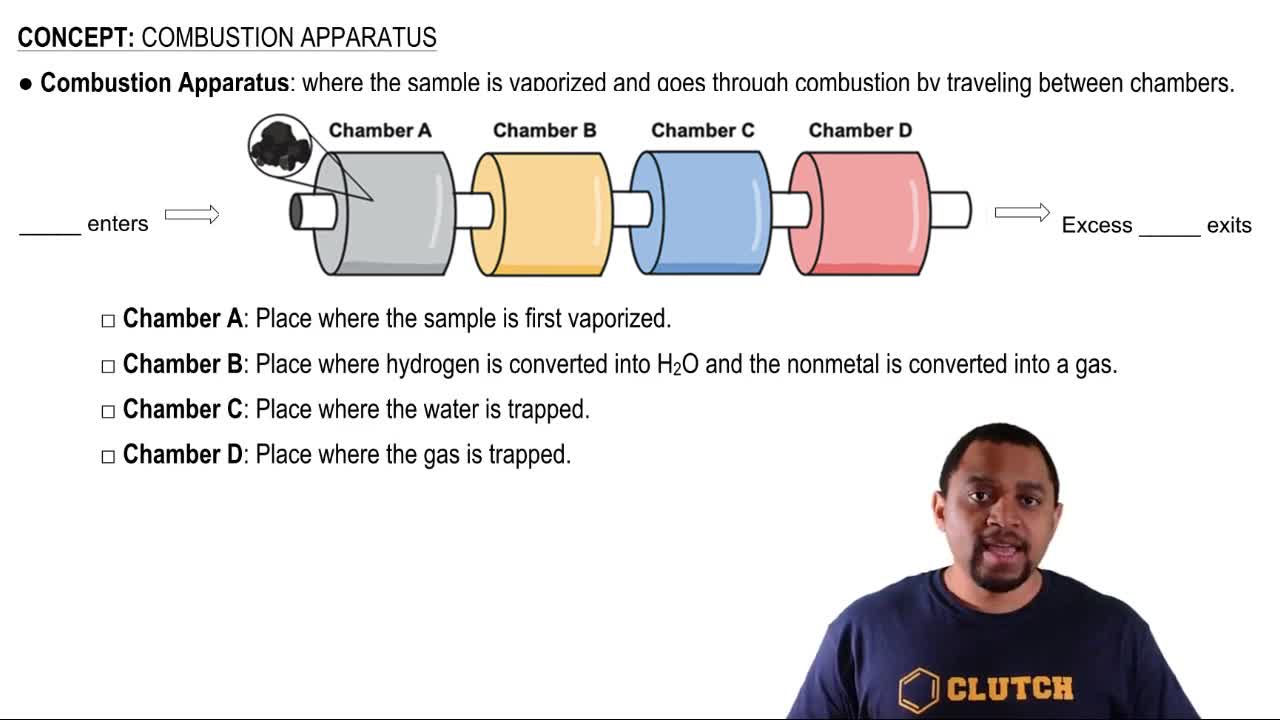
Combustion Reactions

Combustion reactions are a type of chemical reaction where a substance (usually a hydrocarbon) reacts with oxygen to produce carbon dioxide and water, releasing energy in the form of heat and light. In the given equation, the organic compound C5H10O2 undergoes combustion, and understanding the products formed is key to balancing the equation correctly.
์ถ”์ฒœ ์˜์ƒ: