What is the hybridization of the central atom in c. SO3?
Ch.9 - Molecular Geometry and Bonding Theories

Brown15th EditionChemistry: The Central ScienceISBN: 9780137542970๋น์ ์ด ์ฌ์ฉํ๋ ๊ฒ ์๋๋ผ์?๊ต๊ณผ์ ๋ณ๊ฒฝ
9์ฅ, ๋ฌธ์ 55c
Which of the following statements are true? c. A ๐ bond is made from the sideways overlap of two p orbitals.
๊ฒ์ฆ๋ ๋จ๊ณ๋ณ ์๋ด1
Identify the type of bond being discussed: a \( \pi \) bond.
Recall the definition of a \( \pi \) bond: it is formed by the sideways overlap of two parallel \( p \) orbitals.
Understand that \( \pi \) bonds are different from \( \sigma \) bonds, which are formed by the head-on overlap of orbitals.
Consider the orientation of \( p \) orbitals: they have lobes that can overlap sideways to form a \( \pi \) bond.
Conclude that the statement is true based on the definition and characteristics of \( \pi \) bonds.

๋น์ทํ ๋ฌธ์ ์ ๋ํ ๊ฒ์ฆ๋ ์์ ๋ต๋ณ:
์ด ์์ ํด๋ฒ์ ์ ๋ฌธ์ ์ ๋์์ด ๋๋ค๊ณ ํํฐ๋ค์ด ์ถ์ฒํ ๊ฒ์
๋๋ค.
์์ ๊ธธ์ด:
46s์ฃผ์ ๊ฐ๋
์ง๋ฌธ์ ์ฌ๋ฐ๋ฅด๊ฒ ๋ตํ๊ธฐ ์ํด ๋ฐ๋์ ์ดํดํด์ผ ํ๋ ํต์ฌ ๊ฐ๋
๋ค์ ๋ค์๊ณผ ๊ฐ์ต๋๋ค.
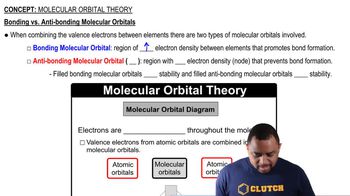
Bonding Orbitals
Bonding orbitals are regions in a molecule where the probability of finding electrons is high, resulting from the overlap of atomic orbitals. In covalent bonding, these orbitals can be classified as sigma (ฯ) and pi (ฯ) bonds, which differ in their formation and electron distribution.
์ถ์ฒ ์์:
๊ฐ์ด๋ ์ฝ์ค
Molecular Orbital Theory
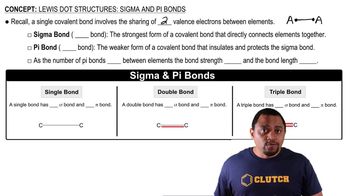
Pi Bonds
A pi (ฯ) bond is a type of covalent bond that occurs when two atomic orbitals overlap sideways, typically involving p orbitals. This overlap allows for the sharing of electrons above and below the bond axis, contributing to the overall stability and geometry of the molecule.
์ถ์ฒ ์์:
๊ฐ์ด๋ ์ฝ์ค
Lewis Dot Structures: Sigma & Pi Bonds
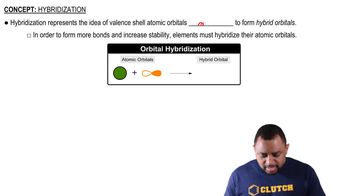
Orbital Hybridization
Orbital hybridization is the concept of mixing atomic orbitals to form new hybrid orbitals that can explain the geometry of molecular bonding. For example, in the case of double bonds, one ฯ bond is formed from head-on overlap, while the ฯ bond arises from the lateral overlap of unhybridized p orbitals.
์ถ์ฒ ์์:
๊ฐ์ด๋ ์ฝ์ค
Hybridization
๊ด๋ จ ์ค์ฒ
๊ต๊ณผ์ ์ง๋ฌธ
3
views
๊ต๊ณผ์ ์ง๋ฌธ
(b) What is the hybridization of the carbon atoms in each molecule?
2487
views
1
rank
๊ต๊ณผ์ ์ง๋ฌธ
Which of the following statements are true? d. A ๐ bond has two regions of overlap on opposite sides of the internuclear axis.
3
views
๊ต๊ณผ์ ์ง๋ฌธ
(b) Imagine that you could hold two atoms that are bonded together, twist them, and not change the bond length. Would it be easier to twist (rotate) around a single s bond or around a double 1s plus p2 bond, or would they be the same?
515
views
๊ต๊ณผ์ ์ง๋ฌธ
Shown here are three pairs of hybrid orbitals, with each set at a characteristic angle. For each pair, determine the type of hybridization, if any, that could lead to hybrid orbitals at the specified angle. (a)
(b)
(c)
750
views
๊ต๊ณผ์ ์ง๋ฌธ
What is the hybridization of the central atom in d. TeCl2?
2
views